Sanjay Bhunjun

Chairman EDB

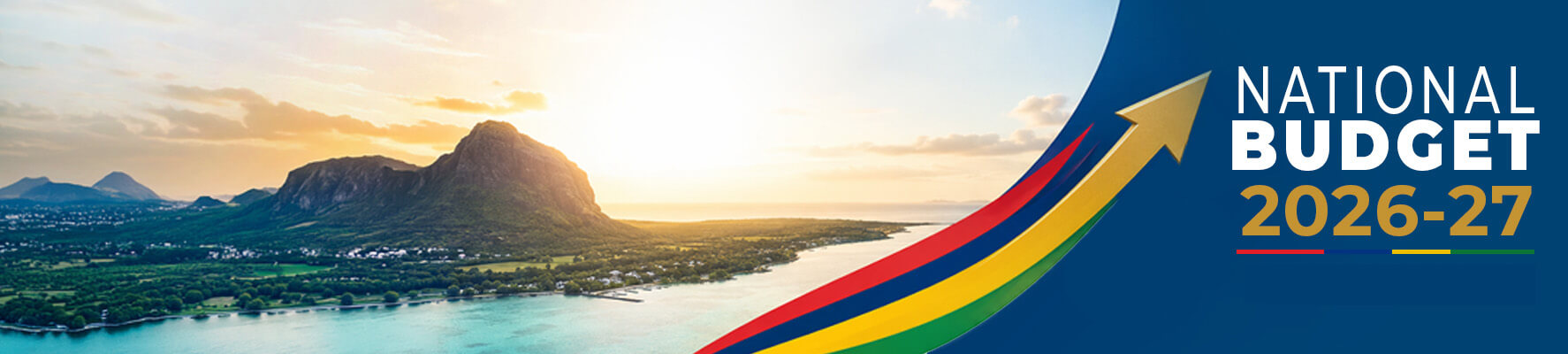
Dear Valued Stakeholders,The presentation of the National Budget 2026/2027 by the Honourable Prime Minister marks a defining moment for Mauritius’ economic trajectory and reinforces the country’s commitment to sustainable, inclusive and investment-led growth. This special edition of the EDB Newsletter reflects on the strategic direction outlined in the Budget and highlights the opportunities it creates for investors, businesses and our stakeholders.

Sanjay Bhunjun

Chairman EDB

Dear Valued Stakeholders,

The presentation of the National Budget 2026/2027 by the Honourable Prime Minister marks a defining moment for Mauritius’ economic trajectory and reinforces the country’s commitment to sustainable, inclusive and investment-led growth. This special edition of the EDB Newsletter reflects on the strategic direction outlined in the Budget and highlights the opportunities it creates for investors, businesses and our stakeholders.

At a time when the global environment remains characterised by uncertainty, shifting trade dynamics and intensifying competition for capital, Mauritius continues to demonstrate resilience, with real GDP growth of 3.2% in 2025. Building on this foundation, the Budget sets out a forward-looking reform agenda aimed at strengthening competitiveness, enhancing ease of doing business and positioning Mauritius as a future-ready economy.

A central pillar of the Budget is the improvement of the investment climate. The forthcoming Business Facilitation Bill, together with the introduction of the “silent agreement” principle, will significantly streamline licensing and permitting processes. The Economic Development Board (EDB) will undertake a comprehensive review of procedures, leveraging data from the National Electronic Licensing System (NELS) to eliminate bottlenecks and improve service delivery. The integration of AI-enabled tools, including multilingual chatbots and automation features, will further enhance investor support through 24/7 digital services.

In parallel, the Budget introduces targeted reforms under the Work and Live framework. Revised Occupation Permit criteria will ensure stronger economic substance, while the introduction of a Technical Permit category will facilitate strategic recruitment under Government-to-Government arrangements. The launch of a Golden Visa Scheme, coupled with the establishment of a National E-Diaspora Platform, will strengthen Mauritius’ ability to attract high-value investors and leverage global expertise in support of national development priorities.

The Budget also provides strong impetus for the knowledge economy and innovation ecosystem. Key measures include the establishment of a National AI Learning Platform, the introduction of Innovation Scholarships, and reforms to facilitate the entry of world-class universities into Mauritius. These initiatives, together with enhanced alignment between education, training and labour market needs, will support the development of a highly skilled workforce and position Mauritius as a regional hub for education, research and digital innovation.

At the same time, Government is advancing sectoral transformation across priority industries. In the agro-industry, the “25by35 Food Security Project” sets a clear ambition to increase domestic food production and reduce import dependency, supported by investments in value chains, climate-resilient practices and strategic reserves. In the creative industries, measures to establish an Artistic and Cultural Hub, strengthen intellectual property frameworks and support artists’ development will contribute to building a vibrant creative economy and enhancing cultural exports. The extension of VAT exemptions for international events will further reinforce Mauritius’ competitiveness as a MICE destination.

The Budget also reflects a balanced approach to development by integrating social, environmental and economic objectives. Investments in education, healthcare, housing and social protection will strengthen human capital and inclusivity, while climate resilience initiatives and the transition towards renewable energy create new opportunities in sustainable infrastructure and green technologies.

From an investment perspective, major infrastructure projects—including port expansion, airport modernisation and logistics development—will enhance Mauritius’ role as a regional gateway for trade and services. In parallel, continued reforms in financial services and global business will support the evolution of Mauritius as a trusted and innovation-ready International Financial Centre.

The EDB remains committed to translating these policy measures into tangible outcomes. Our role extends beyond promotion to active facilitation, policy advocacy and project development. Through strengthened coordination with Government and private stakeholders, and through our sector-focused approach, we will continue to support investors at every stage, from market entry to expansion and diversification.

Over the past year, the Board has approved projects exceeding Rs 160 billion across key sectors, reflecting continued investor confidence in Mauritius’ fundamentals. The measures introduced in this Budget provide renewed momentum to deepen this pipeline, attract quality investment and support enterprise growth.

Looking ahead, Mauritius is well positioned to consolidate its status as a competitive, resilient and innovation-driven economy. The success of this Budget will, however, depend on effective implementation, strong public–private collaboration and the ability to convert policy into bankable opportunities.

To our partners and investors, both domestic and international, the message remains clear: Mauritius is open for business and committed to enabling your success. The EDB stands ready to support you in identifying opportunities, facilitating investments and delivering results.

This Budget Special Edition is an invitation to engage with the opportunities ahead and to join us in shaping the next phase of Mauritius’ development.

Yours sincerely,

Sanjay Bhunjun
Chairperson
Economic Development Board Mauritius

At a time when the global environment remains characterised by uncertainty, shifting trade dynamics and intensifying competition for capital, Mauritius continues to demonstrate resilience, with real GDP growth of 3.2% in 2025. Building on this foundation, the Budget sets out a forward-looking reform agenda aimed at strengthening competitiveness, enhancing ease of doing business and positioning Mauritius as a future-ready economy.

A central pillar of the Budget is the improvement of the investment climate. The forthcoming Business Facilitation Bill, together with the introduction of the “silent agreement” principle, will significantly streamline licensing and permitting processes. The Economic Development Board (EDB) will undertake a comprehensive review of procedures, leveraging data from the National Electronic Licensing System (NELS) to eliminate bottlenecks and improve service delivery. The integration of AI-enabled tools, including multilingual chatbots and automation features, will further enhance investor support through 24/7 digital services.

In parallel, the Budget introduces targeted reforms under the Work and Live framework. Revised Occupation Permit criteria will ensure stronger economic substance, while the introduction of a Technical Permit category will facilitate strategic recruitment under Government-to-Government arrangements. The launch of a Golden Visa Scheme, coupled with the establishment of a National E-Diaspora Platform, will strengthen Mauritius’ ability to attract high-value investors and leverage global expertise in support of national development priorities.

The Budget also provides strong impetus for the knowledge economy and innovation ecosystem. Key measures include the establishment of a National AI Learning Platform, the introduction of Innovation Scholarships, and reforms to facilitate the entry of world-class universities into Mauritius. These initiatives, together with enhanced alignment between education, training and labour market needs, will support the development of a highly skilled workforce and position Mauritius as a regional hub for education, research and digital innovation.

At the same time, Government is advancing sectoral transformation across priority industries. In the agro-industry, the “25by35 Food Security Project” sets a clear ambition to increase domestic food production and reduce import dependency, supported by investments in value chains, climate-resilient practices and strategic reserves. In the creative industries, measures to establish an Artistic and Cultural Hub, strengthen intellectual property frameworks and support artists’ development will contribute to building a vibrant creative economy and enhancing cultural exports. The extension of VAT exemptions for international events will further reinforce Mauritius’ competitiveness as a MICE destination.

The Budget also reflects a balanced approach to development by integrating social, environmental and economic objectives. Investments in education, healthcare, housing and social protection will strengthen human capital and inclusivity, while climate resilience initiatives and the transition towards renewable energy create new opportunities in sustainable infrastructure and green technologies.

From an investment perspective, major infrastructure projects—including port expansion, airport modernisation and logistics development—will enhance Mauritius’ role as a regional gateway for trade and services. In parallel, continued reforms in financial services and global business will support the evolution of Mauritius as a trusted and innovation-ready International Financial Centre.

The EDB remains committed to translating these policy measures into tangible outcomes. Our role extends beyond promotion to active facilitation, policy advocacy and project development. Through strengthened coordination with Government and private stakeholders, and through our sector-focused approach, we will continue to support investors at every stage, from market entry to expansion and diversification.

Over the past year, the Board has approved projects exceeding Rs 160 billion across key sectors, reflecting continued investor confidence in Mauritius’ fundamentals. The measures introduced in this Budget provide renewed momentum to deepen this pipeline, attract quality investment and support enterprise growth.

Looking ahead, Mauritius is well positioned to consolidate its status as a competitive, resilient and innovation-driven economy. The success of this Budget will, however, depend on effective implementation, strong public–private collaboration and the ability to convert policy into bankable opportunities.

To our partners and investors, both domestic and international, the message remains clear: Mauritius is open for business and committed to enabling your success. The EDB stands ready to support you in identifying opportunities, facilitating investments and delivering results.

This Budget Special Edition is an invitation to engage with the opportunities ahead and to join us in shaping the next phase of Mauritius’ development.

Yours sincerely,

Sanjay Bhunjun
Chairperson
Economic Development Board Mauritius
edb-logo-white

Ground Floor, 7 Exchange Square
Wall Street, Ebene 72201,
Republic of Mauritius

© Copyright 2026 Economic Development Board. All Rights Reserved.

en_GB