Showcasing Mauritian Innovation at VivaTech 2026

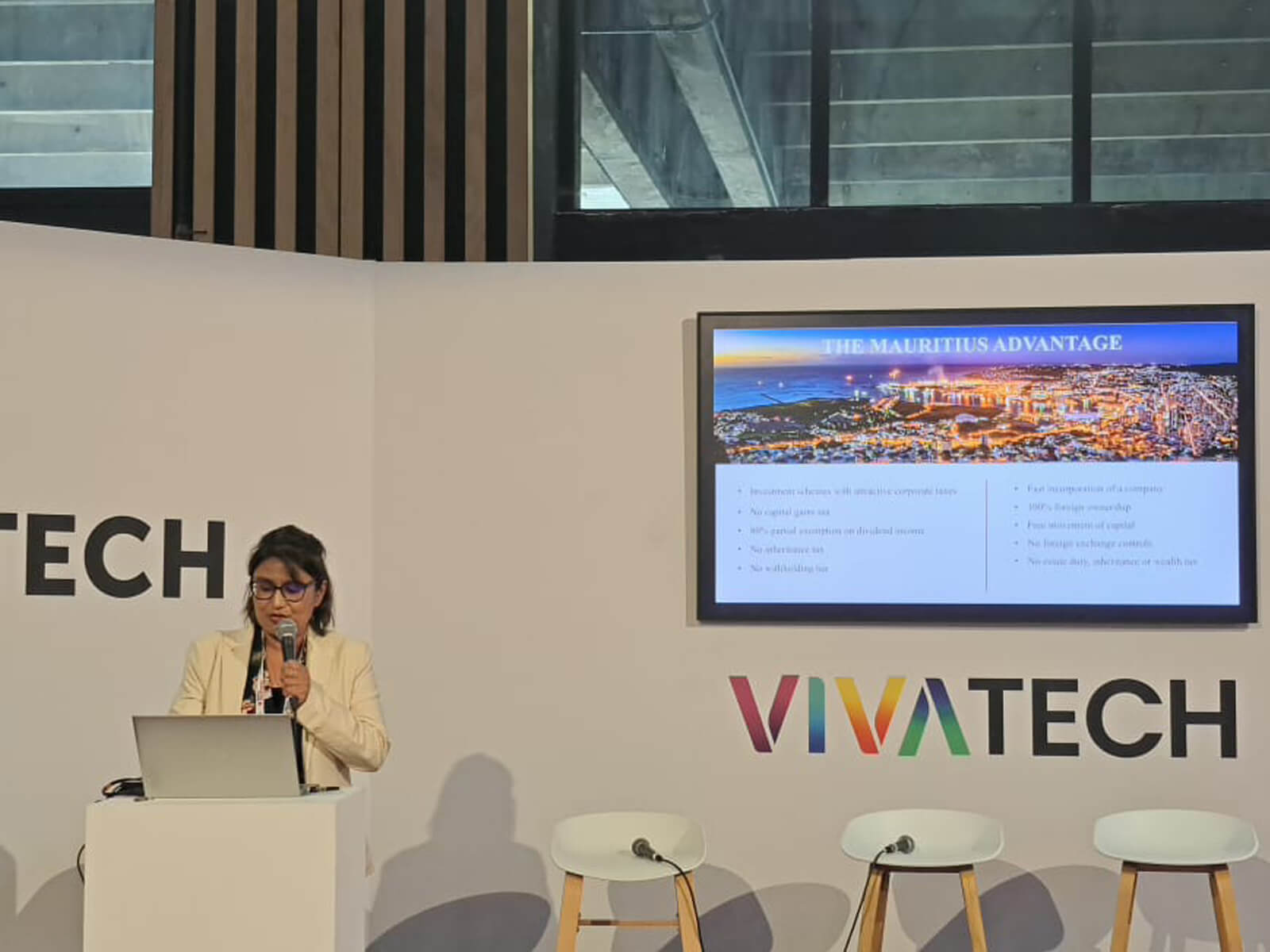
Mauritius reinforced its commitment to becoming a leading innovation and technology hub by participating in VivaTech 2026, Europe’s largest startup and technology event, through a delegation led by the Economic Development Board (EDB).

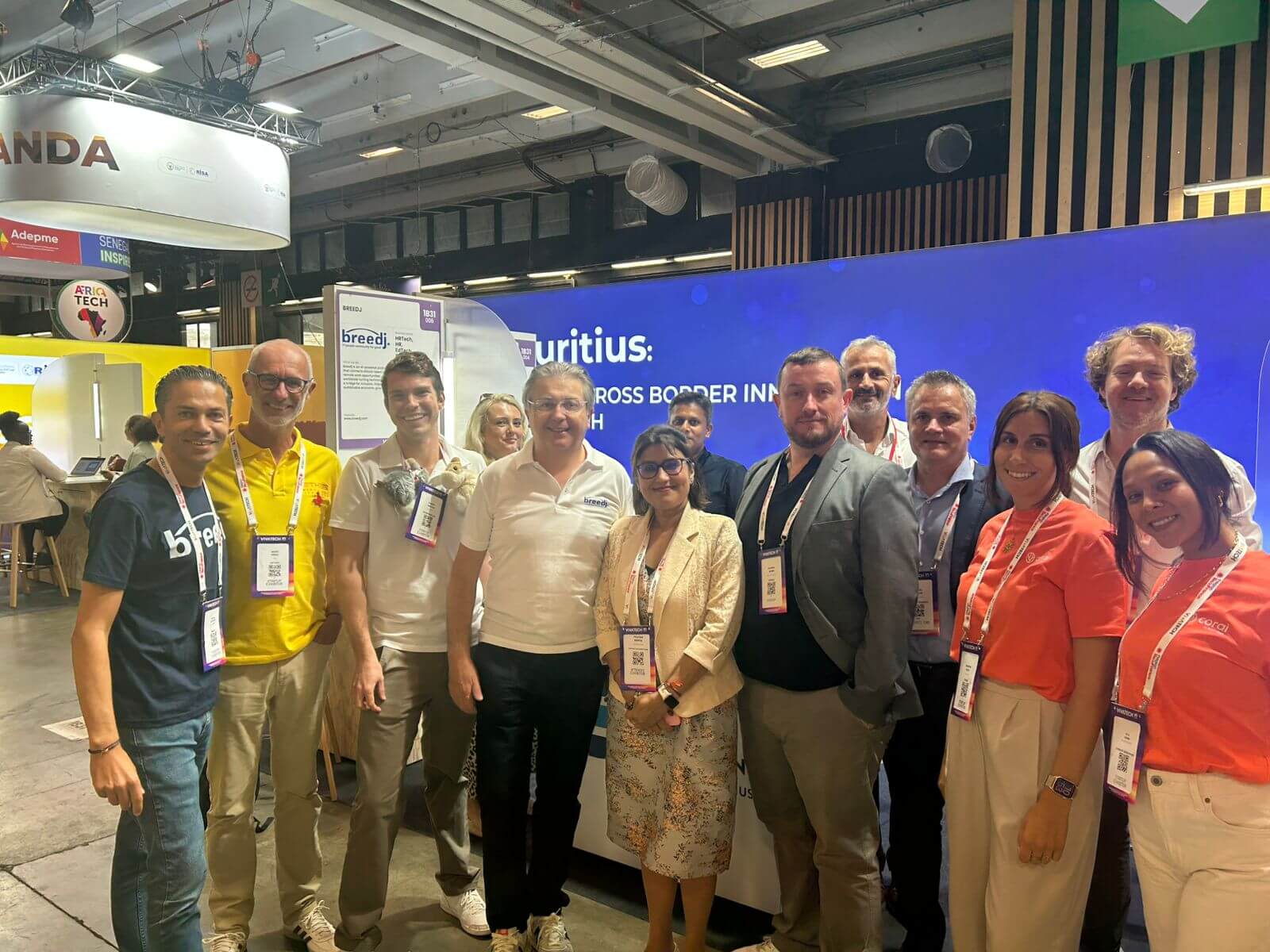
The Mauritius Pavilion brought together a dynamic group of innovative startups providing an exceptional platform to showcase the country’s growing digital capabilities, connect with international investors and partners, and promote Mauritius as a competitive destination for investment and innovation.

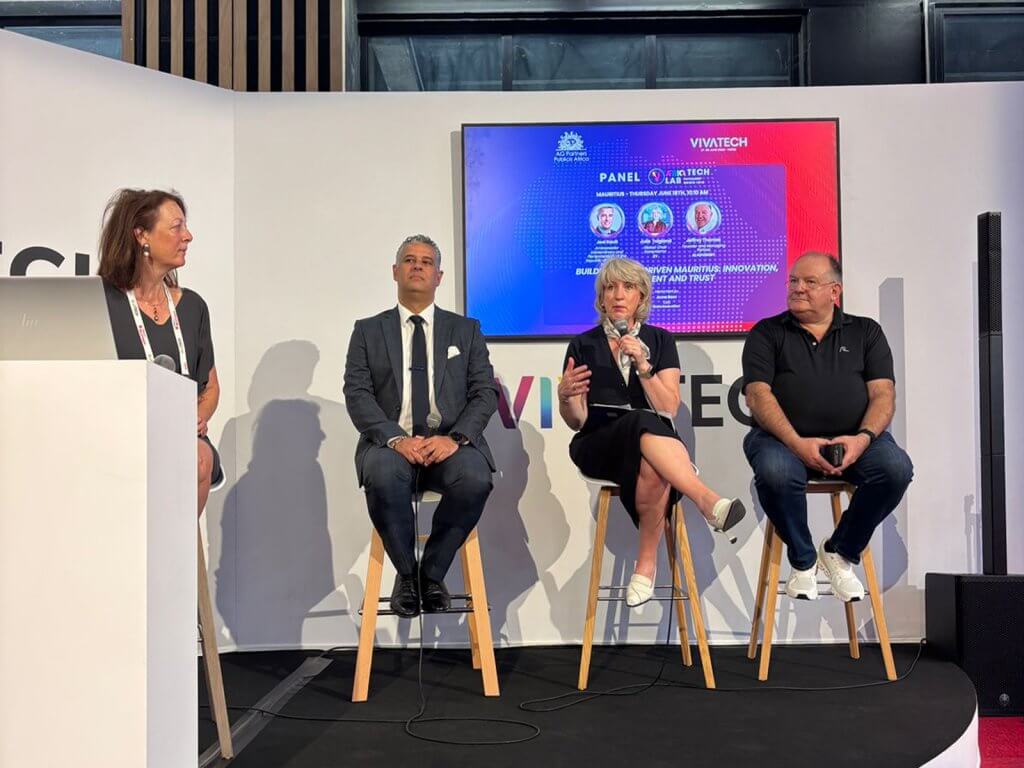
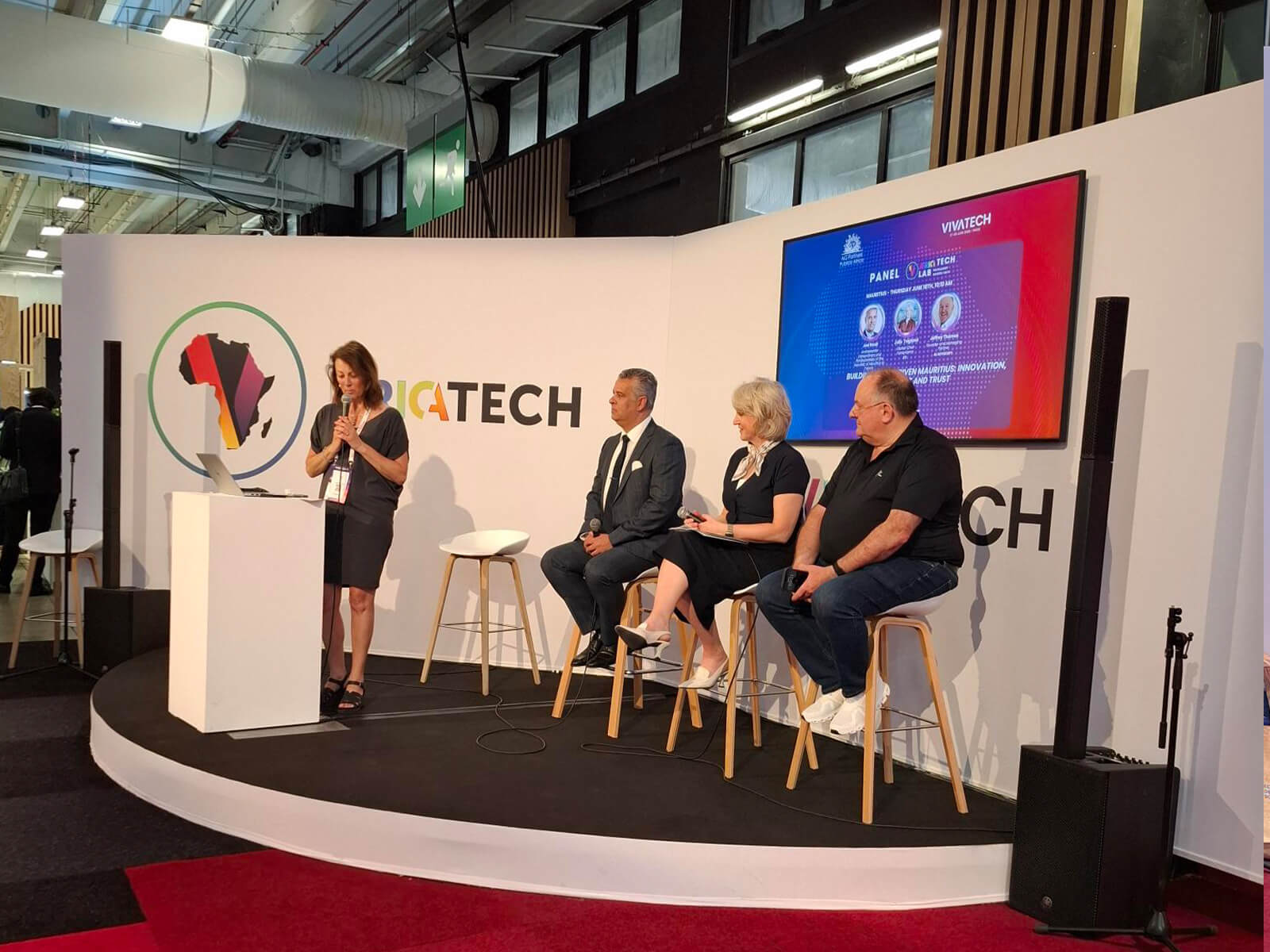
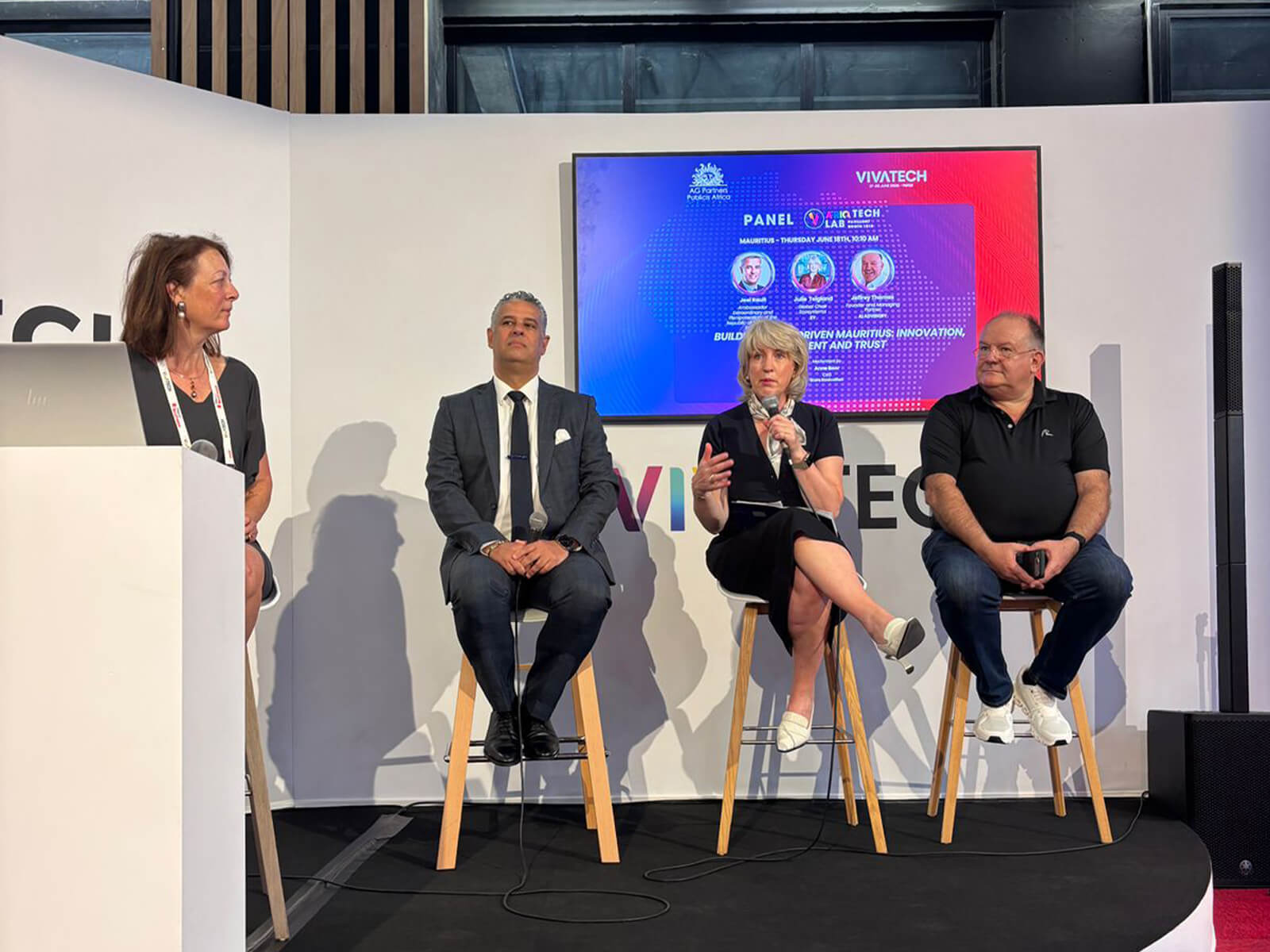
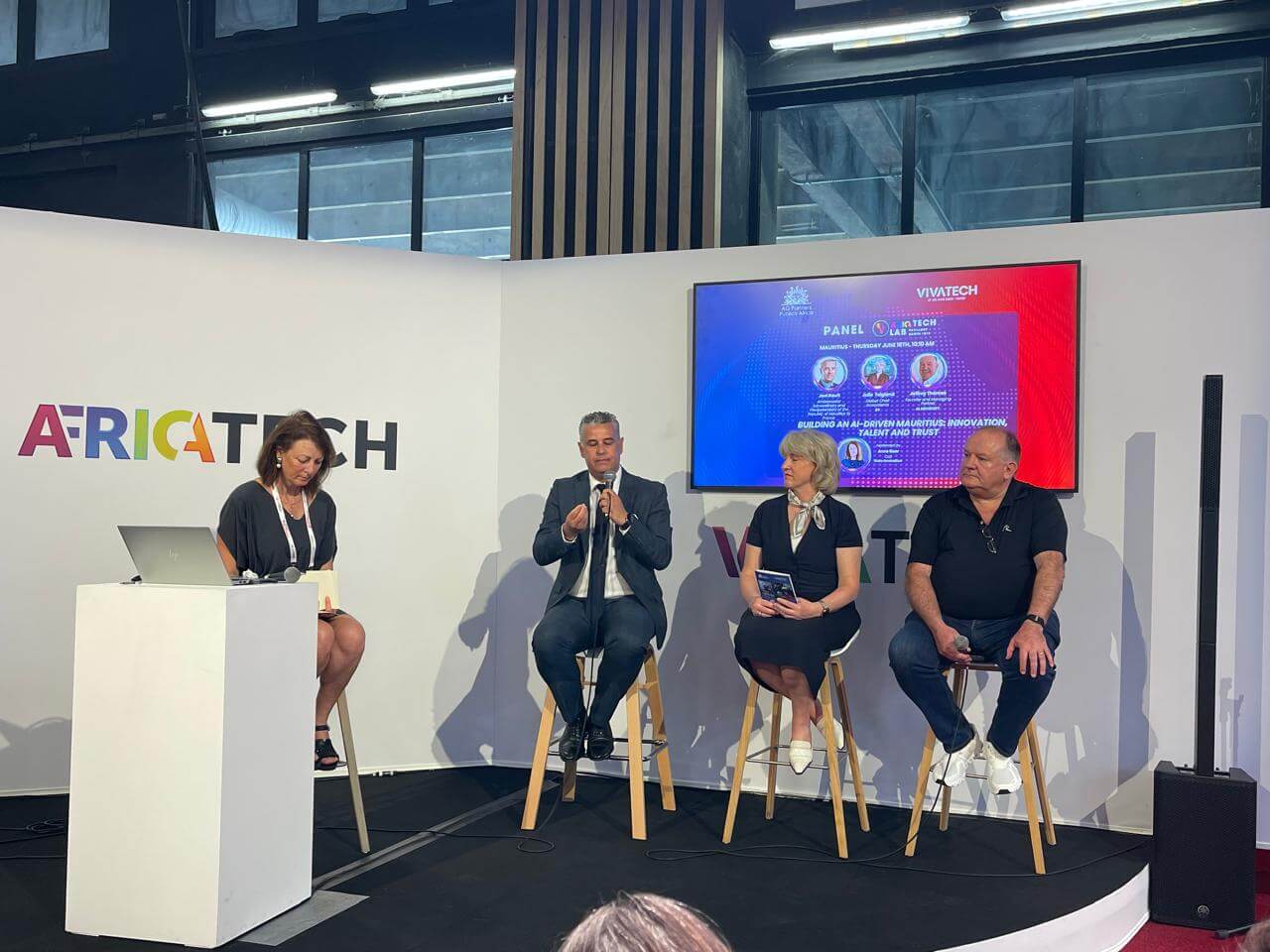
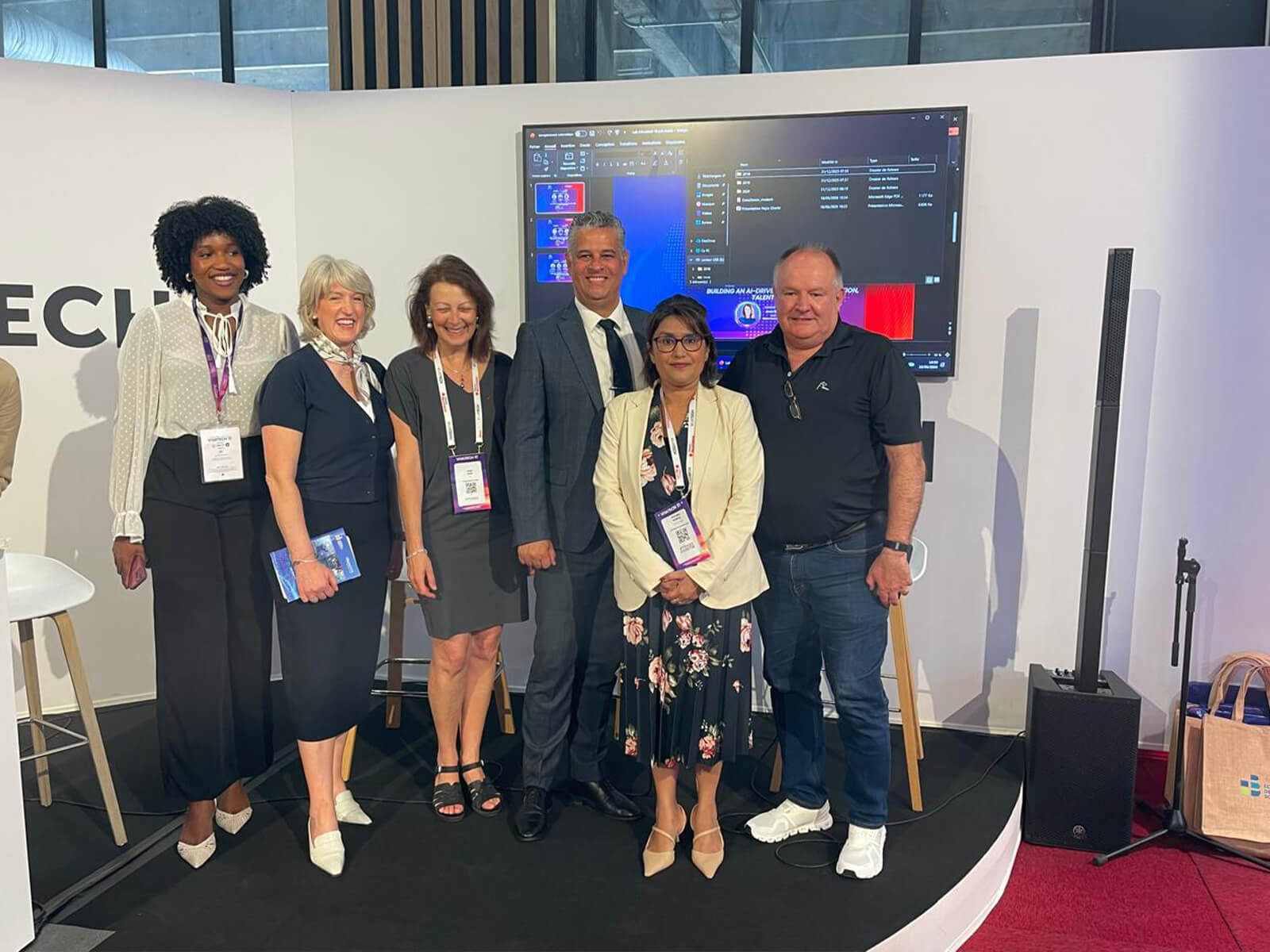
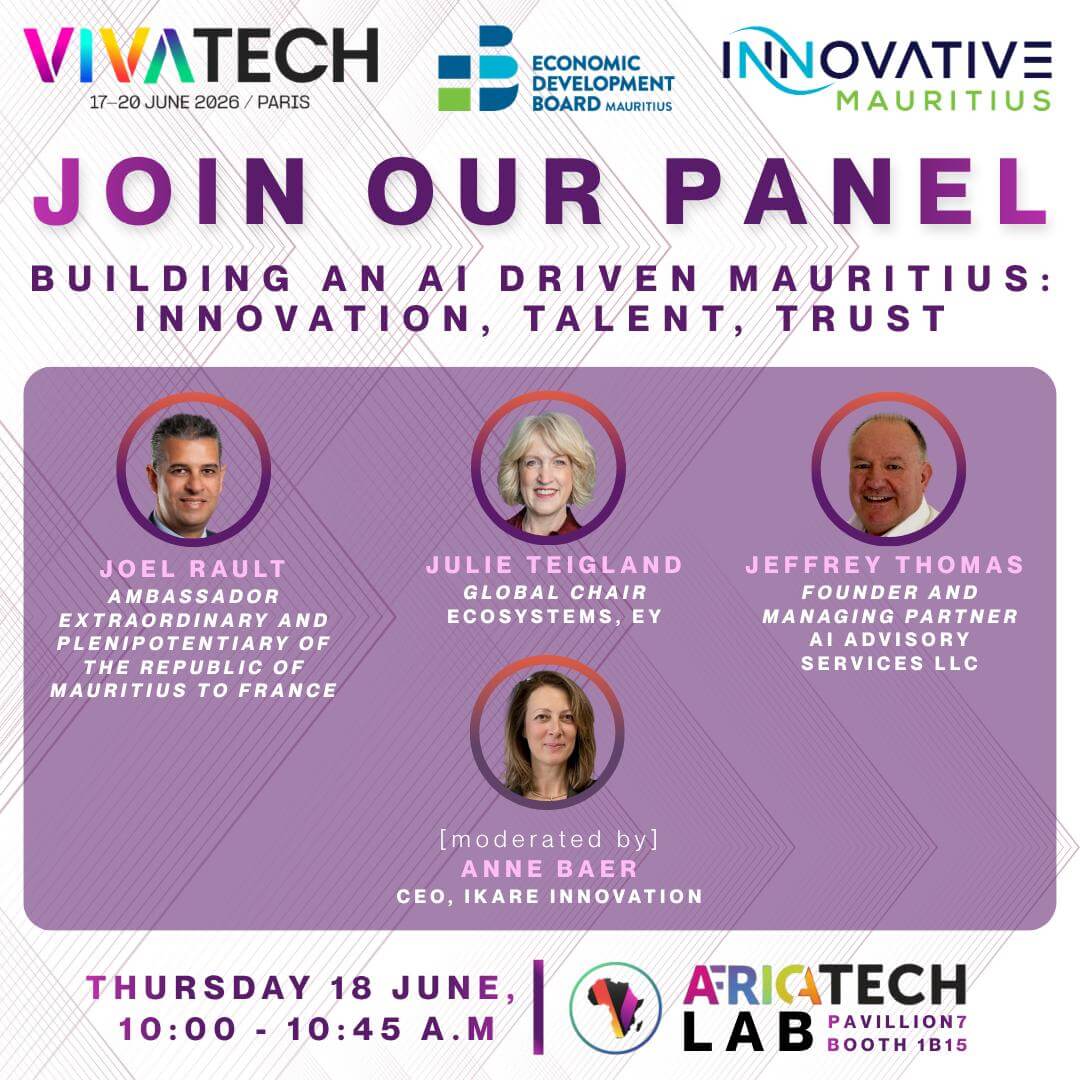
A key highlight of the programme was the panel discussion, “Building an AI-Driven Mauritius: Innovation, Talent and Trust,” which explored the country’s potential for harnessing artificial intelligence as a catalyst for economic growth

The panel explored the key building blocks needed to foster an AI-driven economy, including:

  • Developing a national AI ecosystem that fosters innovation and entrepreneurship.
  • Investing in digital skills and AI talent to prepare the workforce of the future.
  • Strengthening collaboration between government, academia, industry, and startups.
  • Promoting responsible and ethical AI through robust governance frameworks.
  • Positioning Mauritius as a regional gateway for AI innovation and digital services.

The discussion also emphasized that Mauritius has a unique opportunity to leverage its agility, strong digital infrastructure, and skilled workforce to become a regional hub for AI innovation and digital transformation.

Throughout the event, the delegation engaged in meaningful discussions with potential partners, investors, and business leaders from across Europe and beyond, fostering new connections and exploring opportunities for collaboration, investment, and market expansion.

This participation was more than an event. It was a statement — that Mauritius is ready to be part of the global conversation on AI, deeptech, and the digital economy of tomorrow.

Share this article

EDB Board Advances Policy Measures to Strengthen Skills, Investment and Innovation

Measures target skills development, business facilitation, digital innovation, investment attraction and implementation of Budget 2026/2027 priorities.

The Board of the Economic Development Board (EDB) has approved a set of priority reforms to support our transition towards a high-value, knowledge-based and innovation-driven economy.

The decisions, taken at the Board meeting held on Saturday, 27 June 2026, aim to strengthen the country’s talent pipeline, simplify business processes, attract strategic investment and accelerate delivery of key national economic measures.

1. Advancing Labour Market Reform and Talent Development

The Board took note of the action plan following the EDB workshop on “Addressing Skills Gaps and Labour Shortages in the Mauritian Labour Market,” held on 12 June 2026. The plan is designed to better align skills supply with demand in healthcare, ICT, manufacturing, construction, hospitality, agro-industry, AI, FinTech and digital technologies.

Key priorities include industry-driven curricula, stronger TVET delivery, international talent attraction, diaspora engagement, workforce retention, improved labour market intelligence, a national workforce planning framework and the introduction of microcredentials.

2. Fast-Tracking Technical Talent Through G-to-G Arrangements

Under the Work and Live initiative announced in Budget 2026/2027, the Board reviewed the operational framework for the new Technical Occupation Permit. The permit will facilitate the recruitment of foreign professionals through Government-to-Government arrangements and be integrated into the National Electronic Licensing System (NELS).

3. Investment Certificate – Digital Technology and Innovation

The Board approved the issue of two new Investment Certificates in the Digital Technology and Innovation sector, supporting companies that will establish operations in Mauritius to serve global markets, including sub-Saharan Africa and the Middle East.

4. Streamlining Business Licensing

The Board took note that EDB will work on a comprehensive business licensing exercise linked to the forthcoming Business Facilitation Bill. Drawing on NELS data and private-sector feedback, the EDB will propose legal amendments to streamline permits, licences, clearances and authorisations.

The Bill, as announced in Budget 2026/2027, will introduce statutory timeframes and the Silent Agreement Principle, under which approvals will be deemed granted where authorities do not issue a decision within the prescribed deadline.

5. Strengthening Responsible Business Conduct

Following Mauritius’ adherence to the OECD Declaration on International Investment and Multinational Enterprises, the Board approved the reconstitution and staffing of the NCP Mauritius Secretariat.

6. Enhancing Investment and Residency Schemes

The Board noted revised criteria for investment and residency schemes as announced in the last Budget Speech, including clearer investment requirements, milestone-based evaluation for innovative start-ups, improved facilitation for technical personnel under G-to-G agreements and new salary threshold for professionals. Guidelines and NELS integration will be ready upon promulgation of the Finance (Miscellaneous Provisions) Act.

7. Introducing the Strategic Golden Visa Framework

The Board took note of the operational guidelines for the Golden Visa programme. Non-citizens investing a minimum of USD 1 million in priority sectors such as FinTech, green energy, aquaculture, and approved public offerings may qualify for Permanent Residence.

8. Expanding International Investment and Trade Outreach

The Board finalised plans for key international missions in the second half of 2026, including the Source Fashion, Africa Down Under Conference in Perth and the SIAL Exhibition to promote Mauritian food and agro-industrial exports.

9. Investment Project Portfolio Update (April 2025 – May 2026)

The Board reviewed a status update on investment projects approved between April 2025 and May 2026. During this period, 63 projects were approved, representing a total investment value of Rs 159.3 billion. In addition, 16 renewable energy projects were issued Registration Certificates, with a combined investment value of Rs 8.75 billion. This portfolio reflects our continued ability to attract large-scale, diversified projects across hospitality, ICT, education, manufacturing, agro-industry and renewable energy.

With respect to implementation, seven projects have progressed to the construction phase or are entering active implementation. Most education and ICT projects that have been issued Investment Certificates have either commenced construction or are already operational, while agro-industrial projects continue to advance in line with their implementation timelines.

Of the 16 renewable energy projects, four are currently facing challenges related to wayleave approvals, land-use matters and regulatory alignment. The EDB is actively engaging with the relevant stakeholders and authorities to facilitate the resolution of these issues and support the timely implementation of the projects.

10. Driving Budget 2026/2027 Implementation

The Board took note of a 20-point roadmap to implement Budget 2026/2027 measures under the EDB’s mandate, with actions covering digital infrastructure, ease of doing business, sectoral development, and fiscal and regulatory reform.

  • Digital Infrastructure – AI chatbot on NELS, National E-Diaspora Platform and Online Student Visa system.
  • Ease of Doing Business – Business Facilitation Bill, streamlined event permits and Freeport Act amendments.
  • Sectoral Development – Fish farming zones, barachois, Startup Accelerator Scheme and Côte d’Or AI SEZ incentives.

The EDB will work closely with public- and private-sector partners to support timely implementation of these measures and strengthen Mauritius’ position as a competitive, innovation-driven investment destination.

Issued on 30 June 2026
Economic Development Board

Share this article

Invitation for Bids – Design & Implementation of Rule-based Work Permit Platform

Procurement Ref. No: TNR-0024 and EDB/IFB/2026/229

  1. The Economic Development Board (EDB), Mauritius is proceeding with a Request for Proposals online and is inviting potential Consultants opened to local and international Consultants submit their proposals through the Government eProcurement System for the Design & Implementation of Rule-based Work Permit Platform.

  2. Request for Proposal Documents may be downloaded from the eProcurement System https://eproc.publicprocurement.govmu.org. Reference Number on the system EDB/IFB/2026/229.

  3. Proposals must be submitted online on the eProcurement System at latest by Wednesday 08 July 2026 up to 14h00 (Local Time).

  4. Consultants who have submitted proposals online by the closing date and time shall decrypt and re-encrypt their proposals as from Wednesday 08 July 2026 as from 16h00 (Local Time) up to Thursday 09 July 2026 up to 13h00 (Local Time).

  5. Proposals received will be opened online on Thursday 09 July 2026 as from 15h01 up to 18h00 (Local Time).

  6. The Economic Development Board (EDB), Mauritius reserves the right to accept or reject any proposal and to annul the bidding process and reject all proposals at any time prior to award of the Contract, without thereby incurring any liability to any Bidder.

June 2026

Share this article

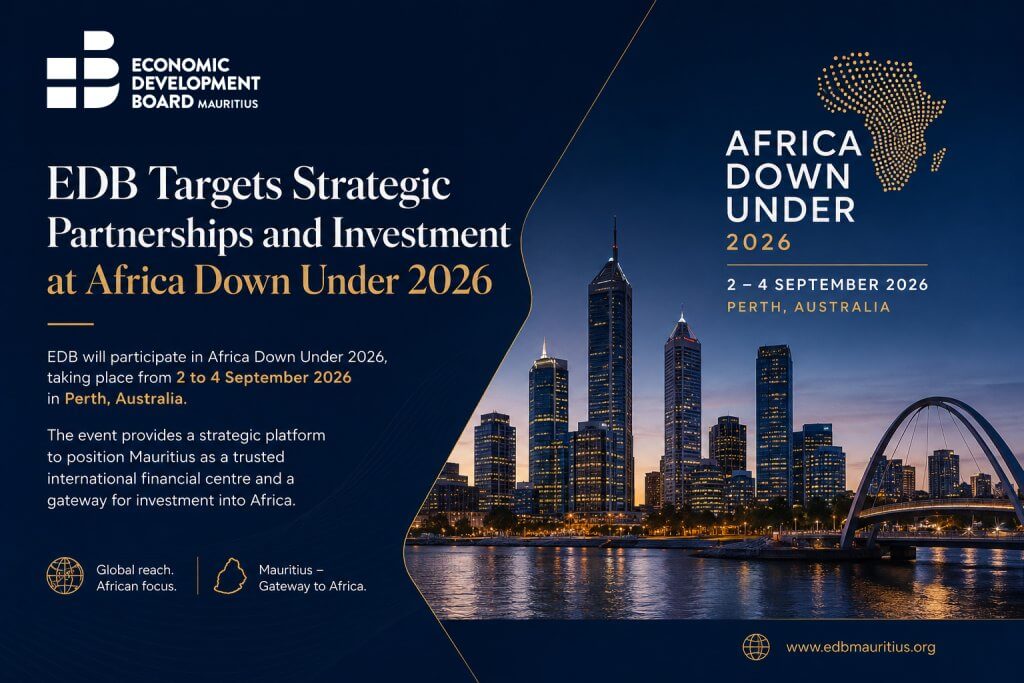
EDB Targets Strategic Partnerships and Investment at Africa Down Under 2026

EDB will participate in Africa Down Under 2026, taking place from 2 to 4 September 2026 in Perth, Australia. The event provides a strategic platform to position Mauritius as a trusted international financial centre and a gateway for investment into Africa. EDB will showcase the strengths of Mauritius’ financial services sector, its robust regulatory framework, and investor-friendly business environment. The mission aims to attract quality investment and promote Mauritius as a preferred base for accessing African markets. EDB will also engage with Australian financial institutions to build strategic partnerships and foster business collaboration. Opportunities for cooperation in education, innovation, and the ocean economy will be explored. Participation at the event will contribute to strengthening Mauritius–Australia bilateral economic relations. It will also enhance Mauritius’ visibility among Australian investors and businesses. Through this engagement, Mauritius seeks to reinforce its role as a leading platform for investment, trade, and sustainable growth in Africa.

Interested companies are invited to express their interest by contacting us at adu2026@edbmauritius.org by latest 15 July 2026.

Share this article

Business Obstacles Alert Mechanism (BOAM) Now Live

The Business Obstacles Alert Mechanism (BOAM) has been launched. It is an online platform that provides businesses with a structured mechanism through which business obstacles encountered during the course of their operations can be brought to the attention of the EDB for follow-up with the relevant public sector agencies.

The platform complements existing administrative procedures and does not replace the normal processes for applying for licences, permits, authorisations or other regulatory approvals. Rather, it provides a channel through which the EDB can engage with the relevant authorities to facilitate the resolution of business obstacles affecting investment projects and business operations.

Who can use BOAM?

BOAM is available to businesses operating in Mauritius that encounter business obstacles during licensing, permitting, utility connections, regulatory clearances or other administrative processes related to their activities.

How the process works

The BOAM process follows a structured workflow:

  • A business operator first registers on the platform and submits details of the obstacle encountered. The submission is then reviewed by the EDB. Where appropriate, the case is routed to the relevant EDB department and, if necessary, referred to the Ministry or public authority for resolution.
  • The system enables progress to be tracked and allows the outcome to be recorded once the issue has been addressed.
  • This workflow provides greater traceability and supports a more systematic approach to the handling of business obstacles.

Access BOAM

The BOAM platform may be accessed directly at: https://boam.investmauritius.org:2083/boam/login.jsf


Need assistance?

Please contact the BOAM Helpdesk.
 +230 203 3800
boamhelpdesk@edbmauritius.org

Share this article

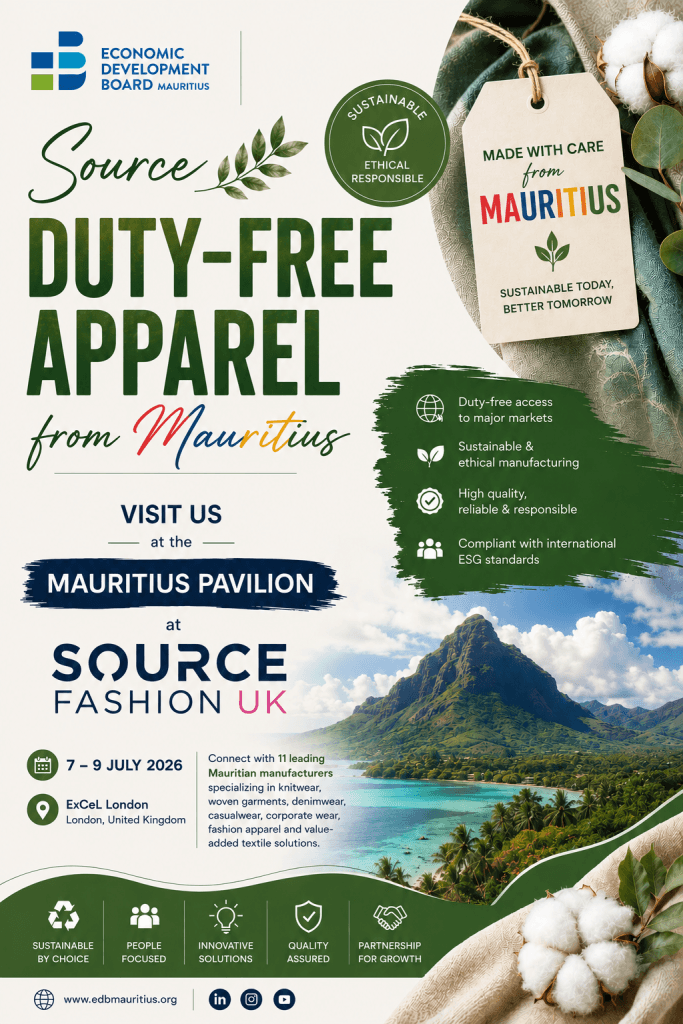
Mauritius Booth at Source Fashion UK July 2026

The Economic Development Board of Mauritius will lead a delegation of 11 Mauritian apparel manufacturers at Source Fashion UK 2026, taking place from 7–9 July 2026 at ExCeL London, United Kingdom.

The Mauritius Pavilion will highlight the country’s competitive advantages in:

  • Sustainable and ethical manufacturing
  • Duty-free market access to key international markets
  • High-quality apparel production
  • Compliance with international ESG standards

This premier sourcing event offers buyers, brands, retailers, and industry professionals a unique opportunity to connect with leading Mauritian companies specializing in:

  • Knitwear
  • Woven garments
  • Denimwear
  • Corporate wear
  • Fashion apparel
  • Value-added textile solutions

📍 Mauritius Pavilion – Source Fashion UK 2026

📅 7–9 July 2026

📍 ExCeL London, United Kingdom

Discover our participating apparel manufacturers and explore partnership opportunities with Mauritius’ dynamic textile and apparel sector here ↓

For more information on the event, please contact Mr. Kavi Boojhawon on kavi.boojhawon@edbmauriitus.org.

Share this article

Mauritius at GreenTech Amsterdam 2026: Exploring Agri-Tech Innovation and Collaboration Pathways

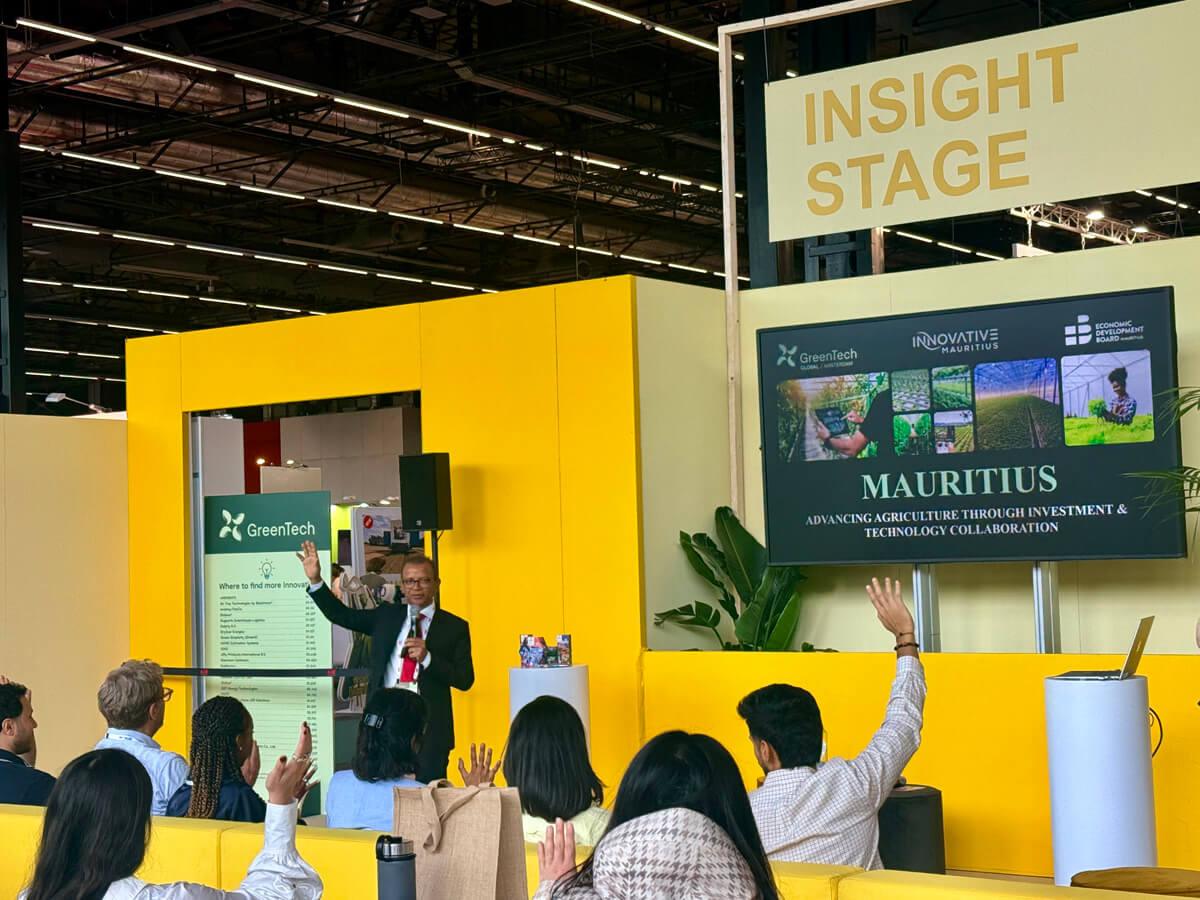
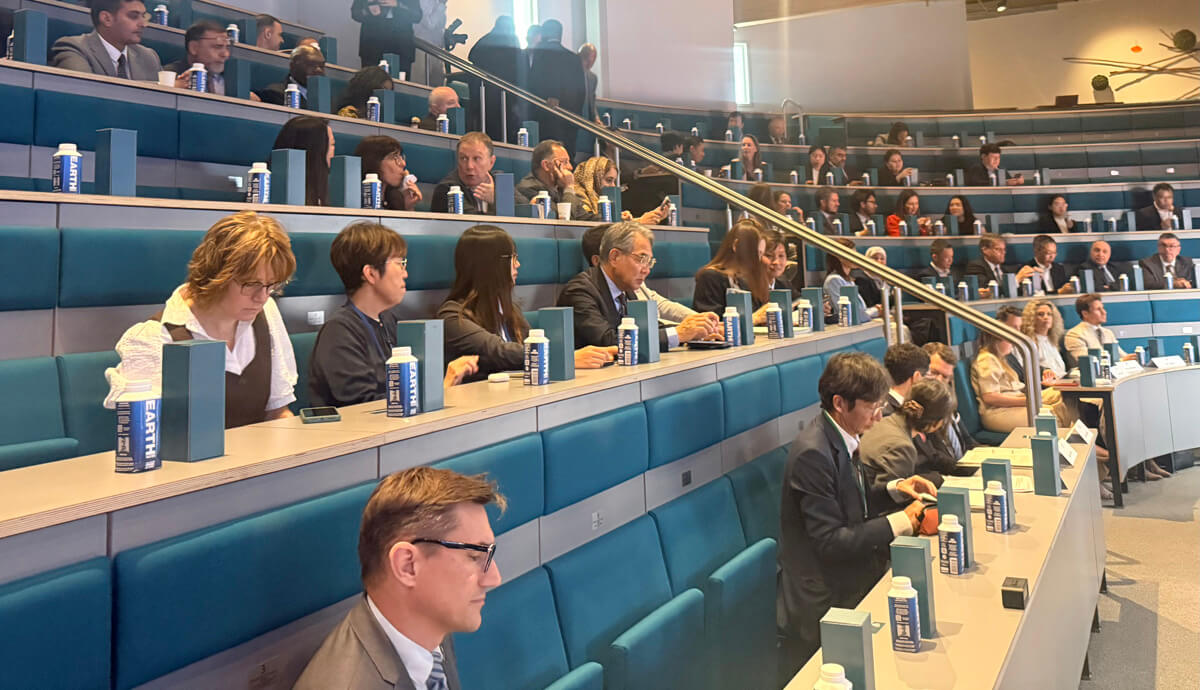
The Economic Development Board (EDB) participated in GreenTech Amsterdam 2026, held from 9 to 11 June at RAI Amsterdam, one of the world’s leading horticultural innovation platforms. The event brought together growers, breeders, investors, technology providers, and researchers, creating a strong platform for exchange and collaboration. With 11,600 visitors from 123 countries, the 2026 edition was anchored around the theme “PURE connection”, reflected in continuous interaction among participants.

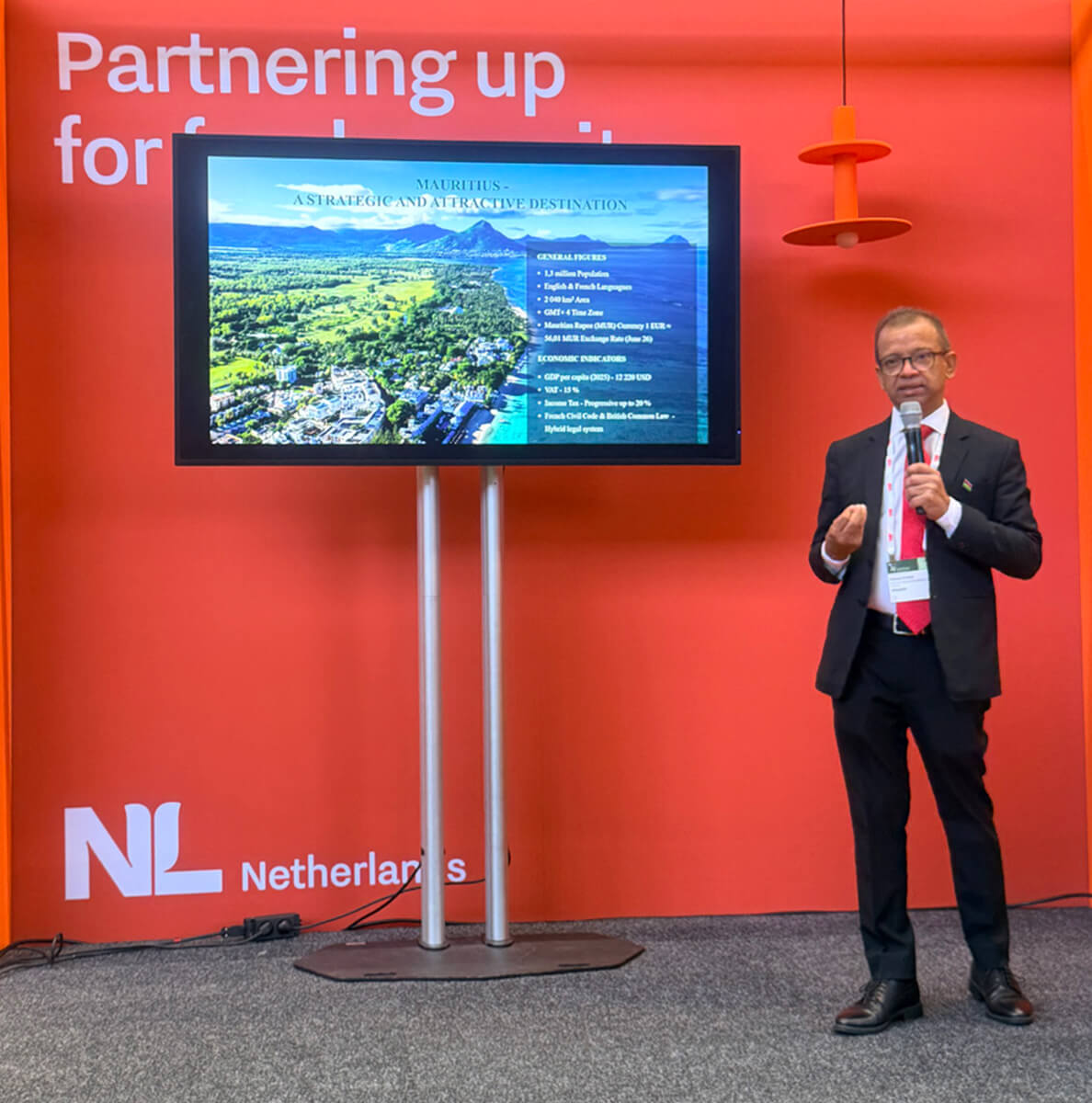
Mauritius’s participation was particularly significant as the country continues to explore how emerging agri-tech solutions can be adapted to the local context and integrated through collaboration with international partners. The EDB was also given three speaking opportunities, including sessions at the NL Lounge and Insight Stage, providing a platform to share perspectives on agricultural transformation, with a focus on strengthening food security and resilience. The mission was also enriching for participating companies, offering exposure to advanced technologies, innovative production systems, and global best practices, while enabling direct engagement with potential partners and solution providers. It also reinforced the importance of strengthening linkages with technology partners to support knowledge exchange and the deployment of locally adapted, scalable solutions.

Mr Fabien de Marassé Enouf, Chief Executive Officer of Alteo Ltd, stated that:

“What we observed in the Netherlands is a well-developed horticultural ecosystem that has evolved over decades through collaboration among growers, research institutions, technology providers and government. While Mauritius operates on a different scale, important elements of this ecosystem could be adapted locally. One example is the use of beneficial insects and pollinators in greenhouse production. These organisms play a critical role in pest management and crop pollination, helping to significantly reduce reliance on chemical pesticides while improving yields, crop quality and production consistency.”

Commenting further, Mr Arnaud D’Unienville, Chief Executive of Alteo Agri Ltd, added that:

“Although such biological solutions are widely used internationally, they are not yet widely adopted or readily accessible to many Mauritian growers. Developing an enabling regulatory framework and strengthening local expertise in biological control would facilitate effective pest management in greenhouses, thereby supporting the adoption of modern greenhouse technologies and enhancing the resilience of the horticulture sector. As Mauritius seeks to strengthen food security and modernise agriculture, these are practical innovations that merit serious consideration.”

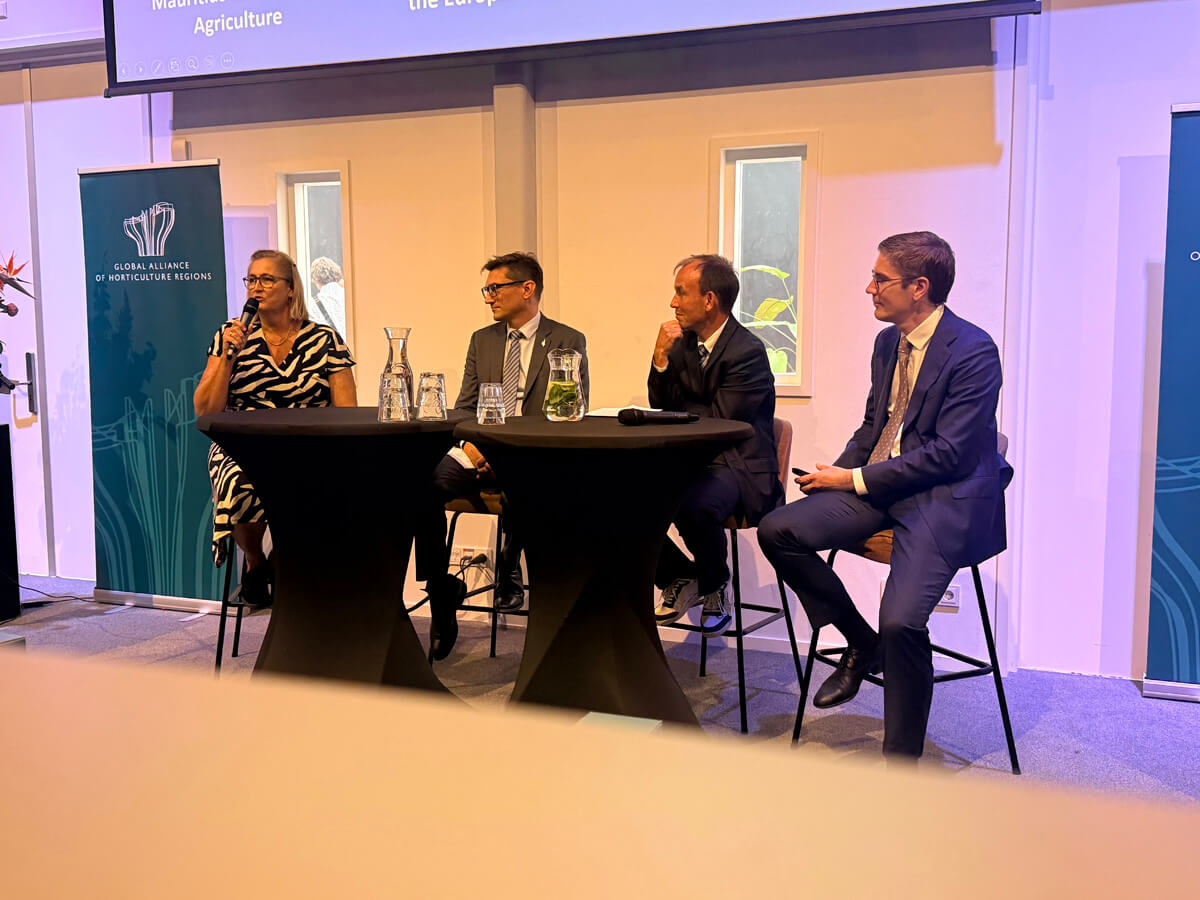
Another major highlight was the official launch of the Global Alliance of Horticulture Regions, a new international initiative aimed at strengthening cooperation between leading horticultural regions worldwide. The alliance seeks to facilitate structured knowledge sharing, joint innovation, and collaborative responses in identifying solutions to global challenges such as climate change, labour shortages, and food system resilience.

As part of the programme, the Secretary-General of the Mauritius Chamber of Agriculture, Mrs Jacqueline Sauzier, participated in a panel discussion, which focused on the involvement of national, regional, and local entities from four continents. During the discussion, she noted:

“One of the key observations from the discussions was that many of the challenges facing agriculture today are shared across countries and regions. Issues related to labour availability, water management, energy costs and climate resilience were common themes throughout the exchanges. This highlighted that collaboration is important, as while each country operates in a different context, there is significant value in learning from one another’s experiences. For Mauritius, these opportunities for collaboration and knowledge exchange are particularly important as we continue to explore practical solutions that can strengthen the resilience and sustainability of our agricultural sector.”

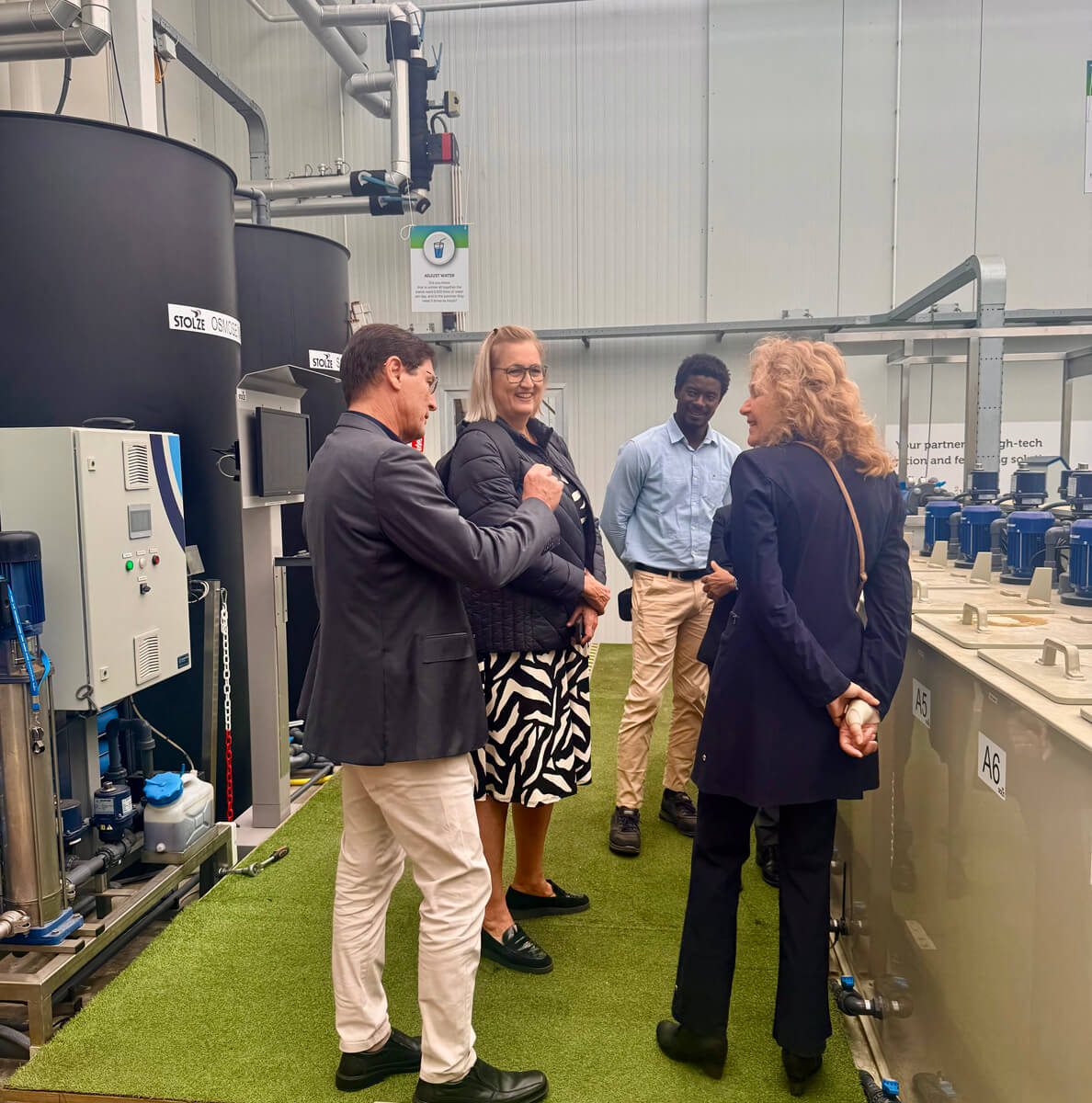
A site visit was also organised at the World Horti Center and Tomato World Center, which provided operators with the opportunity to experience the latest innovations and technologies in horticulture, including advanced greenhouse systems, smart farming solutions, and renewable energy applications supporting sustainable agricultural production. Overall, Mauritius’s participation in GreenTech Amsterdam 2026 reinforced the importance of global engagement in shaping the future of agriculture. The event demonstrated that while technologies continue to evolve rapidly, long-term success depends on collaboration, ecosystem development, and the ability to translate innovation into practical, scalable solutions adapted to local realities.

Share this article

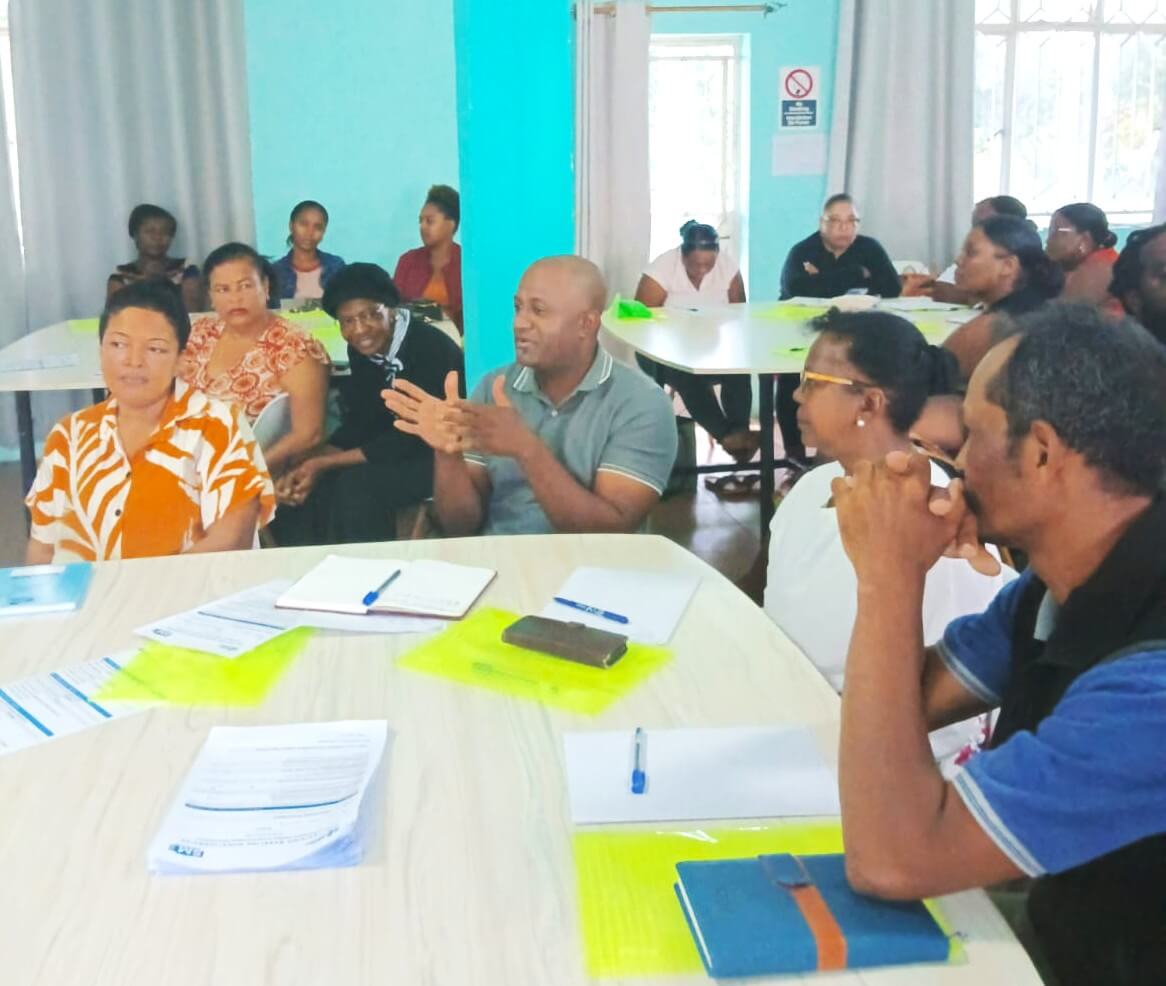
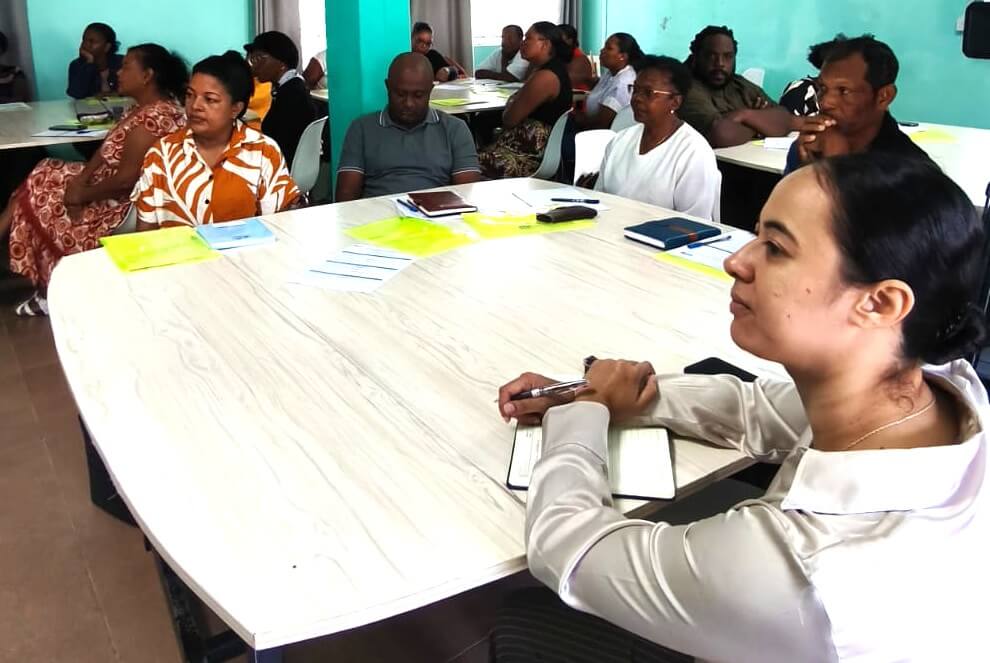
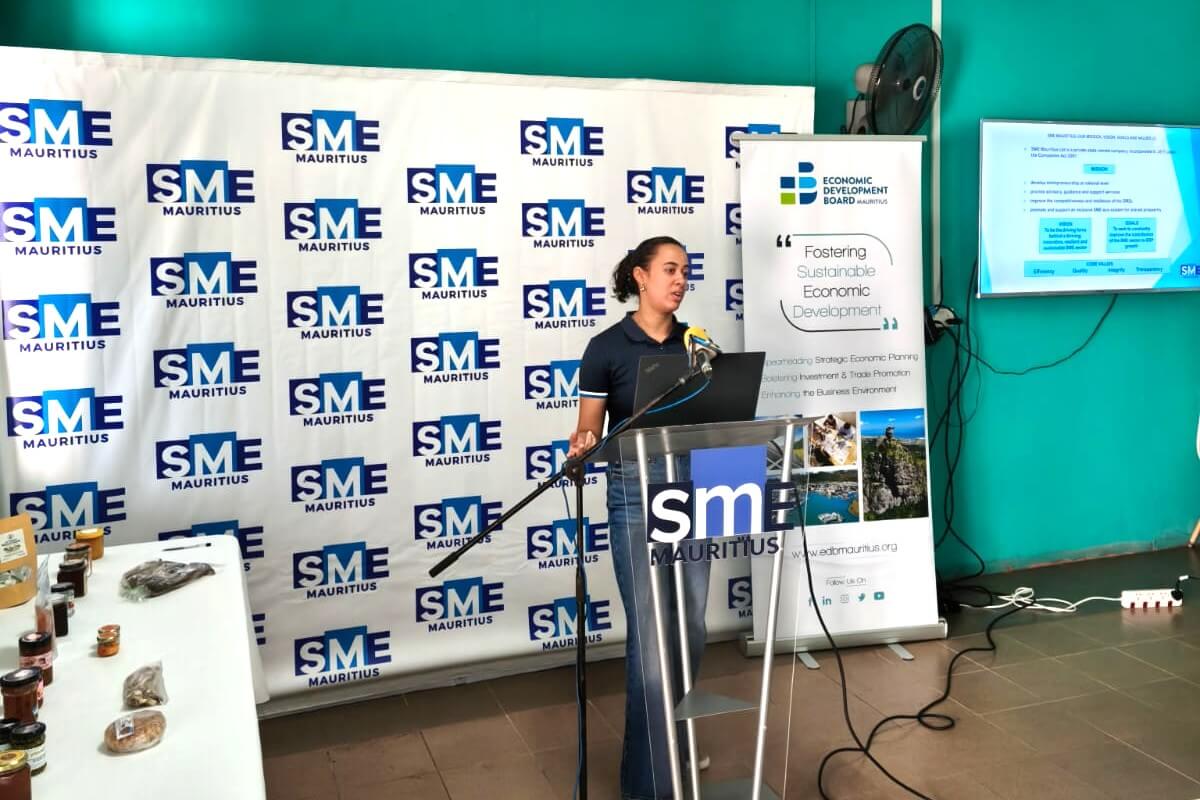
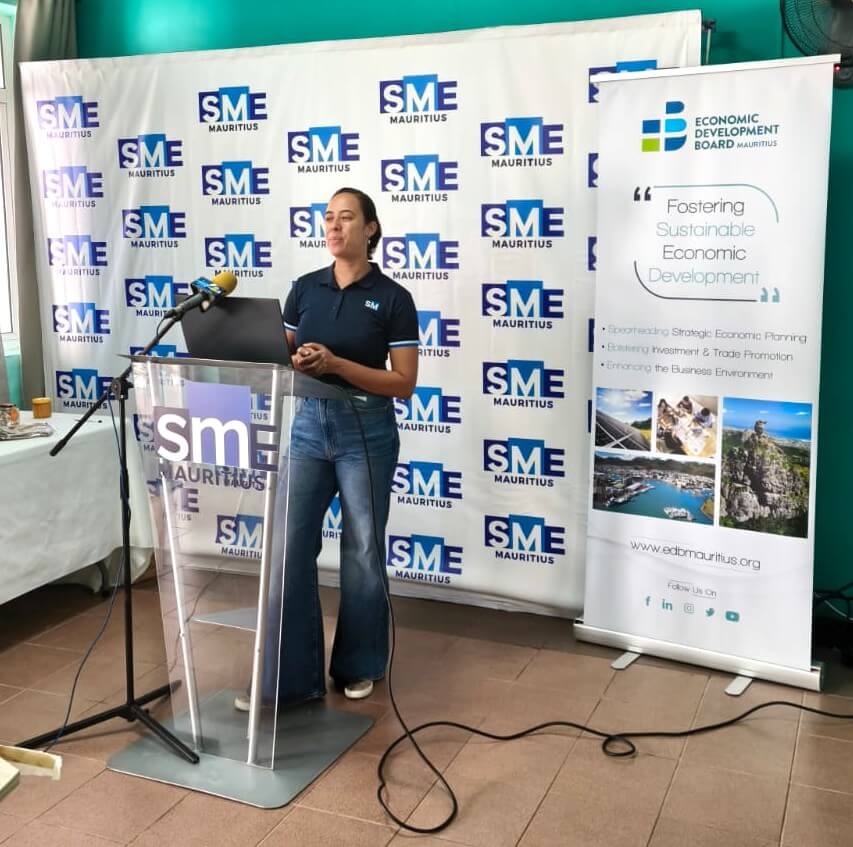
Food Packaging & Labelling Training for Rodriguan Food Enterprises

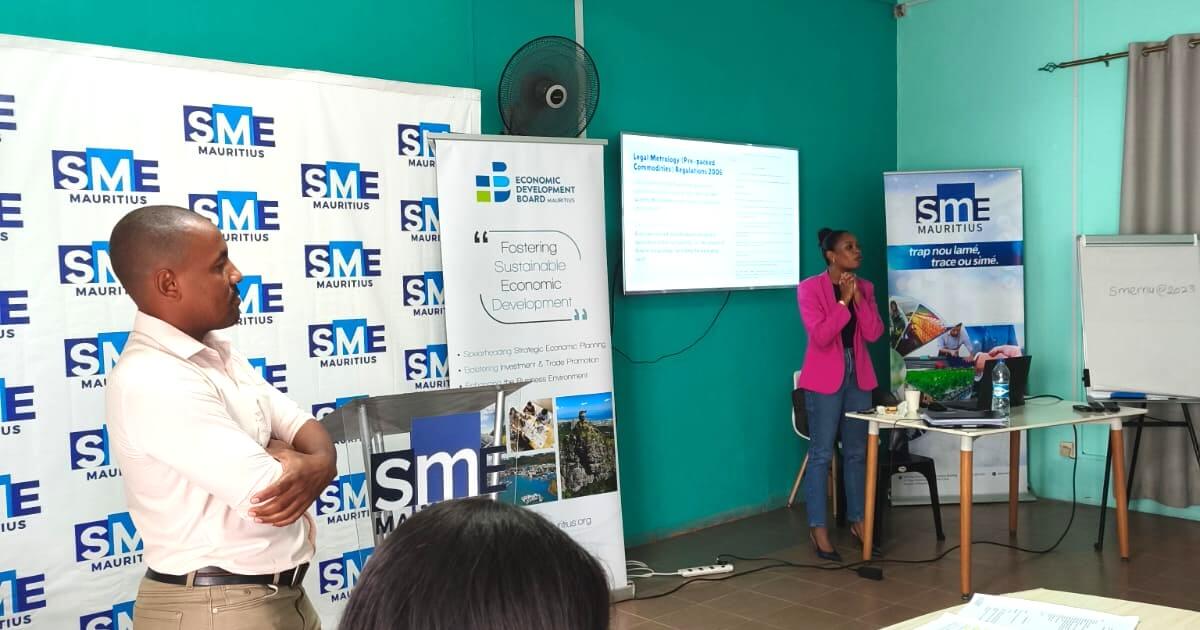
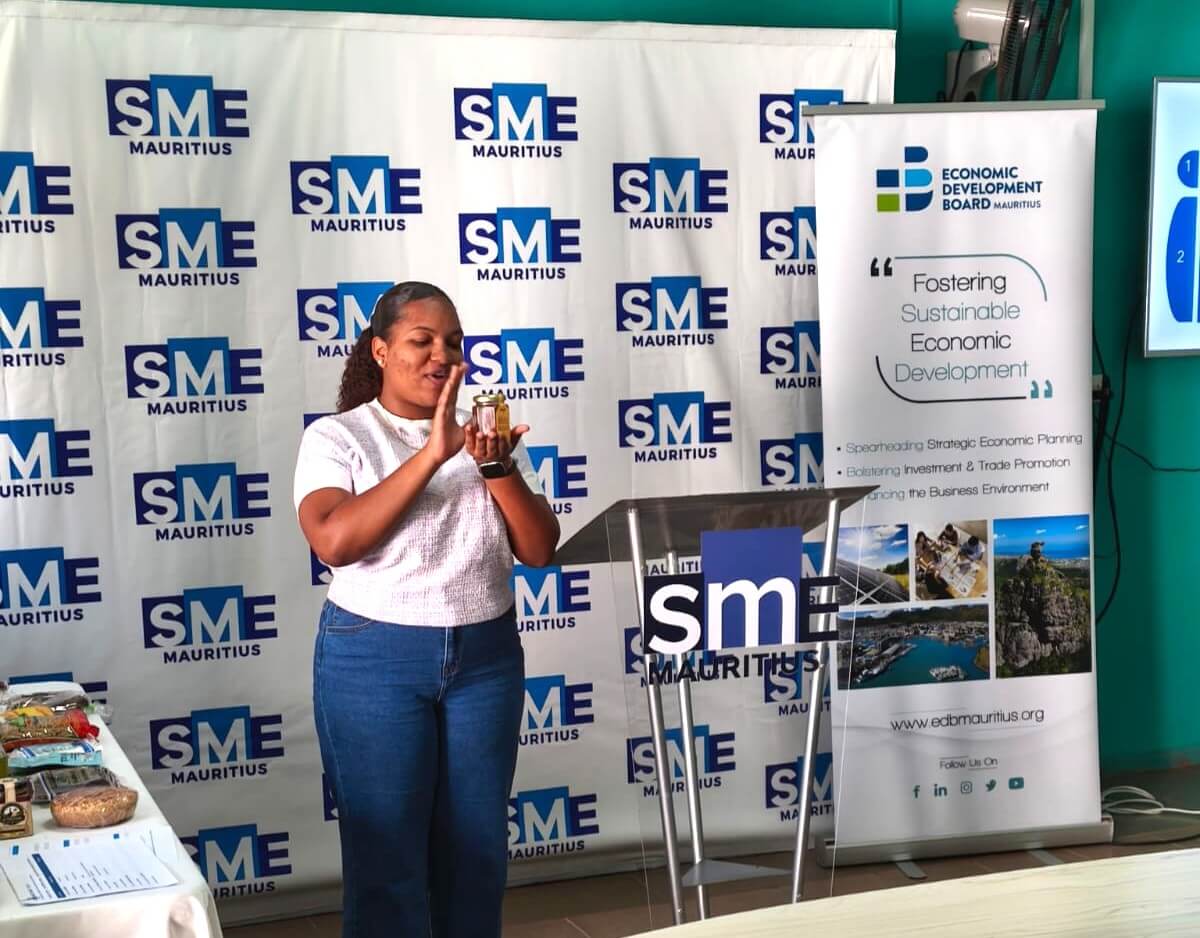
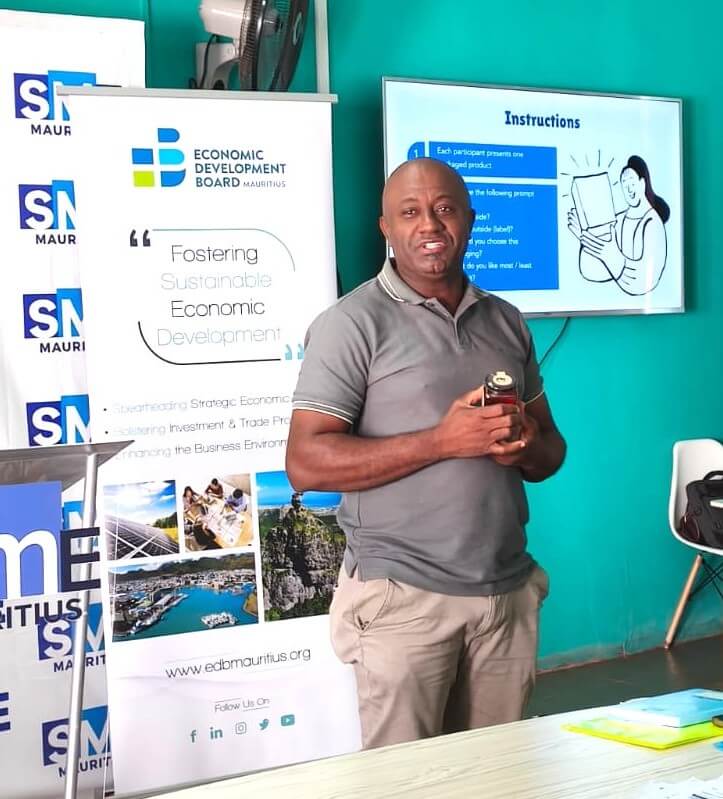
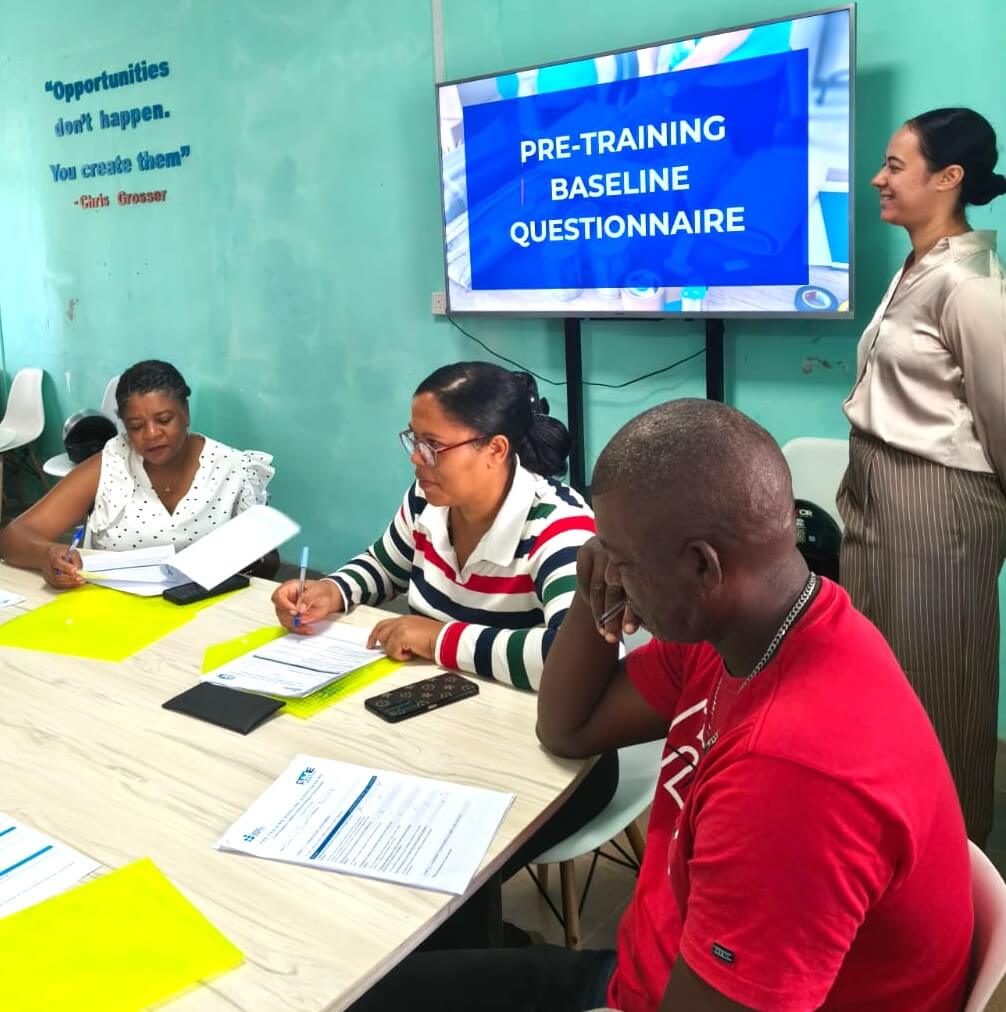
EDB Mauritius, in collaboration with SME Mauritius Ltd, organised and delivered the Food Packaging & Labelling Training for Rodriguan Food Enterprises from 1 to 5 June 2026. The three-day programme was held at SME Mauritius Ltd, Malabar, Rodrigues, and brought together over 20 selected food producers representing a cross-section of the island’s food sector.

The training covered food packaging science and material selection, the full mandatory labelling requirements under the Food Regulations 2024 and the Legal Metrology (Pre-Packed Commodities) Regulations 2006, packaging design principles and digital design tools, and labelling requirements for selected export markets. A specialist session on the EU Packaging and Packaging Waste Regulation (PPWR) was delivered by Expertise France. SME Mauritius Ltd presented the financial support schemes available to producers for packaging and labelling improvements.

Participants were provided with a suite of practical tools: a packaging diagnostic framework, a label compliance audit checklist aligned with the Food Regulations 2024, and a pre- and post-training self-assessment to measure knowledge progression across the programme.

On the final day of training, participants presented an improved packaging and labelling concept and committed to a specific improvement action to be implemented within 30 days.

This initiative is part of a broader effort by EDB Mauritius and SME Mauritius Ltd to strengthen the competitiveness and regulatory readiness of Rodriguan food enterprises in domestic and international markets.

Share this article

Building an AI-Driven Mauritius: Innovation, Talent and Trust » – Vivatech, 18 june

« Building an AI-Driven Mauritius: Innovation, Talent and Trust » – Vivatech, 18 june, 10h, moderated by Anne Baer | CEO, iKare Innovation

This session will explore how Mauritius has built a supportive startup ecosystem through collaboration among government, industry, academia, investors, incubators, and entrepreneurs. It will also highlight key enablers such as policy support, finance, skills development, and innovation support.

The panel will explore how AI can drive innovation, productivity, and economic growth in Mauritius. Discussions will focus on high-impact sectors, opportunities for startups, and priorities to build a competitive, skilled, and future-ready economy.

Special speakers :

  • Joel Rault, Ambassador Extraordinary and Plenipotentiary of the Republic of Mauritius to France, Government of Mauritius
  • Julie Linn Teigland, Global Vice Chair – Alliances & Ecosystems, EY
  • Jeffrey Thomas, Founder and Managing Partner, AI Advisory

Moderated by Anne Baer | CEO, iKare Innovation


Get Your 4-Day VivaTech Pass with an Exclusive 20% Discount via the link below:
Share this article

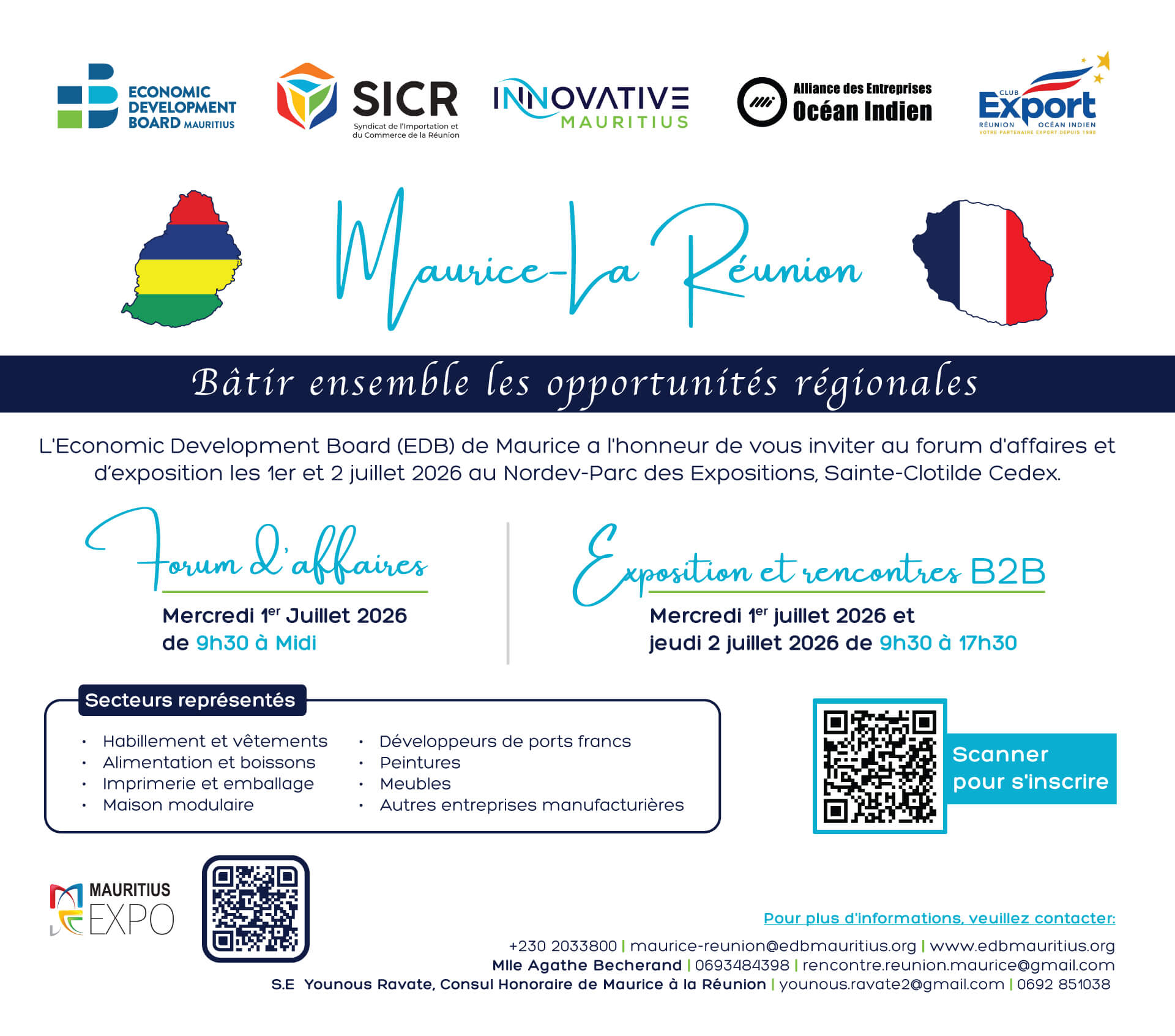
Maurice – La Réunion: Bâtir ensemble les opportunités régionales 1er et 2 juillet au Nordev Parc des Expositions

L’Economic Development Board (EDB) de Maurice, en collaboration avec les principales institutions économiques de La Réunion, organise un forum d’affaires et une exposition afin de promouvoir les investissements et le commerce entre nos deux îles sœurs. L’événement se tiendra les 1er et 2 juillet au Nordev Parc des Expositions.

Ce rendez-vous économique s’articulera autour d’un forum d’affaires axé sur les opportunités d’investissement entre les deux territoires et une exposition réunissant fabricants mauriciens, opérateurs économiques et développeurs de ports francs. Il vise à renforcer les partenariats régionaux, stimuler les exportations mauriciennes vers La Réunion et créer une véritable synergie entre les communautés d’affaires. Près de soixante exposants, issus de divers secteurs manufacturiers, parmi lesquels des PME et des femmes entrepreneures mauriciennes, seront présents au Nordev à la recherche de nouvelles opportunités d’affaires :

  • Habillement
  • Produits alimentaires et boissons
  • Imprimerie, papeterie et emballage
  • Produits d’entretien et d’hygiène
  • Peintures et revêtements
  • Mobilier en bois, en aluminium et décoration intérieure
  • Fabrication de maisons modulaires et de structures métalliques

Maurice et La Réunion partagent un marché dynamique et disposent d’un potentiel de croissance important, soutenu par une longue relation commerciale fondée sur la confiance mutuelle et la volonté de répondre aux besoins de leurs consommateurs.

Les jeunes entrepreneurs réunionnais et les porteurs de nouveaux projets auront l’opportunité de découvrir de nouvelles perspectives de collaboration avec les entreprises mauriciennes, ouvrant également la voie à une expansion vers les marchés africains. En effet, les entreprises réunionnaises peuvent tirer parti de la Zone de libre-échange continentale africaine (ZLECAf/AfCFTA) en s’associant à des partenaires mauriciens, notamment à travers la création de coentreprises, en utilisant Maurice comme plateforme d’export vers l’Afrique, et en bénéficiant des accords commerciaux ainsi que des infrastructures logistiques du pays, en particulier le port franc.

Le mercredi 1er juillet, la séance de l’après-midi comportera également une table ronde consacrée aux « Synergies économiques Maurice–La Réunion : co-développement, innovation et accès aux marchés régionaux ».

Ne manquez pas cette occasion unique de développer vos partenariats. Inscrivez-vous dès maintenant via le QR Code d’inscription mis sur l’annonce

Share this article

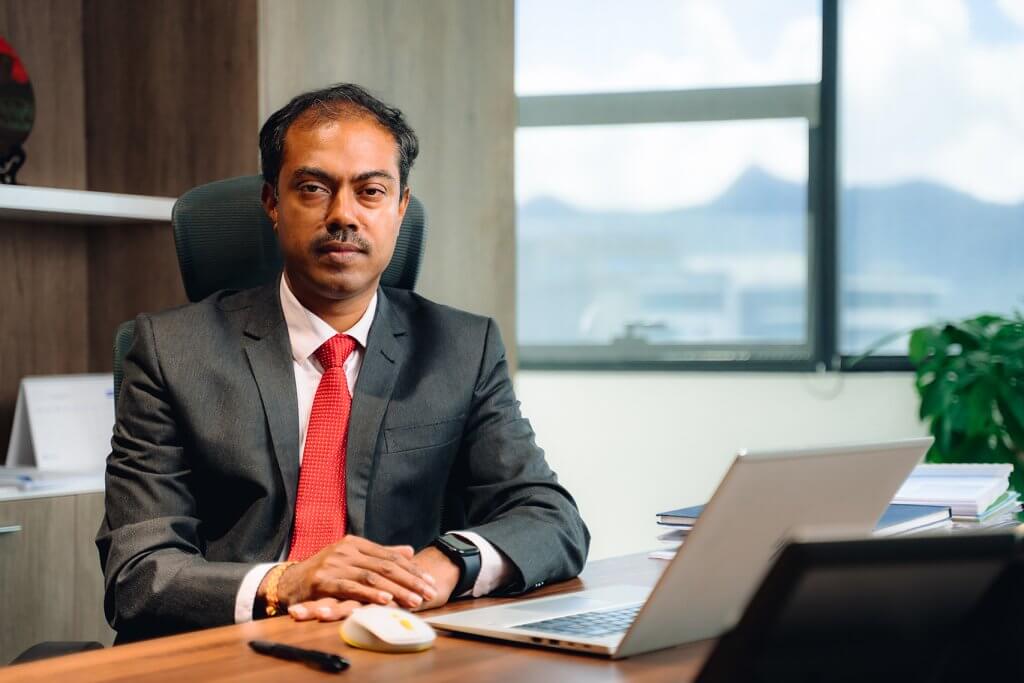
Maurice à Vivatech 2026 : Entretien avec le Directeur général adjoint de l’Economic Development Board (EDB)

En préparation à sa venue à Vivatech, l’Economic Development Board (EDB) de Maurice s’est entretenu avec Africa Mutandi. Entretien exclusif avec M. Sachin Mohabeer, Directeur général adjoint de l’Economic Development Board (EDB).

1. Quelle est votre vision de la contribution du numérique au développement socio économique de votre pays ?

Le numérique n’est plus simplement un secteur économique parmi d’autres ; il est devenu un accélérateur de développement pour l’ensemble de l’économie. Pour Maurice, c’est une formidable opportunité de créer davantage d’emplois qualifiés, d’améliorer la compétitivité de nos entreprises et d’attirer des investissements à forte valeur ajoutée qui contribuent directement à la croissance économique. Mais au-delà des chiffres, le numérique doit aussi améliorer le quotidien des citoyens, faciliter l’accès aux services, améliorer l’efficacité des services publics et favoriser l’inclusion. Le numérique doit également permettre aux PME d’accéder à de nouveaux marchés bien au-delà de nos frontières.

Notre ambition est de positionner Maurice comme une plateforme régionale d’innovation, capable de développer des talents, d’adopter les technologies émergentes et de créer un environnement de confiance où les entreprises peuvent innover et se développer durablement. À travers une approche fondée sur l’innovation, les compétences et la confiance numérique, nous souhaitons bâtir une économie résiliente, durable et tournée vers l’avenir.

2. Quelles sont votre stratégie et actions phares au regard de cette vision ?

Notre approche est avant tout pragmatique et repose sur plusieurs piliers complémentaires. Le premier consiste à développer un environnement favorable à l’innovation et à l’investissement technologique, en offrant un cadre réglementaire moderne et attractif. Le deuxième vise à renforcer les compétences numériques de notre population afin de répondre aux besoins des industries de demain. Enfin, nous accordons une attention particulière au développement de l’intelligence artificielle, des technologies vertes et des solutions à forte valeur ajoutée.

Nous soutenons activement les startups innovantes en facilitant leur accès aux réseaux internationaux et aux marchés étrangers. Nous accordons également une attention particulière à l’intelligence artificielle, qui représente aujourd’hui une véritable révolution économique. L’EDB soutient activement les startups mauriciennes en leur ouvrant des portes à l’international et en facilitant leur accès aux réseaux d’investisseurs et de partenaires. Notre présence à VivaTech, accompagné de huit startups mauriciennes, illustre concrètement cette stratégie de promotion de l’innovation mauricienne sur la scène internationale.

3. Qu’attendez-vous de votre participation à cette édition VivaTech 2026 ?

VivaTech est une occasion exceptionnelle de montrer ce que Maurice a à offrir dans le domaine de l’innovation et des technologies. Nous venons à Paris avec une volonté très claire : faire connaître notre écosystème, valoriser nos startups et développer de nouveaux partenariats. Nous souhaitons rencontrer des investisseurs, des entreprises technologiques, des accélérateurs internationaux, des centres de recherche, et des acteurs institutionnels qui partagent notre vision. Au-delà des opportunités commerciales, nous y voyons également une plateforme privilégiée d’échanges sur les meilleures pratiques en matière d’intelligence artificielle, de comprendre les nouvelles tendances et d’interagir avec certains des meilleurs innovateurs au monde. Nous voulons que les participants découvrent une Maurice moderne, innovante et pleinement engagée dans l’économie numérique de demain et de positionner Maurice comme un partenaire crédible et innovant au sein de l’économie numérique mondiale.

4. Quels acteurs composent votre délégation ?

Nous avons souhaité présenter une délégation qui reflète la diversité et le dynamisme de l’innovation mauricienne. Aux côtés de l’Economic Development Board, huit startups innovantes, sélectionnées pour leur potentiel de croissance et leur capacité à rayonner à l’international, participent à cette mission. Ces entreprises évoluent dans des secteurs stratégiques, allant de l’intelligence artificielle à la fintech, en passant par les technologies énergétiques, l’apprentissage numérique, les solutions de transformation des entreprises et les plateformes technologiques avancées. Parmi elles figurent notamment des sociétés développant des solutions d’IA appliquée, des plateformes de mise en relation de talents, des outils de gestion de la performance des entreprises ou encore des technologies liées à l’énergie intelligente. Chacune apporte une réponse concrète à des enjeux actuels et démontre la capacité de Maurice à développer des solutions innovantes ayant une portée internationale. Cette délégation représente également le talent, la créativité et l’ambition de notre nouvelle génération d’entrepreneurs.

5. Quels sont les temps forts de votre présence à Paris et au salon ?

Notre programme à Paris s’articule autour de plusieurs temps forts destinés à maximiser l’impact de la participation mauricienne. Tout d’abord, nous disposerons d’un pavillon national au sein de l’Africa Zone de VivaTech, offrant une visibilité privilégiée à nos startups auprès des visiteurs et investisseurs internationaux. Nous avons également programmé de nombreuses rencontres avec des investisseurs, des incubateurs, des entreprises technologiques, des fonds d’investissement et des partenaires potentiels.

Un moment particulièrement important sera notre panel intitulé « Building an AI Driven Mauritius – Innovation, Talent and Trust », qui permettra de partager notre vision du développement de l’intelligence artificielle à Maurice. Au-delà du salon lui-même, cette mission est aussi l’occasion de renforcer les liens entre les écosystèmes mauricien et français de l’innovation, de générer des collaborations concrètes et d’attirer des investissements.

Share this article

Vacancy – Post of Administrative Officer

The Economic Development Board (EDB) is the Government of Mauritius’ apex institution
responsible for:

  • Investment promotion, export promotion, and business facilitation;
  • Positioning Mauritius as an international financial centre and business hub;
  • Supporting structural reforms that improve the business environment.

Role Purpose

To provide administrative and operational support to ensure the efficient processing of applications, effective stakeholder communication, and proper monitoring of projects in line with EDB’s mandate.

Qualifications & Experience

  • University Diploma in Administration, Management, Business Studies, or related field.
  • University Degree in relevant field will be an advantage.
  • At least 3 years of experience in administrative roles.

Mode of Application

3Interested candidates are invited:

  • To download the requirements and responsibilities for the above-mentioned position below.
  • To submit their motivation letter together with a copy of their Curriculum Vitae to https://events.investmauritius.org:2053/recruitment/login.jsf at latest by 30 June 2026. Applications received after the closing date will not be considered. Only the best qualified candidates will be convened for interview.

EDB reserves the right not to make any appointment following this advertisement

Share this article

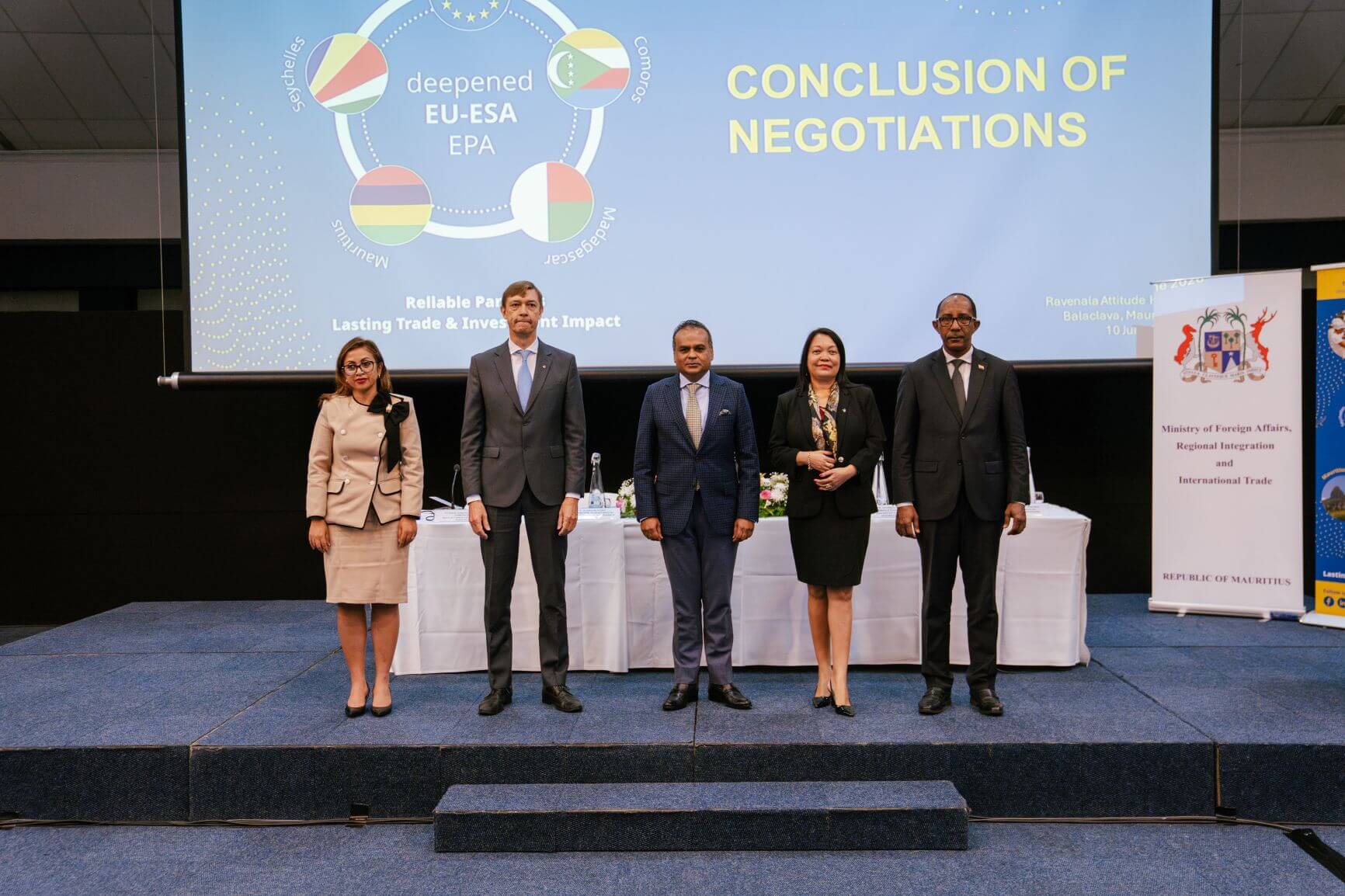
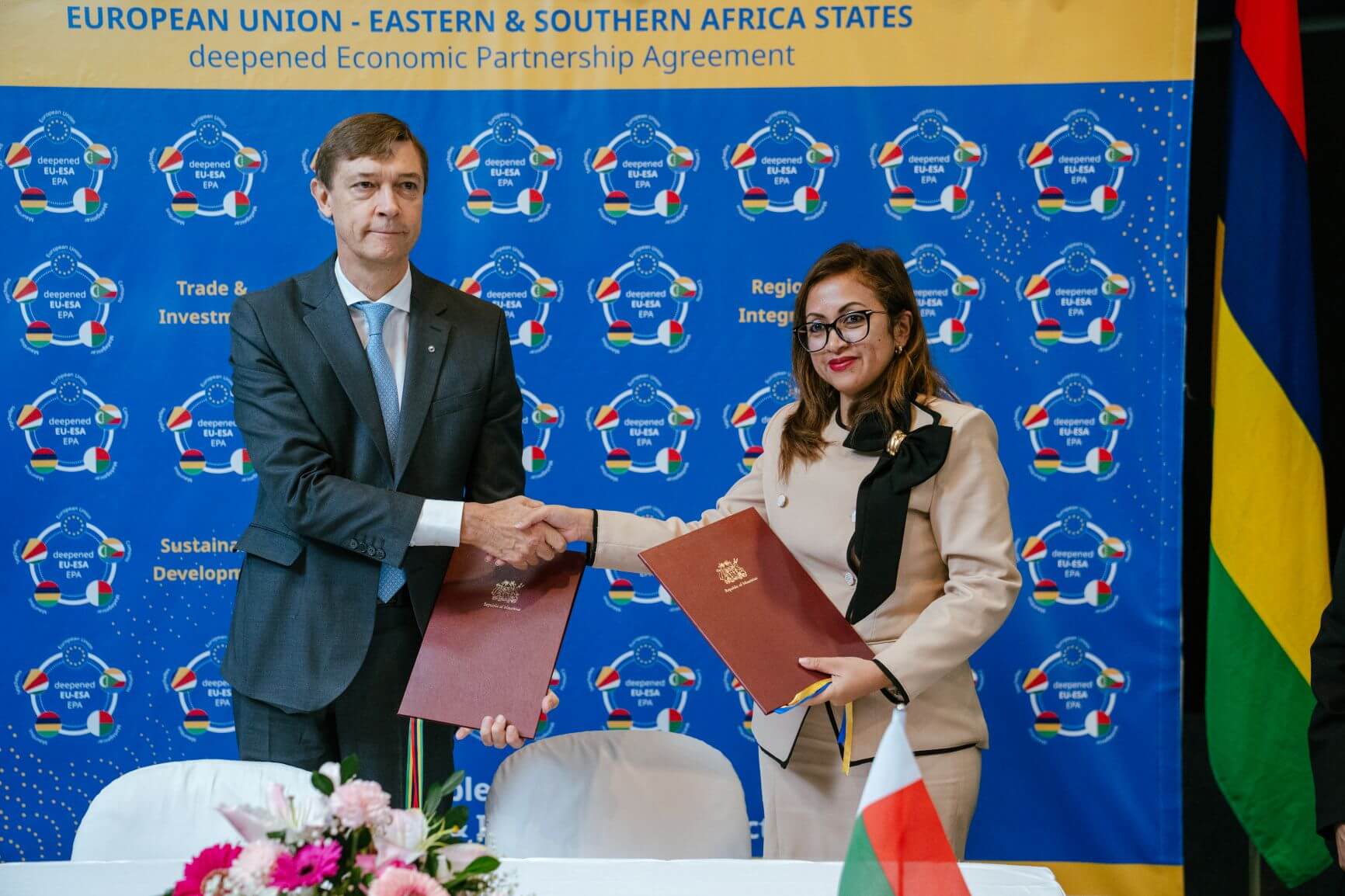
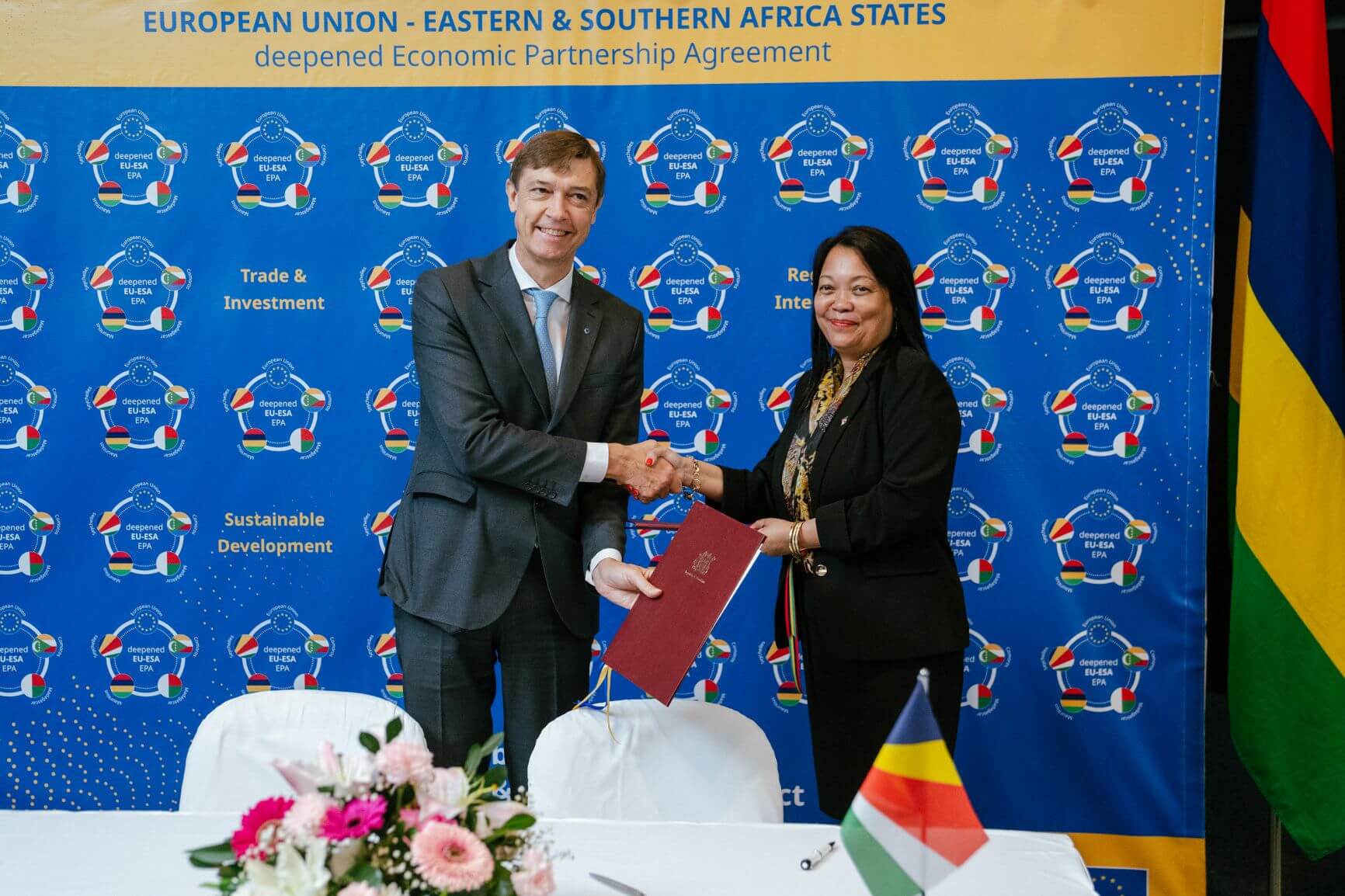
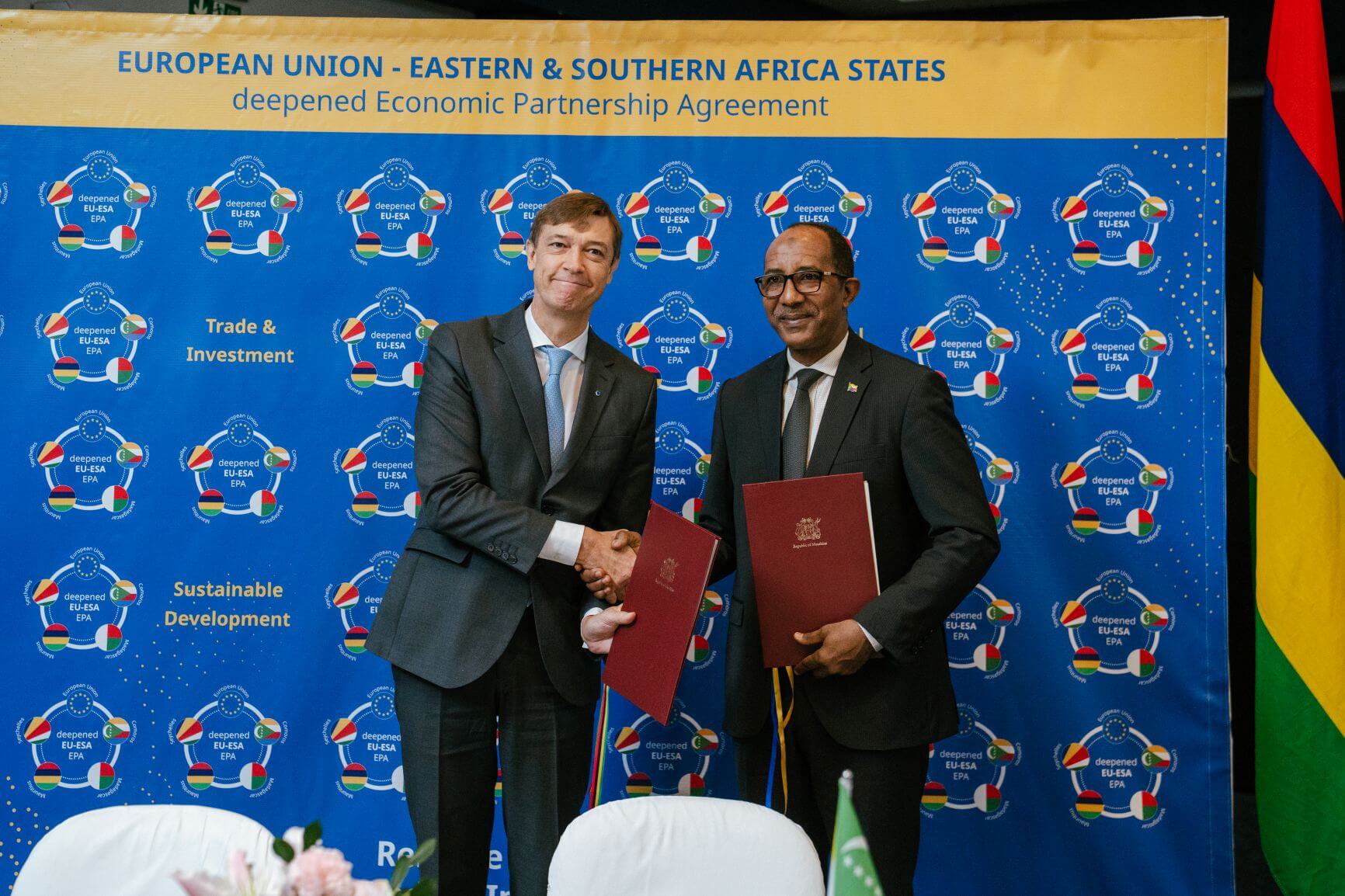
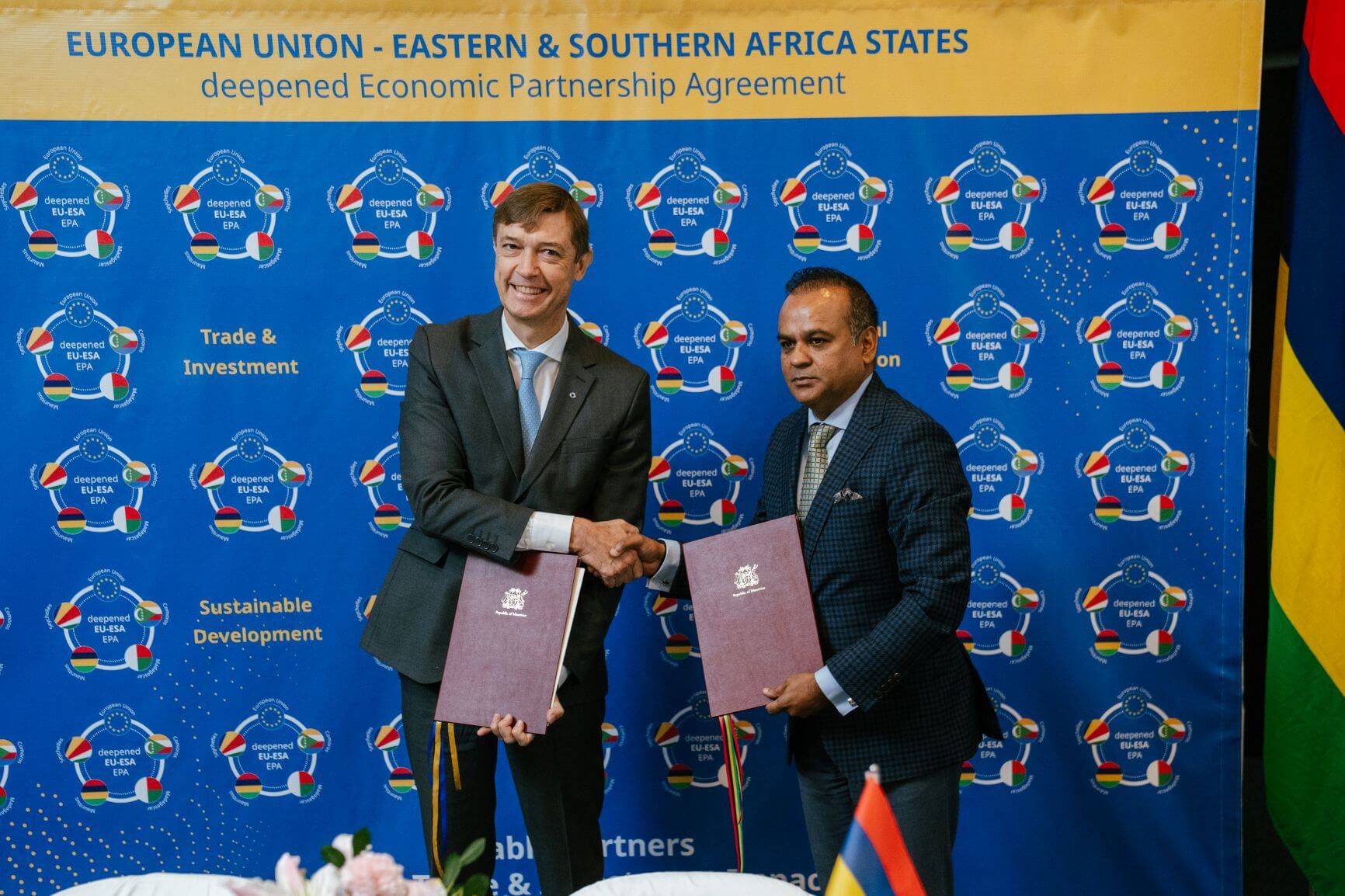
Joint Press Statement on the conclusion of the negotiations to deepen the EU-Eastern and Southern Africa Economic Partnership Agreement

On 10 June 2026, the European Union (EU) and four States of Eastern and Southern Africa (ESA4) – the Union of the Comoros, the Republic of Madagascar, the Republic of Mauritius and the Republic of Seychelles – announced the conclusion of the negotiations to deepen the existing EU-ESA Economic Partnership Agreement (EPA) into a modern and comprehensive free trade agreement (FTA).

The announcement was made jointly by the Minister of Economy, Industry, Investments, in charge of Economic Integration of the Union of the Comoros, Hon. Moustoifa Hassani Mohamed, Minister of Trade and Consumer Affairs of the Republic of Madagascar, Hon. Haingotiana Michela Angèle Andriamadison, Minister of Foreign Affairs, Regional Integration and International Trade of the Republic of Mauritius, Hon. Dhananjay Ramful, Minister for Transport, Ports and Civil Aviation, Hon. Veronique Laporte of the Republic of Seychelles, and the Commissioner for Trade and Economic Security; Interinstitutional Relations and Transparency of the European Commission, Mr. Maroš Šefčovič.

Both sides welcomed the conclusion of the negotiations as a significant milestone in the EU-ESA partnership. They underlined that the Agreement is comprehensive, forward-looking and mutually beneficial, and will strengthen trade relations, enhance supply chain resilience, and support sustainable development.

As a modern and comprehensive FTA, the first of its kind in Sub-Saharan Africa, it covers not only trade in goods but also services, investment, digital trade, and sectoral cooperation, while supporting local processing, industrial transformation and value addition in the ESA States.

Both sides underlined their shared objective of taking the necessary steps towards signature and entry into force of the Agreement as soon as possible, in line with their respective procedures. They also recalled that the Agreement will remain open to accession by other ESA States when they are ready to join.

Share this article

Warning on Fraudulent Facebook Accounts Impersonating EDB and SheTrades Mauritius Hub

The Economic Development Board (EDB) of Mauritius wishes to inform the public that it has identified the existence of fraudulent Facebook accounts falsely impersonating the EDB and the SheTrades Mauritius Hub.

These malicious accounts are unlawfully using the EDB logo, branding, and institutional identity, and are engaging with members of the public under false pretences. It has been brought to our attention that these accounts are being used to mislead individuals and solicit payments, thereby exposing the public to financial loss and fraud.

The EDB wishes to clarify that:

  • The only official Facebook page for the SheTrades Mauritius Hub is:
    SheTrades Mauritius Hub (Official)
  • Any other Facebook pages or accounts claiming to represent the EDB or SheTrades Mauritius Hub should be treated as fraudulent and unauthorised unless formally verified.

The EDB has formally escalated this matter to Meta (Facebook) and requested the immediate removal of all impersonating accounts, as well as the verification of the legitimate page to prevent further abuse.

Public Advisory

Members of the public are strongly advised to:

  • Exercise extreme caution when interacting with social media accounts claiming affiliation with the EDB or SheTrades Mauritius Hub.
  • Refrain from sharing personal, financial, or sensitive information with unverified sources.
  • Avoid making any payments or financial transactions based on communications received via such accounts.

Reporting of Fraud

Any person who has been contacted, misled, or has suffered financial loss as a result of these fraudulent activities is strongly urged to report the matter immediately to:

  • The Mauritius Police Force, and
  • Relevant enforcement authorities, including cybercrime units.

Prompt reporting is essential to facilitate investigations and prevent further harm to others.

The EDB remains committed to safeguarding the integrity of its programmes and protecting the public from fraudulent and deceptive practices.

DISCLAIMER

The Economic Development Board (EDB) of Mauritius hereby disclaims any responsibility or liability for any loss, damage, or prejudice suffered by any individual or entity as a result of interactions, communications, or transactions conducted with unauthorised and fraudulent social media accounts impersonating the EDB or its programmes, including the SheTrades Mauritius Hub.

The EDB confirms that:

  • It does not conduct financial transactions, request payments, or solicit sensitive personal information through unverified or unofficial social media accounts.
  • Any such requests made through impersonating accounts are fraudulent and not authorised by the EDB.

The EDB shall not be held responsible for any direct or indirect consequences arising from reliance on information provided by such unauthorised sources.

The public is advised to rely solely on official EDB communication channels and verified accounts for accurate and legitimate information.

Share this article

EDB Board Approves Strategic Measures to Strengthen Investment, Exports and Business Facilitation

The Board of the Economic Development Board (EDB), at its meeting held on Saturday, 23 May 2026, endorsed a series of measures to strengthen Mauritius’ investment climate, support export growth, enhance business facilitation and advance targeted policy reform. The decisions underscore the EDB’s continued commitment to enabling high-value investment, improving the ease of doing business and supporting strategic sectors of the economy.

1. Premium Investor Certificates Issued

Further to the recommendation of the Board and approval by the Ministry of Finance in accordance with the EDB Act, Premium Investor Certificates are being issued to the following companies:

  • AV Glass Industries Ltd – for the setting up of a high-tech, fully automated glass processing unit at Trianon.
  • Medivations Ltd – for the development of a new factory in Moka Smart City to support the production of Class II medical devices.
  • La Vanille Nature Park Ltd – for an expansion project aimed at enhancing and diversifying its nature-based tourism offering, including the establishment of two new museums.

2. Investment Certificate Approved for Mushroom Production

The Board approved the issue of an investment certificate for a project involving the production of white button mushrooms for local markets and export in a climate-controlled facility.

3. Recommendation for a Labour Market Workshop

The Board recommended the organisation of a workshop on labour-related issues to address key challenges such as labour shortages, skills mismatch, sectoral manpower requirements, labour productivity and workforce turnover.

4. Policy Recommendation on Residential Care Homes

As part of the EDB’s policy advocacy mandate, the Board recommended proposing amendments to the Residential Care Home Act 2003 and/or the Residential Care Home Regulations 2005 to provide for the issuance of a No Objection in Principle by the relevant authority. This would serve as a preliminary, non-binding endorsement for projects that are aligned with prevailing policy and regulatory considerations.

5. Golden Visa Guidelines Finalised

The Board took note that the guidelines for the Golden Visa have been finalised and will be published on the EDB website.
The Board also noted that the Fast-Track Concierge Service (FTCS) at EDB will provide end-to-end support to investors and High Net Worth Individuals, including assistance with relocation, investment opportunities, family settlement and related facilitation services.

6. Registration of ‘Mauritius IFC’ Wordmark and Logo

The Board took note of the application to register the “Mauritius IFC” wordmark and logo as the exclusive intellectual property of the EDB under the Industrial Property Act 2019, with a view to strengthening legal protection of the brand locally and internationally.

7. Participation in Africa Down Under Conference 2026

The EDB, together with private sector representatives, will participate in the Africa Down Under (ADU) Conference to be held in Perth, Australia, from 2 to 4 September 2026. The mission will serve to position Mauritius as a credible platform for investment into Africa and to deepen engagement with Australian mining, exploration and energy operators active on the continent. A dedicated networking event will also be organised with the support of the High Commissioner of Mauritius to Australia, H.E. Mrs. Seeneevassen.

8. Participation in SIAL Exhibition

The EDB will participate in SIAL (Salon International de l’Alimentation), together with the private sector, to promote Mauritian exports in food and related products. A directory of exporters and products will be prepared and showcased alongside the EDB virtual platform (https://mauritiusexpo.com/exhibition), and exporters will be invited to register with the EDB to promote their products.

9. Launch of BOAM Platform

The EDB is launching the BOAM (Business Obstacle and Alert Mechanism), an online platform designed to provide business operators with a structured channel to report bottlenecks relating to licences, permits, authorisations and other regulatory clearances. The platform will enhance traceability, reporting and follow-up in support of improved business facilitation.

Share this article

EDB CEO meets Austrade Trade and Investment Commissioner for Africa to strengthen Mauritius–Australia relations

On 25 May 2026, the Chief Executive Officer of the Economic Development Board (EDB), Mr. Mahen Kundasamy, had the pleasure of welcoming Ms. Jemima Schilling, Trade and Investment Commissioner for Africa at the Australian Trade and Investment Commission (Austrade), accompanied by Her Excellency Ms. Kate Chamley, High Commissioner of Australia to Mauritius, for discussions aimed at strengthening bilateral engagement and exploring avenues for enhanced cooperation between Mauritius and Australia.

The meeting provided a valuable opportunity to explore potential avenues for enhanced cooperation between Mauritius and Australia ahead of EDB’s participation in the Africa Down Under Conference scheduled for September 2026 in Perth.

Discussions encompassed a broad range of strategic areas of mutual interest, including:

  1. Strengthen the visibility of Mauritius in the Australian market and position the country as a strategic gateway for investment, trade, work and live opportunities.

  2. Enhancing awareness among Australian investors of the priority sectors in Mauritius that offer strong potential for investment, innovation, and technical collaboration particularly in blue economy, renewable energy, healthcare, education and agro-industrial sectors.

  3. Promoting Mauritius as an International Financial Centre (IFC) of choice for Australian mining companies seeking efficient and credible platforms for structuring their investments into Africa.

  4. Australian buyers to explore opportunities of utilising the Mauritius Freeport as a strategic platform for the duty-free export of goods to African and European markets, thus leveraging Mauritius’ extensive network of preferential trade agreements, world-class logistics facilities, and seamless access to key regional markets.

Her Excellency reiterated the strong and longstanding relationship between the two countries, underscoring the establishment of Curtin University in Mauritius as a key milestone in this partnership and few mining companies using Mauritius for their cross-border investment in Africa.

The discussion also explored the potential of a Double Tax Avoidance Agreement between the two countries for the Promotion of cross-border investment, increased in trade and economic cooperation, enhanced in financial and investment flows and the elimination of double taxation which will benefit both countries.

 The discussions further examined potential areas of cooperation in the agro-industrial sector, with a focus on leveraging advanced technologies to enhance food security. This includes the introduction of mechanised harvesting methods, the promotion of smart agricultural practices, and the development of targeted training programmes to upskill farmers.

The CEO of the EDB expressed his sincere appreciation for the visit of the High Commissioner of Australia and Trade and Investment Commissioner for Africa and reiterated his strong commitment to maintaining close and constructive collaboration with Australia. He emphasised the importance of building on these promising discussions and translating them into concrete and impactful actions. This collaborative approach aims to unlock new opportunities for trade and investment.

Share this article

Interview du CEO de l’edb sur l’économie bleu

Comment l’Economic Development Board (EDB) définit-il l’économie bleue dans le contexte mauricien, et en quoi ce pilier s’inscrit-il dans la stratégie globale de diversification économique du pays ?

L’économie bleue consti-tue, pour Maurice, bien plus qu’un secteur : c’est un levier structurel de transformation économique. Elle repose sur la valorisation durable des ressources marines et côtières, dans une logique inté-grée et à forte valeur ajoutée. Avec une zone économique exclusive de plus de 2,2 millions de km², Maurice dispose d’un actif straté-gique encore sous-exploité.

Dans ce contexte, l’économie bleue s’inscrit pleinement dans la stratégie nationale de diversification. Elle vise à réduire la dépendance aux secteurs traditionnels, tout en créant de nouveaux moteurs de croissance dans des domaines tels que l’aquaculture offshore, les énergies marines renouvelables, les services maritimes et la finance bleue.

Quels sont les atouts spécifiques de Maurice pour se positionner comme un hub régional de l’économie bleue dans l’océan Indien ?

Maurice dispose tout d’abord de cette vaste zone économique exclusive (ZEE), constituant un levier stratégique majeur. À cela s’ajoutent une stabilité politique, sociale et économique reconnue ainsi qu’un cadre légal et réglementaire moderne, particulièrement attractif pour les investisseurs.

Par ailleurs, Maurice s’appuie sur un secteur financier solide et bien régulé, capable de soutenir des mécanismes de financement innovants. Sa position géostratégique, au croisement des routes commerciales maritimes reliant l’Asie à l’Afrique et à proximité des principales zones de pêche au thon, constitue également un atout majeur.

Enfin, la proximité avec le continent africain renforce son rôle de plateforme régionale, tandis que l’accès préférentiel au marché européen, sans droits de douane ni quotas, offre des perspectives commerciales particulièrement avantageuses.

À ces fondamentaux s’ajoute un levier différenciant majeur : le port franc de Maurice, véritable plateforme logistique intégrée à forte valeur ajoutée. Celui-ci permet aux opérateurs de mener, en régime hors taxe, un large éventail d’activités, notamment l’entreposage et le stockage, l’étiquetage et le reconditionnement, le tri et le calibrage, la transformation légère, ainsi que l’assemblage et la réexportation.

Cet écosystème renforce la capacité de Maurice à capter et redistribuer des flux commerciaux régionaux, en particulier dans les filières liées aux produits de la mer et aux activités maritimes.

Quel rôle occupe l’EDB dans la structuration, la promotion et l’accélération de ce secteur, tant au niveau local qu’international ?

Le rôle de l’EDB a évolué, passant d’un simple promoteur d’investissements à un véritable architecte d’écosystèmes économiques, capable de connecter investissements, expertises et opportunités à l’échelle de l’océan Indien et du continent africain. Notre approche repose sur trois priorités : faciliter, connecter et catalyser. Il s’agit à la fois de créer un cadre propice à l’investissement, d’aligner les acteurs, et d’orienter les flux vers les segments à plus fort potentiel.

Concrètement, nous accompagnons le renforcement des chaînes de valeur existantes, tout en accélérant le développement de nouveaux segments, notamment l’aquaculture, le bunkering (soutage – NDLR) et les services maritimes. Parallèlement, nous soutenons l’émergence d’activités à plus forte valeur ajoutée, telles que les services techniques maritimes, les chantiers navals et la recherche appliquée. Au-delà des projets individuels, notre priorité est de structurer des filières cohérentes, capables d’atteindre une masse critique et de s’intégrer dans les chaînes de valeur régionales et globales.

Quelle est aujourd’hui la contribution de l’économie bleue au PIB de Maurice, et quelles sont les perspectives d’évolution à moyen et long terme ?

L’économie bleue représente un pilier déjà significatif de l’économie mauricienne, avec une contribution estimée à 10,3 % du PIB en incluant les effets directs, indirects et induits à travers les différentes chaînes de valeur. Cette contribution reflète son caractère transversal, couvrant des activités allant de la pêche et la transformation aux services portuaires et au bunkering.
À titre d’illustration :

  • Les exportations de poisson ont atteint 15 milliards de roupies (288 millions d’euros – NDLR) en 2025 ;
  • Les ventes du bunkering se sont élevées à 32 milliards de roupies (615 millions d’euros – NDLR), avec un volume dépassant 1 million de tonnes métriques en 2025 ;
  • Le secteur génère environ 10 000 emplois directs, hors tourisme côtier.

Au-delà de ces indicateurs, l’enjeu principal réside dans le passage à l’échelle et la montée en valeur ajoutée.

L’ambition, telle qu’exprimée par le ministère de tutelle, est de porter cette contribution à 20 % du PIB d’ici 2035, en s’appuyant sur une montée en valeur ajoutée, une meilleure intégration des chaînes de valeur et une accélération des investissements.
À terme, l’économie océanique est appelée à devenir un moteur structurant de croissance, contribuant à la fois à la diversification économique, à la sécurité alimentaire et à la résilience du pays.

Quel sont les créneaux identifiés comme les plus porteurs, et pourquoi ?

Nous observons une dynamique en deux temps. D’une part, les secteurs établis – pêche, transformation du thon, activités portuaires – offrent encore un potentiel important via la montée en valeur ajoutée et l’optimisation des chaînes logistiques. D’autre part, les secteurs émergents constituent le véritable relais de croissance : l’aquaculture offshore durable, les énergies marines renouvelables, les services et la logistique maritimes et le bunkering.

Enfin, un troisième axe, en forte montée en puissance, concerne les activités à forte intensité de services et de connaissance, notamment les chantiers navals et services de maintenance, la recherche et développement appliquée aux ressources marines et les services techniques et d’ingénierie maritime. Ces segments répondent à des tendances globales fortes : sécurité alimentaire, transition énergétique et intensification du commerce maritime.

Les Assises de l’Océan jouent ici un rôle structurant en permettant de définir un plan directeur cohérent autour des priorités nationales.

Maurice a-t-elle déjà réussi à attirer des investissements significatifs dans l’économie océanique ? Pouvez-vous citer quelques projets ou types d’investisseurs ciblés ?

Une dynamique d’investissement est clairement engagée. Des avancées concrètes ont été réalisées dans l’aquaculture, l’expansion des fermes marines, la modernisation de la flotte de pêche – avec environ 2 milliards de roupies (38 millions d’euros – NDLR) d’investissements ainsi que dans le développement du bunkering, avec l’arrivée de nouveaux opérateurs.

Par ailleurs, plusieurs projets structurants sont en cours, notamment dans le stockage de produits pétroliers et les infrastructures associées. Ces initiatives confirment l’attractivité croissante du secteur. L’enjeu désormais est de passer à une phase d’accélération, en attirant davantage d’acteurs internationaux et en développant des projets de plus grande envergure.

Share this article

Recrutement – Consultant Régional Europe

L’Economic Development Board (EDB) est l’institution gouvernementale mauricienne chargée de :

  • la promotion des investissements et des exportations, et la facilitation des affaires ;
  • le positionnement de Maurice comme centre financier international et pôle d’affaires ;
  • le soutien aux réformes structurelles visant à améliorer l’environnement des affaires.

Object Principal du Poste

Le Consultant Régional – Europe sera appelé à développer et à renforcer les relations avec les principaux acteurs du monde des affaires. Il accompagnera les investisseurs ainsi que les entreprises à chaque étape de leurs projets d’investissement et d’exportation. Par une approche proactive, une analyse approfondie des marchés et des actions de promotion ciblées, le titulaire contribuera à attirer des projets d’investissement à forte valeur ajoutée et à dynamiser la croissance des exportations.

Profil et Competences requis

  • Titulaire dúne Licence universitaire ou qualification équivalente avec au moins dix (10) années d’expérience professionnelle pertinente
  • Maîtrise de l’anglais et du français
  • Excellentes compétences en gestion des parties prenantes et en réseautage
  • Excellentes aptitudes en communication et en présentation
  • Sensibilité et compréhension interculturelles
  • Approche orientée vers les résultats

Modalités de candidature

Les candidats intéressés sont invités à :

Les candidatures reçues après la date limite ne seront pas prises en compte. Seuls les candidats les plus qualifiés seront convoqués à un entretien.

L’EDB se réserve le droit de ne procéder à aucun recrutement suite à cette annonce.

Share this article

Vacancy – Post of Director Real Estate & Hospitality

The Economic Development Board (EDB) is the Government of Mauritius’ apex institution
responsible for:

  • Investment promotion, export promotion, and business facilitation;
  • Positioning Mauritius as an international financial centre and business hub;
  • Supporting structural reforms that improve the business environment.

Position Overview

The Director – Real Estate & Hospitality provides strategic leadership and direction for the Real Estate & Hospitality Cluster, driving investment promotion, facilitating high-value property developments, and positioning Mauritius as a premier destination for real estate investment in line with national economic objectives.

Qualifications & Experience

  • Master’s degree in related field & at least 12 years’ experience including 8 years at management level.
  • Proven experience in real estate development, investment promotion, or related sectors.
  • Strong understanding of international property markets and investment trends.
  • Experience in stakeholder engagement at senior levels.

Mode of Application

Interested candidates are invited:

  • To download the requirements and responsibilities for the above-mentioned position below.
  • To submit their motivation letter together with a copy of their Curriculum Vitae to https://events.investmauritius.org:2053/recruitment/login.jsf at latest by 03 June 2026. Applications received after the closing date will not be considered. Only the best qualified candidates will be convened for interview.

EDB reserves the right not to make any appointment following this advertisement

Share this article

Vacancy – Post of Director Financial Services

The Economic Development Board (EDB) is the Government of Mauritius’ apex institution
responsible for:

  • Investment promotion, export promotion, and business facilitation;
  • Positioning Mauritius as an international financial centre and business hub;
  • Supporting structural reforms that improve the business environment.

Position Overview

The Director – Financial Services is responsible for leading and developing Mauritius’ financial services investment ecosystem, with a strong focus on attracting, facilitating, and retaining investment in the sector. The role supports EDB’s mandate to position Mauritius as a competitive international financial centre.

Qualifications & Experience

  • Master’s degree in related field & at least 12 years’ experience including 8 years at management level.
  • Experience and senior-level exposure in financial services sector, investment promotion, regulatory bodies, or international business will be an advantage.

Mode of Application

Interested candidates are invited:

  • To download the requirements and responsibilities for the above-mentioned position below.
  • To submit their motivation letter together with a copy of their Curriculum Vitae to https://events.investmauritius.org:2053/recruitment/login.jsf at latest by 27 May 2026. Applications received after the closing date will not be considered. Only the best qualified candidates will be convened for interview.

EDB reserves the right not to make any appointment following this advertisement

Share this article

Deadline Extension – Invitation for Proposals – Appointment of a Consultant for the Preparation of the Economic Development Board (EDB), Mauritius Strategic Plan (2027-2029)Relaunched

Procurement Ref. No: TNR-0022
The deadline for the submission of bids has been extended by two (2) weeks.
The new closing date is now Wednesday, 06 May 2026 at 15 00 hours

  1. The Economic Development Board (EDB) is inviting bids from eligible consultants for the Preparation of EDB Strategic Plan (2027-2029)(Relaunched) as more fully described in the bidding documents.
  2. Bidding documents may be downloaded from the Public Procurement Portal: https://publicprocurement.govmu.org/publicprocurement or downloaded on the website of EDB: https://edbmauritius.org/wp-content/uploads/2026/04/TNR0022_bd_strategic_consltant.pdf
  3. Bids must be deposited in the Tender Box situated at the Ground floor, 7, Exchange Square, Wall Street, Ebene, 72201 by latest Wednesday 06 May 2026 at 15 00 hours. Electronic bidding shall not be permitted. Late bids will be rejected.
  4. Bids will be opened in the presence of bidders’ representatives who may wish to attend in person at the above address, on Wednesday 06 May 2026 at 15 05 hours.
  5. EDB reserves the right to accept or reject any bid and to annul the bidding process and reject all bids at any time prior to award of the Contract, without thereby incurring any liability to any Bidder.

21 April 2026

Share this article

Promouvoir l’exportation régionale à travers une mission ciblée en Afrique de l’Est

Suite au succès de sa mission de promotion du commerce et de l’investissement en Afrique du Sud en janvier 2026, ayant réuni une vingtaine de manufacturiers mauriciens, l’Economic Development Board (EDB) poursuit son engagement sur le continent africain avec l’organisation d’une nouvelle mission de promotion commerciale en Afrique de l’Est.

Prévue du 20 au 28 avril 2026, cette mission couvrira trois marchés stratégiques, à savoir la Tanzanie, le Rwanda et le Kenya. Elle s’inscrit dans la volonté de renforcer les relations économiques et commerciales entre Maurice et les économies à fort potentiel de la région.

L’initiative réunira une vingtaine d’opérateurs mauriciens issus de secteurs clés, notamment le textile et l’habillement, l’agroalimentaire, l’ingénierie légère et l’ameublement. Elle facilitera des rencontres d’affaires ciblées avec des acteurs majeurs d’Afrique de l’Est, incluant des acheteurs, importateurs, distributeurs et partenaires stratégiques, dans le cadre de sessions de rencontres B2B et d’échanges professionnels.

Dans un contexte marqué par une intégration économique croissante sur le continent africain, cette mission offre aux entreprises participantes l’opportunité de diversifier leurs marchés d’exportation et de tirer pleinement parti des accords commerciaux préférentiels, notamment la Southern African Development Community (SADC), le Common Market for Eastern and Southern Africa (COMESA) et la African Continental Free Trade Area (AfCFTA).

À travers cette démarche, l’EDB réaffirme son rôle de facilitateur du développement économique et son engagement à positionner Maurice comme une plateforme régionale d’exportation compétitive vers l’Afrique.

Pour toute information complémentaire sur cette mission, veuillez contacter M. Geerish Bucktowonsing, Directeur de la promotion des exportations et de l’accès au marché à l’EDB, à l’adresse suivante : geerish.bucktowonsing@edbmauritius.org.

Share this article

Vacancy – Post of Receptionists

The Economic Development Board (EDB) is the Government of Mauritius’ apex institution
responsible for:

  • Investment promotion, export promotion, and business facilitation;
  • Positioning Mauritius as an international financial centre and business hub;
  • Supporting structural reforms that improve the business environment.

Role Purpose

The receptionist is responsible for managing the front desk, receiving and assisting visitors, handling incoming calls and correspondence, and providing administrative support to ensure the smooth operation of the reception area.

The receptionist serves as the first point of contact for visitors and is expected to maintain a professional and welcoming environment at all times.

Qualifications & Experience

  • School Certificate and Higher School Certificate or equivalent qualifications acceptable to the Board.
  • At least three (3) years relevant working experience.

Mode of Application

Interested candidates are invited:

  • To download the requirements and responsibilities for the above-mentioned position below.
  • To submit their motivation letter together with a copy of their Curriculum Vitae to https://events.investmauritius.org:2053/recruitment/login.jsf at latest by Monday 04 May 2026. Applications received after the closing date will not be considered. Only the best qualified candidates will be convened for interview.

EDB reserves the right not to make any appointment following this advertisemen

Share this article

Vacancy – Post of Director Digital Transformation & NELS

The Economic Development Board (EDB) is the Government of Mauritius’ apex institution
responsible for:

  • Investment promotion, export promotion, and business facilitation;
  • Positioning Mauritius as an international financial centre and business hub;
  • Supporting structural reforms that improve the business environment.

Position Overview

The Director – Digital Transformation & NELS will be responsible for leading the organisation’s digital strategy, IT governance, enterprise systems, cybersecurity, and continuous enhancement of the National Electronic Licensing System (NELS).

This role ensures that technology infrastructure, digital platforms, and data systems effectively support EDB’s strategic objectives, operational efficiency, regulatory compliance, and service excellence.

Qualifications & Experience

  • Master’s degree in related field & at least 12 years’ experience in relevant field of work, including 8 years at Management level.

  • Experience in government institutions, IPA, IFC, multinationals will be an advantage.

Mode of Application

Interested candidates are invited:

  • To download the requirements and responsibilities for the above-mentioned position below.

  • To submit their motivation letter together with a copy of their Curriculum Vitae to https://events.investmauritius.org:2053/recruitment/login.jsf at latest by 29 April 2026. Applications received after the closing date will not be considered. Only the best qualified candidates will be convened for interview.

EDB reserves the right not to make any appointment following this advertisement

Share this article

Webinaire agroalimentaire du 24 mars 2026 : l’EDB et SME Mauritius facilitent l’accès des entrepreneurs rodriguais aux réseaux régionaux

Le mardi 24 mars 2026, l’Economic Development Board (EDB) et SME Mauritius Ltd ont facilité la participation d’une quinzaine d’entrepreneurs rodriguais du secteur agroalimentaire au webinaire intitulé « Produire, transformer et innover en agroalimentaire : comment créer plus de valeur locale ? », organisé par Qualitropic et l’Association des Manufacturiers Mauriciens (AMM) dans le cadre du projet BIOECOI, financé par l’Union européenne et la Région Réunion à travers le programme INTERREG VI Océan Indien.

UNE INITIATIVE CONJOINTE EDB – SME MAURITIUS

L’EDB et SME Mauritius ont souhaité offrir aux entrepreneurs rodriguais du secteur agroalimentaire un accès direct à cet évènement régional, en les accueillant dans les locaux de SME Mauritius à Malabar. L’objectif : permettre aux PME de Rodrigues de bénéficier des mêmes ressources, expertises et connexions que leurs homologues de la région, sans contrainte de déplacement.

EN AVANT-PROGRAMME : PRÉSENTATION DES DISPOSITIFS D’APPUI AUX PME

Avant le début du webinaire, les représentants de l’EDB et de SME Mauritius ont présenté aux participants l’éventail des services et programmes d’appui dont peuvent bénéficier les PME agroalimentaires. Des programmes actuellement en cours de développement ont également été mentionnés, témoignant de la volonté des deux institutions d’élargir continuellement l’offre d’accompagnement proposée aux entreprises de l’île.

LE WEBINAIRE : INNOVER POUR VALORISER LES PRODUITS LOCAUX

Organisé dans un format interactif mêlant échanges, sondages et travaux en groupe, le webinaire a proposé aux participants d’explorer comment valoriser les ressources locales, innover et créer des produits capables de se distinguer des importations, dans un contexte où le secteur agroalimentaire doit renforcer sa compétitivité et sa capacité d’innovation.

La session a débuté par une mise en perspective du contexte agroalimentaire mauricien, s’appuyant sur des chiffres clés du secteur. Les intervenants de Qualitropic ont ensuite partagé des exemples concrets de projets innovants menés en Europe (valorisation de co-produits, développement de produits sains, nouvelles techniques de transformation), offrant de nouvelles perspectives sur les possibilités d’innovation dans la filière agroalimentaire locale. La session s’est conclue par un atelier collaboratif centré sur l’identification de pistes d’innovation et de stratégies de différenciation des produits locaux.

La journée a également été l’occasion pour les entrepreneurs rodriguais d’échanger entre eux, de partager leurs expériences et d’identifier des synergies potentielles au sein de la filière agroalimentaire locale.

UNE PREMIÈRE ÉTAPE DANS UN PARTENARIAT DURABLE

Cette initiative illustre la volonté commune de l’EDB et de SME Mauritius de renforcer leur collaboration au service des PME rodriguaises, en facilitant leur intégration dans les dynamiques économiques régionales. Les deux institutions entendent poursuivre et développer ce partenariat à l’avenir, à travers de nouvelles actions de formation, d’accompagnement et de mise en réseau à destination des entrepreneurs de l’île.

Share this article

Central Board of Direct Taxes Clarifies General Anti-Avoidance Rules Provisions

On the 31st of March 2026, the Central Board of Direct Taxes (CBDT) in India has issued amendments to the Income-tax Rules, 1961 (Old Rules) as well as the Income-tax Rules, 2026 (New Rules) to provide reassurance and certainty to the international investor community on the application of the General Anti-Avoidance Rules (GAAR), particularly concerning investments made prior to 1 April 2017.

Key Highlights

  • Grandfathering of pre-2017 investments reinforced
    Income arising from the transfer of investments made before 1 April 2017 is now explicitly excluded from GAAR, irrespective of when the tax benefit is realised.

  • Greater legal certainty for investors
    The amendment embeds this protection directly within the rules, strengthening earlier guidance and providing clear statutory backing.

  • GAAR remains applicable post-2017
    Investments made on or after 1 April 2017 continue to be subject to GAAR, where arrangements meet the criteria of an impermissible avoidance arrangement.

Implications

This key development enhances predictability and investor confidence, particularly for legacy structures involving India. This is a positive and welcome development for global investors, including those structuring investments into India through international financial centres such as Mauritius.

Share this article

Invitation for Proposals – Appointment of a Consultant for the Preparation of the Economic Development Board (EDB), Mauritius Strategic Plan (2027-2029)Relaunched

Procurement Ref. No: TNR-0022

  1. The Economic Development Board (EDB) is inviting bids from eligible consultants for the Preparation of EDB Strategic Plan (2027-2029)(Relaunched) as more fully described in the bidding documents.

  2. Bidding documents may be downloaded from the Public Procurement Portal: https://publicprocurement.govmu.org/publicprocurement or downloaded on the website of EDB: https://edbmauritius.org/wp-content/uploads/2026/04/TNR0022_bd_strategic_consltant.pdf

  3. Bids must be deposited in the Tender Box situated at the Ground floor, 7, Exchange Square, Wall Street, Ebene, 72201 by latest Wednesday 22 April 2026 at 15 00 hours. Electronic bidding shall not be permitted. Late bids will be rejected.

  4. Bids will be opened in the presence of bidders’ representatives who may wish to attend in person at the above address, on Wednesday 22 April 2026 at 15 05 hours.

  5. EDB reserves the right to accept or reject any bid and to annul the bidding process and reject all bids at any time prior to award of the Contract, without thereby incurring any liability to any Bidder.

07 April 2026

Share this article

Mauritius at the forefront of Digital Partnership and Collaboration

Mauritius has reaffirmed its position as a leading digital partner for Africa following the successful conclusion of the ICT roadshow across 3 key African markets, namely Namibia, Botswana and Zambia. The mission which was led by the Economic Development Board and comprised of representatives of 11 private ICT companies, aimed to promote business growth, deepen collaboration between Government and industry and also unlock opportunities for digital partnership and collaboration in those 3 countries.

The roadshow also provided a dynamic platform for Business – to- Government (B2G) et business-to-business (B2B) engagement, resulting in strengthened strategic partnerships, concrete collaboration opportunities and new pathways for Mauritian ICT operators in the African markets. Overall, more than 300 people attended the business forum in respective cities Windhoek, Gaborone and Lusaka and more than 150 one to one business engagement meetings were held.

The mission was an opportunity to host high-level engagement with the Namibia Investment Promotion Economic Development Board and the Botswana Investment and Trade Centre to create partnership facilitation of investment and digital initiatives.

Another key highlight of the mission was the organisation of site visits, which provided firsthand exposure to local digital ecosystems, infrastructure, and innovation hubs. These visits enabled practical discussions and allowed both sides to better identify scalable solutions and align expectations.

The presence of Honourable Felix Mutati, Minister of Science and Technology of Zambia, as Guest of Honour during the business forum, further underscored the importance of fostering stronger digital collaboration between the two countries and reaffirmed Zambia’s commitment to enhancing government-to-government partnerships in support of technological advancement.

As Mauritius continues to position itself as a digital innovation platform, the roadshow has further reinforced the country’s position as a trusted hub for digital partnerships and collaboration across Africa. The exchanges held in all 3 countries have not only revealed converging interests in developing and promoting emerging technologies but also a shared vision about an inclusive, resilient and future- ready digital Africa.

Témoignages

‘’The recent ICT Roadshow organised by the EDB was indeed a very fruitful one wherein industry operators had the opportunity to engage with stakeholders in very vivid and structured manner. The most positive outcome from this mission is surely the concrete collaboration with relevant counterparts in the field of Digital Transformation, Datacentre Sevices and Cybersecurity which has stated there itself and which we are busy pursuing now. The momentum is there and we are pushing for conclusive steps and actions in those respective territories. ‘’
Shateeaum Sewpaul
Founder & CEO - Excelerate Consulting
1st Vice President - OTAM
‘’As part of the delegation, I was very satisfied with the overall organization of the 3 events in Namibia, Botswana and Zambia. The quality of the speakers during the Business Forums as well as the quality of the persons we met during the B2B Meetings were above my expectations and it was thanks to the EDB and their counterparts in each country. The business contacts made were very promising and will hopefully turn into mutually beneficial partnerships.”
Vincent Bourelly
President of MITIA / COO of Elytis
Share this article

Registration Opens for the 2026 U.S-Africa Business Summit in Mauritius

Mauritius will host the Corporate Council on Africa (CCA)’s 2026 U.S.-Africa Business Summit, a flagship platform convening senior U.S. and African private sector and government leaders. The summit themed Advancing New Frontiers in U.S.-Africa Prosperity is scheduled from 26th to 29th July 2026 at Mont Choisy Le Golf in Mauritius.

⇒ Registration is now open for the 2026 U.S-Africa Business Summit.

CCA is the leading U.S. business association driving U.S.-Africa trade and investment partnerships for over 30 years, and its members collectively represent significant investment interests on the continent.

The 18th US-Africa Business Summit will convene over 2,500 high-level participants, including African Heads of State, senior US government officials, and top CEOs and executives from both continents. It will provide a robust platform to firm up, to expand and to fund Mauritius’ important strategic, historic role a key player on the African continent.

Summit sessions will focus on key sectors driving business, jobs, and economic growth in the United States and across the African continent including agribusiness, energy, health, infrastructure, mining and critical minerals, security, trade facilitation, ICT, creative industries, and finance.

Summit participants can network with key U.S. and African private sector and government officials, explore new business opportunities, meet potential business partners, and forge new business deals.

Take advantage of the 20% off early bird discount on the registration rates before May 15, 2026.

For more information and to register, please visit https://www.usafricabizsummit.com/

Share this article

Roadshow to West Africa – May 2026

The Economic Development Board of Mauritius has the pleasure to invite companies to participate as sponsors for an upcoming roadshow dedicated for the financial services sector to West Africa from the 18th to 22nd of May 2026 to Nigeria, Côte d’Ivoire and Ghana.

This roadshow represents a unique opportunity for firms to expand their regional footprint, strengthen networks, and contribute to the development of deeper financial linkages between Mauritius and West Africa.

Interested companies are invited to express their interest in sponsoring this initiative by latest 6 April 2026 by contacting us at finserv@edbmauritius.org or by reaching out on +230 203 3877.

Disclaimer: Please note that the EDB reserves the right to select only relevant stakeholders in line with the objectives of the roadshow and to cancel the mission should there be insufficient interest.

Share this article

Statement by Dr The Hon Prime Minister on the adherence of Mauritius to the IMF Special Data Dissemination Standard Plus at the sitting of the National Assembly on Tuesday 17 March 2026

Share this article

Mauritian Food & Beverage Companies Explore Market Opportunities at FOODEX Japan 2026

Mauritius strengthened its presence in Asian food and beverage markets through its participation at FOODEX Japan 2026, where the Economic Development Board (EDB) led a delegation of six Mauritian companies showcasing a range of agri-food products. Held from 10 to 13 March at Tokyo Big Sight, FOODEX is one of Asia’s leading food and beverage trade exhibitions. The 2026 edition brought together around 3,200 exhibitors from 76 countries and attracted approximately 73,000 professional visitors, including importers, distributors, retailers and hospitality operators seeking new products.

The Mauritian pavilion presented a variety of products reflecting the island’s agricultural expertise and growing value-added processing capabilities. Exhibitors showcased rum, specialty sugars including Low (GI) sugars, farmed fish, vanilla, seaweed and moringa-based products. While Japan remains an important destination for imported specialty products, FOODEX also offers Mauritian companies’ exposure to buyers from neighbouring markets such as Taiwan, South Korea, and Southeast Asia, making the exhibition a strategic platform to expand across the region.

Mauritian seafood attracted strong interest during the exhibition, particularly during food-tasting sessions that showcased its quality. The Director of Ferme Marine de Mahebourg (FMM) Mr. Pierre Yves Semasse noted that “FOODEX has generated strong interest from importers and distributors seeking reliable suppliers of responsibly farmed seafood, reinforcing the strong potential for Mauritian fish in Asian markets”

Mauritian rum also garnered interest among buyers. Mr Jérôme Jaen from Omnicane Ltd reported encouraging discussions with importers, particularly for rum, with enquiries also extending to antioxidant sugar from buyers in neighbouring markets. He noted that “while rum remains a niche segment, there is clear curiosity among buyers for products with a strong identity and distinctive production processes.”

Echoing this sentiment, Dr. Sukhbir Puri of House of Lords highlighted the emerging opportunities for Mauritian rum in Asia, stating that “there is a growing interest in authentic rum with a compelling origin story. Mauritius has the potential to position itself in this niche segment, but sustained follow-up with interested buyers will be essential to translate that interest into concrete opportunities.” He further noted that, alongside rum, whisky also showed promising potential.

In addition to seafood, rum and special sugars, Mauritian vanilla and seaweed products also captured the interest of buyers at the exhibition. Visitors showed particular curiosity about seaweed-based products, reflecting the growing appetite in Asian markets for innovative ingredients.

Overall, participation at FOODEX Japan 2026 proved valuable in generating good contact with buyers and industry professionals from across the region. The event highlights the continued efforts of EDB to support Mauritian enterprises in expanding into Asian markets. Sustained follow-up and engagement with the contacts established will now be essential to translate these initial discussions into lasting commercial partnerships.

Share this article

Participation of the Economic Development Board in “The Fintech Conference: Payments, FX and Digital Assets” organised by Magma Finance

The Economic Development Board (EDB) participated in the Fintech Conference: Payments, FX and Digital Assets, organised by Magma Finance on the 26th of February 2026, at the InterContinental Resort Mauritius. The conference convened over 100 professionals from the financial services sector, including operators in the fintech industry and featured thematic panel discussions addressing key developments within the fintech ecosystem. In his welcoming address, the Honourable Dhaneshwar Damry, Junior Minister of Finance, emphasised the importance of collaboration between the public and private sectors in advancing the financial services landscape in Mauritius.

During the panel session entitled “Cross-Border Payments in Africa, Middle East, Europe and Asia”, the EDB outlined the evolution in payment infrastructures across major geographies, including the TARGET Instant Payment Settlement (TIPS) in Europe, Buna in the UAE as well as the Pan-African Payment and Settlement System (PAPSS) and COMESA Regional Payment and Settlement System (REPSS) in Africa. The EDB also provided an overview of the payment system in Mauritius, highlighting the Mauritius Automated Clearing and Settlement System, and the engagement of the Bank of Mauritius in regional payment initiatives of the COMESA and SADC. The discussion further underscored the key attributes underpinning the position of the Mauritius International Financial Centre as a hub for cross-border payments. These include a well-regulated investment platform and an enabling regulatory framework providing for various opportunities in the fintech sector, such as the Payment Service Providers licence issued by the Bank of Mauritius, the Payment Intermediary Services licence issued by the Financial Services Commission. The participation of the EDB in this conference forms part of its ongoing efforts to promote Mauritius as an attractive International Financial Centre and to support the continued development of the fintech ecosystem.

Share this article

Participation of the Economic Development Board, as member of the Taskforce on Z/Yen Group, in a Workshop organised by the Bank of Mauritius

The Economic Development Board (EDB) is member of a Taskforce established by the Bank of Mauritius, in collaboration with the Financial Services Commission (FSC), with the objective of improving the ranking and rating of Mauritius in the Global Financial Centres Index (GFCI), the Global Green Finance Index (GGFI) and the Smart Centres Index (SCI) published bi-annually by Z/Yen Group. One of the key initiatives of the Taskforce is to encourage a greater number of respondents to participate in the surveys underpinning these indices. As the rating of a financial centre in the GFCI is influenced both by its performance across instrumental factors and the number of assessments received, increasing the number of respondents referring to the Mauritius International Financial Centre (IFC) is of strategic importance.

In this context, the Taskforce organised a workshop on 4 March 2026, bringing together key stakeholders from the financial services sector, including banks and licensees of the FSC, with the aim of encouraging greater participation in the surveys. The workshop began with an introduction by Mr. Hugh Morris, Senior Research Partner at Z/Yen Group, who provided an overview of the three indices and presented insights into the performance of Mauritius in recent editions of the GFCI. The FSC highlighted the importance of further strengthening the performance of the Mauritius IFC across the three indices and outlined the action plan for 2026. The Bank of Mauritius provided a detailed overview of the questionnaires and encouraged the stakeholders to support the Taskforce in its initiative.

The EDB reiterated its commitment to positioning Mauritius as an attractive international financial centre, alongside its broader mandate of country branding, trade and investment promotion, and business facilitation. The EDB also presented its initiatives aimed at enhancing the visibility of the Mauritius IFC, including roadshows in core and emerging markets, participation in international conferences, policy advocacy, investor facilitation, and its active involvement in the Taskforce. As part of its efforts to encourage greater participation in the surveys, the EDB has undertaken targeted outreach in core markets and continues to leverage its international investor network across various sectors, while publishing dedicated content on its website and social media platforms. These initiatives are further supported by promotional activities and collaboration with key institutions such as the Mauritius Africa Fintech Hub. Going forward, the Taskforce will continue to engage with key stakeholders and international networks to increase participation in the surveys underpinning the GFCI, GGFI and SCI, with the objective of enhancing the ranking and rating of the Mauritius IFC.

In this context, we encourage investors to provide a rating for the Mauritius IFC in the GFCI, GGFI and SCI indices. Responses will be treated confidentially, and the aggregated results will contribute to a comprehensive global assessment published by the Z/Yen Group. The surveys are accessible as follows:

Share this article

CEO’s Interview in Business Magazine

On affirme que certains projets d’investissement connaissent des retards importants, voire restent bloqués, au niveau de l’EDB. Comment analysez-vous cette perception et quels éléments souhaitez-vous apporter pour l’éclairer ?

Je ne m’attarderai pas sur les perceptions, mais plutôt sur les faits, car les perceptions ne reflètent pas la réalité. Dans cette optique, il est essentiel d’expliquer clairement le rôle de l’EDB ainsi que les différentes étapes que suit un dossier d’investissement, depuis son dépôt jusqu’à sa mise en œuvre.

L’EDB intervient avant tout comme facilitateur et coordinateur des projets d’investissement, en assumant pleinement son rôle de guichet unique. À ce titre, il agit comme une interface stratégique entre les investisseurs, les autorités compétentes, les collectivités locales, les ministères et les organismes de régulation, afin de simplifier et d’accélérer l’obtention des licences, permis, autorisations et validations requises.

Pour de nombreux projets, l’EDB joue ainsi un véritable rôle de chef d’orchestre : il centralise les éléments du dossier, clarifie les aspects techniques et coordonne les retours des différentes administrations, dans le but de faciliter l’avancement des dossiers, d’assurer la viabilité économique des initiatives, leur alignement avec les orientations stratégiques nationales, ainsi que leur conformité au cadre réglementaire en vigueur et aux normes environnementales et urbanistiques.

Au cours de ce processus, des délais peuvent effectivement apparaître à certaines étapes. Trois causes principales expliquent généralement ces situations : premièrement, des dossiers incomplets ou faisant l’objet d’ajustements successifs de la part des promoteurs – plans, montage financier, structure du projet, conformité réglementaire, entre autres ; deuxièmement, la complexité technique accrue des projets d’envergure, impliquant l’obtention de multiples permis et un séquençage précis des autorisations ; troisièmement, les délais de réponse et les besoins d’alignement entre plusieurs organismes publics.

C’est précisément à ce niveau que l’EDB joue un rôle clé, en réunissant les parties concernées afin d’identifier les points de friction, de définir un plan d’action clair et de convenir de délais réalistes pour la mise en œuvre des projets. Nous encourageons par ailleurs les promoteurs à solliciter l’EDB le plus tôt possible, en particulier pour les projets complexes, afin de cadrer dès le départ la liste des autorisations requises, la séquence opérationnelle et les documents attendus.

En matière de facilitation des affaires, nous continuons à renforcer la digitalisation et la simplification des procédures grâce à des plateformes de gestion électronique des autorisations, afin de réduire les frictions administratives et d’offrir une meilleure visibilité aux opérateurs économiques.

Pouvez-vous nous donner un aperçu du nombre de projets d’investissement qui ont été soumis et traités par l’EDB au cours de l’année 2025 ?

L’année 2025 a été marquée par une dynamique exceptionnelle, se traduisant par le traitement d’un volume important de projets dans un cadre de gouvernance renforcé, assurant rigueur décisionnelle et suivi opérationnel renforcé. Entre avril et décembre 2025, le Conseil d’administration de l’EDB s’est réuni 12 fois et a approuvé 46 projets d’investissement pour une valeur totale déclarée de 140 milliards de roupies, contre 23 projets en 2024 pour 37,4 milliards de roupies.

Ces nouveaux projets ont directement renforcé notre pipeline, qui dépasse aujourd’hui les 400 milliards de roupies de projets en cours d’accompagnement. Ce portefeuille s’inscrit dans un calendrier de réalisation s’échelonnant sur cinq à huit ans, illustrant le caractère pluriannuel et structurant de ces investissements, lesquels couvrent des secteurs prioritaires et à forte valeur ajoutée, tels que l’éducation, la santé, les TIC, les loisirs, l’industrie manufacturière, ainsi que les Smart Cities et le développement immobilier.

D’autres indicateurs viennent confirmer cette vitalité, notamment l’octroi de 6 918 Occupation Permits en 2025, contre 5 461 en 2024, traduisant un regain d’attractivité pour les talents et investisseurs étrangers.

Par ailleurs, dans le secteur de l’immobilier résidentiel, 862 autorisations ont été accordées en 2025, un niveau qui demeure solide et témoigne d’un attrait soutenu pour Maurice et pour son offre résidentielle auprès des investisseurs. Dans le même temps, 31 demandes d’acquisition à vocation commerciale ont été approuvées pour un montant total de 1,2 milliard de roupies, illustrant la confiance durable des opérateurs économiques dans l’environnement des affaires mauricien.

L’investissement direct étranger (IDE) semble aujourd’hui majoritairement orienté vers le secteur immobilier. Quelle est la stratégie de l’EDB pour attirer davantage d’IDE vers des secteurs à plus forte valeur ajoutée et à fort potentiel de croissance ?

Il est important de nuancer la perception selon laquelle les IDE seraient disproportionnellement orientés vers l’immobilier. Tout d’abord, les dernières statistiques publiées par la Banque de Maurice mettent en évidence un changement majeur : entre janvier et septembre 2025, les services financiers et d’assurance se sont imposés comme le premier secteur d’accueil des IDE, avec Rs 18,5 milliards, devançant l’immobilier avec Rs 15,7 milliards, sur un total d’environ Rs 40,4 milliards. Ce seuil marque un changement de paradigme pour l’économie mauricienne.

Par ailleurs, historiquement, le secteur immobilier représente environ 50 à 55 % des IDE, ainsi qu’environ 50 % de l’investissement total du secteur privé. Entre 2010 et 2024, il a concentré près de 51 % des IDE de manière cumulative. Ce ratio n’a dépassé le seuil des 60 % qu’à de très rares occasions au cours des deux dernières décennies, notamment en 2015, 2019 et 2024, selon les données publiées par la Banque de Maurice.

Il convient de souligner que l’impact du secteur immobilier, en particulier à travers des projets intégrés tels que les Smart Cities, dépasse largement le simple développement foncier et ne saurait être perçu comme étant en opposition avec les autres secteurs économiques. Véritables catalyseurs de croissance, ces investissements génèrent un effet multiplicateur significatif en soutenant le financement des infrastructures de base, telles que les routes, les réseaux et les services essentiels. Par ailleurs, ces développements sont conçus pour favoriser la mixité des usages, en intégrant des espaces résidentiels, des pôles d’affaires, des centres commerciaux, des établissements scolaires et universitaires, des infrastructures hôtelières, médicales et des parcs loisirs, au bénéfice de l’ensemble des régions environnantes.

Celui qui investit dans l’immobilier résidentiel, souvent à travers l’acquisition d’une résidence secondaire, constitue également un levier stratégique vers d’autres secteurs de l’économie. En découvrant le pays, en expérimentant son écosystème et son cadre de vie, l’investisseur évalue progressivement son environnement d’affaires ; lorsque les conditions lui paraissent favorables, il est alors davantage enclin à envisager le développement d’activités économiques sur place, génératrices d’emplois.

En s’appuyant sur cet écosystème, notre stratégie vise à accélérer les investissements directs étrangers (IDE) vers des secteurs à forte valeur ajoutée, grâce à un ciblage proactif des investisseurs et des projets dans les TIC, la santé, l’éducation, le secteur manufacturier et les industries créatives.

Elle s’accompagne d’une politique structurée d’aftercare, destinée à assurer un suivi rapproché des investisseurs déjà implantés et à favoriser leur développement sur le territoire.

Vos détracteurs disent que l’EDB devrait faire l’objet de réformes en profondeur afin d’être en mesure de concevoir et de mettre en œuvre des stratégies de développement réellement ciblées, adaptées aux spécificités de chaque secteur d’activité, cela dans le cadre de la Vision 2050. Que répondez-vous à cela
?

L’EDB est engagée dans un processus continu de modernisation et d’adaptation, parce que la conjoncture mondiale évolue vite et qu’une agence de promotion de l’investissement doit rester agile.

Conformément aux mesures annoncées par le Premier ministre, Dr Navin Ramgoolam, lors du discours du Budget 2025-2026, une restructuration organisationnelle est en cours au sein de l’EDB. Celle-ci s’inscrit dans la volonté du gouvernement d’opérer une transition structurelle afin de faire évoluer une économie axée sur la consommation au cours des dix dernières années vers une économie productive, diversifiée et créatrice de valeur.

Cette restructuration vise à adapter nos structures internes, à renforcer nos capacités opérationnelles et à consolider les équipes dédiées aux filières prioritaires telles que les TIC, l’économie bleue, les énergies renouvelables et l’industrie manufacturière de pointe. L’objectif est de mieux orienter les flux d’investissement vers ces secteurs stratégiques et de positionner Maurice sur des segments à forte valeur ajoutée.

Nous engageons également un changement de paradigme dans notre approche d’engagement à l’international, en recentrant nos efforts sur des marchés à fort potentiel et stratégiquement alignés avec nos objectifs de croissance économique.

À titre d’exemple, compte tenu du potentiel considérable de l’Afrique en pleine émergence, ainsi que des dynamiques propres à chacune de ses régions, nous avons entrepris une refonte complète de notre Africa Desk. Cette réorganisation repose sur une approche plus granulaire, avec la mise en place d’unités régionales dédiées à l’Afrique de l’Ouest, à la région MENA et au bloc SADC/COMESA, afin de mieux prendre en compte les spécificités économiques, réglementaires et sectorielles propres à chaque marché.

Cette transition nécessite une phase d’ajustement, mais nous sommes confiants que ses effets seront visibles d’ici deux à trois ans, notamment à travers des stratégies sectorielles plus ciblées et une capacité d’exécution renforcée.

Cette transformation s’inscrit également dans une démarche résolument collaborative. Nous privilégions un dialogue constant entre les secteurs public et privé afin d’identifier, de concert, les réformes les plus pertinentes pour répondre aux besoins des investisseurs et les leviers d’amélioration adaptés aux réalités propres à chaque secteur d’activité. Dans ce cadre, la révision et la modernisation de nos dispositifs d’incitation et de soutien à l’investissement, afin de les rendre plus attractifs et compétitifs, constituent également un axe majeur de notre action.

À ceux qui plaident en faveur de réformes, ma réponse est sans équivoque : oui, nous avançons, dans un cadre structuré, avec des objectifs clairement définis et une exigence de performance.

Comment l’EDB renforce-t-elle le positionnement international de Maurice en matière d’investissement et d’exportation ?

Depuis 2025, notre déploiement international s’inscrit dans une dynamique renouvelée, orientée vers la performance. Il ne s’agit plus uniquement de promouvoir Maurice, mais de générer des résultats mesurables, grâce à un dispositif de suivi renforcé permettant de convertir les opportunités identifiées en projets d’investissement concrets.

Tout d’abord, la mission en Inde, conduite par le Premier ministre, Dr Navin Ramgoolam, a rencontré un grand succès et a offert une visibilité exceptionnelle à l’offre mauricienne. Elle a permis d’instaurer un dialogue direct avec les principaux décideurs et entreprises indiennes, notamment à travers l’India–Mauritius Business Conclave, organisé en partenariat avec la FICCI.

Elle a également débouché sur des résultats concrets, notamment à travers la proposition de création d’une Zone économique spéciale Maurice–Inde (MISEZ), destinée à attirer davantage d’investissements indiens selon une logique d’implantation structurée et d’accélération des projets. Sous l’impulsion du Premier ministre, l’EDB a mis en place un guichet dédié aux investisseurs indiens afin de faciliter et coordonner leurs initiatives à Maurice. Par ailleurs, cette mission a contribué à renforcer le positionnement du pays comme plateforme stratégique d’accès au continent africain, en s’appuyant sur les accords régionaux existants.

L’EDB n’a pas été en reste en ce début d’année, notamment à travers l’organisation d’une mission conduite du 19 au 28 janvier, visant à promouvoir le centre financier international de Maurice à Hong Kong et dans les principaux centres d’affaires d’Asie de l’Est.

Cette initiative a été suivie d’une mission de promotion du commerce et de l’investissement en Afrique du Sud, visant à renforcer les liens d’affaires et à explorer de nouvelles opportunités de partenariats.

Une équipe de l’EDB, accompagnée du ministère de l’Enseignement supérieur, est actuellement en mission en Zambie et au Zimbabwe afin de promouvoir le secteur de l’enseignement, qui présente un fort potentiel de développement et de coopération régionale.

Ces initiatives seront suivies, en mars, par une mission conduite par le ministre, Dr Avinash Ramtohul, visant à promouvoir le secteur des TIC en Afrique australe. Elles se poursuivront en avril par une série de rencontres B2B en Tanzanie, au Rwanda et au Kenya, destinées à diversifier nos marchés d’exportation en tirant pleinement parti des accords commerciaux régionaux tels que la SADC, le COMESA et l’AfCFTA. Ces actions s’inscrivent dans le cadre d’une stratégie renforcée en faveur du développement des exportations, portée par un département spécifiquement dédié à cette mission.

D’autres missions sont prévues en Afrique de l’Ouest pour promouvoir notre centre financier international, et en Afrique australe pour développer le secteur de la santé. Nous mobilisons tous les leviers afin d’être un partenaire stratégique dans la valorisation des opportunités offertes par un continent en pleine croissance.

La prochaine étape de notre plan d’action se déploiera en Europe, avec l’organisation d’un roadshow, du 16 au 27 mars 2026. Cette initiative a pour objectif de renforcer la visibilité de Maurice sur un marché stratégique et de générer des opportunités concrètes, à travers l’organisation de forums d’affaires, de rencontres ciblées et d’échanges professionnels structurés, soutenus par un mécanisme de suivi visant à maximiser les retombées économiques.

Comment valoriser l’expertise mauricienne sur le continent africain ?

Un accent particulier est désormais mis sur l’exportation de services. L’EDB entend intensifier ses efforts pour promouvoir en Afrique le savoir-faire mauricien dans des domaines à forte expertise. Maurice dispose d’un vivier de talents reconnus dont les compétences correspondent étroitement aux besoins croissants du continent africain.

Nos échanges préliminaires avec les différentes parties prenantes se sont révélés particulièrement encourageants. Ils ont mis en évidence l’intérêt marqué pour l’expertise mauricienne et confirmé l’existence d’opportunités encore largement inexploitées en matière de mobilisation et de valorisation des talents locaux, notamment dans les métiers liés à la conception et à l’architecture, à l’ingénierie, à la construction et aux services spécialisés. Ces premiers échanges renforcent ainsi le positionnement de Maurice comme un partenaire de référence pour accompagner les projets structurants sur le continent africain.

À titre d’exemple, le milliardaire marocain Anas Sefrioui a engagé un investissement de 300 millions de dollars dans un projet immobilier mixte de luxe à Abidjan. Ce type d’initiative représente une opportunité majeure pour exporter les talents locaux tout en leur offrant une visibilité et une exposition à l’international.

Nous allons activement promouvoir ces services professionnels afin d’en faire un nouveau pilier stratégique et à fort impact sur notre croissance.

Share this article

Call for Entry – EDB Art Gallery

Calling All Artists! EDB Art Gallery – 5th Edition

Don’t miss the opportunity to exhibit your work at the EDB Art Gallery and shine among creative minds.

Deadline: 28 February 2026

Submit now: rukshar@edbmauritius.org

Exhibition Details:

  • Number of Artworks: 12-15 pieces to be exhibited per batch
  • Duration: 6 weeks
  • Location: Ground Floor, 7 Exchange Square, Wall Street, Ebene

Exhibition Period:

  • Batch I: 16 March – 26 April 2026
  • Batch II: 27 April – 7 June 2026
  • Batch III: 8 June – 19 July 2026
  • Batch IV: 20 July – 30 August 2026
  • Batch V: 31 August – 11 October 2026

Conditions for Participation:

  1. Open to artists who are residents of the Republic of Mauritius and Rodrigues.
  2. All paintings and photographs must be original and must have never been exhibited at EDB before.
  3. Each artist may submit up to two artworks.
  4. Size of artwork: Minimum 50 cm x 50 cm – Maximum 180 cm x 100 cm
  5. EDB will allocate the exhibition space for each selected artwork
  6. A catalogue featuring the exhibited artworks and artist’s testimonials will be published across EDB’s website and social media platforms (Facebook, Instagram, LinkedIn).
  7. Participating artists are strongly advised to subscribe to an insurance policy to cover any risks.

Note: EDB reserves the right to decline any work deemed inappropriate or to cancel the exhibition.

How to Apply

Submit the following by 28 February 2026, 15:00 hrs:

  • Completed participation form
  • High-quality photographs of each artwork
  • Artist’s CV


Download Registration Form

Share this article

The Economic Development Board (EDB) Supporting Partner for the 9th edition of Pension Funds and Alternative Investments Africa (PIAfrica)

The Economic Development Board (EDB) is proud to be a Supporting Partner for the 9th edition of Pension Funds and Alternative Investments Africa (PIAfrica). taking place from the 11th to 12th February 2026 at the Hilton Mauritius Resort & Spa.

Organised by AMETrade, PIAfrica has established itself as a leading annual conference, convening over 200 high-level participants, including pension fund managers, asset and investment managers, institutional investors, sovereign wealth funds, and influential industry leaders, from more than 25 countries worldwide.

This year’s overarching theme “Empowering Africa’s Institutional Capital for Growth and Development” reflects the strategic transformation underway within Africa’s pension sector.

The conference will address key priorities such as optimising returns, supporting economic development, navigating regulatory change, and building resilient, future-ready portfolios.

As Mauritius continues to position itself as a trusted and innovative financial hub for Africa, the EDB remains committed to supporting initiatives that foster strategic dialogue, strengthen cross-border collaboration, and advance institutional investment across the continent.

Learn more about the conference here: https://pensionfundsafrica.com/

Share this article

Mauritius Trade & Investment Promotion Mission to South Africa

The Economic Development Board (EDB) conducted a Mauritius Trade & Investment Promotion Mission to South Africa from 26 to 30 January 2026, visiting Cape Town, Port Elizabeth, and Johannesburg. The mission aimed to strengthen trade relations and promote new avenues for exchange and investment between Mauritius and South Africa. It featured buyer-seller meetings and business forums across the manufacturing, real estate, and financial services sectors, providing South African companies and investors with direct opportunities to engage with Mauritian operators and explore potential partnerships.

The delegation was led by Mr. Geerish Bucktowonsing, Director for Industry, SMEs, Freeport, and Logistics at the EDB, alongside Her Excellency Maria Mireille Martin, High Commissioner of Mauritius to South Africa. During the mission, they highlighted Mauritius’ investment potential in an exclusive interview with CNBC Africa.

Share this article

Communique – AGOA Extension Bill and Retroactive Application of AGOA Certificates of Origin

The African Growth and Opportunity Act (AGOA) Extension Bill was introduced in the United States Senate on 13 January 2026. The proposed legislation seeks to extend duty-free access to the US market for most exports from eligible Sub-Saharan African (SSA) countries until 31 December 2028.

The Bill provides for the continuation of preferential treatment under the Trade Act of 1974 and AGOA for 32 eligible African countries. It also extends two key AGOA provisions, namely:

  1. The duty-free treatment of certain apparel articles from beneficiary SSA countries; and
  2. The third-country fabric provision, which allows limited quantities of apparel articles from lesser-developed beneficiary countries, including Mauritius, to qualify for duty-free access to the US market.

In addition, the Bill introduces a retroactive refund mechanism. It provides for the reimbursement of duties paid on eligible articles from SSA countries that entered the United States after 30 September 2025 and before the enactment of the Bill, provided that an AGOA Certificate of Origin is submitted to US Customs and Border Protection (CBP).

The EDB Mauritius encourages all eligible exporters to take note of these developments and to liaise with their customs brokers and relevant authorities in order to benefit from the extended AGOA preferences.

Share this article

Mauritius ranked Africa’s most stable country in 2025, with the lowest political and economic risk

Mauritius has once again distinguished itself on the African continent, securing the top position as the most stable and least risky country in Africa for 2025, according to the Africa Country Instability Risk Index (ACIRI) published by SBM Intelligence, in November 2025.

With the lowest risk score of 17, Mauritius ranks as the safest country in Africa, reflecting strong governance, economic stability and minimal geopolitical threats. Mauritius stands in the “Safe” category, defined as countries scoring below 30, based on their aggregate risk scores.

Source: SBM Intelligence Africa Country Instability Risk Index (ACIRI)

A strong regional leader in governance and stability

The ACIRI report highlights that 50% of the top 10 safest African countries come from Southern Africa, with Mauritius leading the regional and continental ranking.

Mauritius’ performance is driven by:

  1. Strong leadership and governance structures, including multi-party democracy and smooth succession patterns.

  2. A trusted and transparent investment hub
    Mauritius’ governance and regulatory maturity place it among Africa’s most predictable and investor-friendly destinations. Its low-risk profile reinforces confidence for both domestic and foreign investors seeking a secure environment to operate long-term.

  3. A resilient and highly diversified economy
    The Mauritian economy does not rely on one or two sectors, placing Mauritius among countries with the highest economic maturity and lowest vulnerability. Mauritius has built a resilient model anchored in financial services, manufacturing, tourism, real estate activities, ICT / BPO and the emerging blue economy.

  4. A stable geopolitical environment and peaceful societyWith no history of civil conflict, Mauritius ranks at the lowest risk level in the “History” category. Its strong institutions and long-standing democratic tradition are recognised in the ACIRI methodology as key differentiators. As a large ocean state, Mauritius further benefits from a peaceful geopolitical environment, with no significant regional tensions or border disputes.

  5. A gateway for Africa-focused investorsAt a time of rising uncertainty across many African markets, Mauritius’ risk profile positions the country as a reliable entry point for regional operations and headquarters.

    This combination of factors positions Mauritius as a model of stability and a reliable destination for investment and long-term planning.

A growing contrast with higher-risk regions

According to the report, which excludes North Africa, Mauritania and Western Sahara, Sub-Saharan Africa recorded an average instability score of 47.46% in 2025, higher than the previous year. With a score of 17, Mauritius performs well ahead of the continental average and continues to strengthen its stability profile, marking a significant improvement from its previous score of 24, a gain of 7 points.

Source: SBM Intelligence Africa Country Instability Risk Index (ACIRI)

A confirmation of Mauritius’ long-standing leadership

Mauritius’ top position in Africa’s 2025 stability ranking is more than an accolade, it reflects the country’s sustained commitment to strengthening democratic institutions, modernising its economy, and upholding the rule of law. This performance reinforces Mauritius’ status as a predictable and resilient jurisdiction for investment, for those seeking to relocate to work and live, and for tourism. At a time when global investors increasingly prioritise stability and risk mitigation, Mauritius continues to offer a high-confidence environment anchored in good governance, economic resilience, and social harmony, standing ready to welcome new opportunities and shape the next chapter of sustainable, inclusive growth.

Share this article

Mauritius Tops the Nomad Capitalist Freedom Index 2025

With a stellar score of 47.5, Mauritius provides an unparalleled environment for global investors, HNWI’s, entrepreneurs, and global citizens.

The prestigious Nomad Capitalist Freedom Index 2025 has ranked Mauritius number one – tying with Monaco for the top spot.

This latest report notes that “Mauritius matches that score [with Monaco] with sensible taxation, a robust legal system and near-zero violent crime, giving investors a stable bridge between Africa and Asia.”

The index, a comprehensive global benchmark, evaluates jurisdictions based on their appeal to globally-minded individuals seeking the best places to live, invest, and do business. Mauritius’s impressive score of 47.5 out of 50 is a testament to its balanced and powerful offering across five key pillars:

  1. Financial Freedom: Mauritius has been lauded for its competitive and transparent tax regime, which facilitates the easy movement of capital and provides a predictable fiscal environment for businesses and investors.
  2. Asset Protection: Mauritius provides exceptional legal reliability and robust structures for safeguarding wealth through its hybrid legal system – British Common Law and French Civil Law.
  3. Human Rights: Mauritius is a regional leader in upholding fundamental civil liberties and fostering a society built on strong governance and economic freedom.
  4. Personal Safety: The country is renowned for its political stability and low crime rates, offering a secure and tranquil environment for residents.
  5. Quality of Life: Mauritius offers an exceptional living experience with its pristine environment, world-class amenities, and vibrant multicultural society.

This top-tier ranking is a powerful validation of the nation’s strategic vision and sends a clear signal to international investors, high-net-worth individuals, and digital nomads that Mauritius provides a rare combination of economic opportunity, personal security, and unparalleled lifestyle. It is a direct reflection of its decades-long strategy to build globally competitive, safe and open economy.

Mauritius solidifies its position as the ideal gateway for those looking to thrive in both the African and Asian markets while enjoying a truly global standard of living, thus consistently delivering on its promise of stability, efficiency, and freedom.

A strategic Hub for Global Trade

Mauritius is strategically positioned as the perfect launchpad for entrepreneurs seeking a stable bridge between Africa, Europe and Asia. The bilingual (English and French) combined with preferential market access to 70% of the world’s population through various trade agreements, make Mauritius a key player in cross-border trade and investment.

The stellar ranking of Mauritius on the Nomad Capitalist Index 2025 is not just an accolade, it is an invitation to global investors and high net-worth individuals to go where they are treated best – and that place is Mauritius.

Share this article

Vacancy – Post of Chief Operating Officer

The Economic Development Board (EDB) is the Government of Mauritius’ apex institution
responsible for:

  • Strategic economic planning for enhanced national competitiveness;
  • Investment promotion, export promotion, and business facilitation;
  • Positioning Mauritius as an international financial centre and business hub;
  • Supporting structural reforms that improve the business environment.

Position Overview

The COO shall be responsible for strategic oversight, operational excellence, and cross-institutional integration of all corporate support and shared-service functions including HR, Finance, Marketing and Branding, Procurement, External Affairs, Change & Project Managment, Facilities, and Corporate Services.

This role ensures optimal service delivery to investment and export clusters, driving efficiency, and institutional transformation.

Qualifications & Experience

  • Master’s degree in either Economics, Management, Finance or alternative qualification acceptable to the Board.
  • PMP certification would be an advantage.
  • At least 13 years’ relevant experience, with minimum 8 years at Leadership level.
  • Proven oversight of multiple corporate functions and shared service models.

Mode of Application

Interested candidates are invited:

  • To download the requirements and responsibilities for the above-mentioned position by
    accessing the following link: https://www.edbmauritius.org/vacancy

  • To submit their motivation letter together with a copy of their Curriculum Vitae to https://jobs.edbmauritius.org/ at latest by 12 December 2025. Applications received after the closing date will not be considered. Only the best qualified candidates will be convened for interview.

EDB reserves the right not to make any appointment following this advertisement

Share this article

The e-Export Directory: Your Gateway to Global Markets

What is the e-Export Directory?

The e-Export Directory has been developed with the objective of connecting Mauritian businesses with international buyers, distributors and investors. It serves as a one-stop showcase for companies that are ready to expand their global footprint and position themselves as reliable players in international trade.

The e-Export Directory provides a structured, professional and user-friendly platform where Mauritian companies can list their profiles, products and services.

Why Should Companies Join the Platform?

  • Free of Charge – Unlike many international trade directories that require costly subscriptions or listing fees, the e-Export Directory, hosted by the Economic Development Board (EDB), provides Mauritian companies with global visibility at no cost.

  • Global Exposure – With buyers and distributors constantly searching for reliable suppliers, the directory gives Mauritian businesses direct visibility in international markets.

  • Enhanced Credibility – International buyers are reassured when suppliers are featured on an official and recognised platform and a listing in the e-Export Directory will add credibility.

  • Networking and Business Partnerships – The directory is not only a showcase but also offers opportunities for new collaborations with importers, distributors, wholesalers, and even investors who are actively seeking opportunities in various sectors.

  • Free Marketing – The e-Export Directory provides a means for businesses to promote themselves globally, at no cost.

  • Sustainable Business Growth – By expanding market reach and creating access to a wider customer base, companies increase their chances of scaling up production, boosting exports, and achieving long-term growth.

  • Driving Mauritius Towards a Global Marketplace – For Mauritius, the e-Export Directory is more than just a platform – it is a strategic enabler of economic growth. It facilitates international exposure for local businesses and supports the diversification of export markets.

Seize opportunities, build credibility and create new growth pathways by joining the e-Export Directory on https://export.edbmauritius.org/.

Share this article

Mauritius strengthens its position in GFCI 38

The latest edition of the Global Financial Centres Index (GFCI 38) reaffirms Mauritius’ status as a leading International Financial Centre (IFC) in the region. GFCI 38, which evaluates the competitiveness of financial centres worldwide, includes 120 centres in its main index. The rankings were derived from 140 instrumental factors combined with 28,549 financial centre assessments provided by 4,877 respondents to the GFCI online questionnaire.

Performance of Mauritius in the GFCI 38

Mauritius has registered a commendable improvement in the GFCI 38 rankings, moving to 52nd place globally with a rating of 707, up from 58th position and a rating of 694 in GFCI 37. Notably, Mauritius has shown consistent progress over the past five editions of the index, rising steadily from 68th position in GFCI 34 to 52nd in GFCI 38, as demonstrated in Figure 1 below.

Regional Performance

In the Middle East & African region, Mauritius has strengthened its standing, now ranking 3rd, just behind Dubai and Abu Dhabi, compared to 4th place previously in the GFCI 37.

Within the African landscape, Mauritius asserts itself as the continent’s premier IFC. ‘The performance of Mauritius performance in GFCI 38 positions the jurisdiction ahead of regional peers, including Casablanca (56th), Kigali (65th), and Johannesburg (94th), while other African centres such as Cape Town, Nairobi, and Lagos recorded declines.

Importantly, Mauritius now leads the Africa region, an achievement that underscores its growing recognition as a trusted and competitive IFC. This outcome reflects the strength of Mauritius’ financial ecosystem, its adherence to international regulatory standards, and its strategic role as a gateway for investment flows into Africa.

FinTech

Alongside its main rankings, GFCI evaluates financial centres based on their FinTech capabilities. Mauritius now ranks 56th with a FinTech score of 686, compared to its ranking of 53 and score of 668 in GFCI 37. The ranking shift from 53rd to 56th globally reflects the extremely dynamic nature of the international FinTech market, where other jurisdictions are also rapidly investing and advancing. However, the higher score confirms that Mauritius’s FinTech ecosystem is robust and continues to mature, positioning it strongly for future growth.

The most important elements in generating a competitive environment for FinTech providers identified by respondents include access to finance, an ecosystem encouraging innovation, availability of skilled staff, ICT infrastructure and the regulatory environment, amongst others. The most important areas of FinTech activity include cybersecurity, payment transaction systems, big data analytics, and credit and risk modelling, amongst others.

Future Prospects

GFCI identifies financial centres with the potential to become more prominent in the next two to three years. Mauritius stands out, ranking among the top 15 centres globally likely to experience significant growth. This position reflects a rising number of positive mentions of 29 over the past two years, up from 24 in GFCI 37, highlighting the jurisdiction’s growing momentum.

Please participate in the surveys for the Global Financial Centre Index (GFCI), the Global Green Finance Index (GGFI), and the Smart Centres Index (SCI) to provide your rating for the Mauritius jurisdiction by clicking on the links below:

Share this article

CEO’s Interview on Recent State Visit to India

In this interview with Mr. Mahen Kundasamy, CEO of the Economic Development Board (EDB), we explore the deep-rooted relationship between India and Mauritius, how it has evolved over the years, and the concrete outcomes expected from the recent State Visit of Prime Minister Dr. Navinchandra Ramgoolam to India.

How have relations between India and Mauritius evolved over the years, and what milestones would you highlight in this journey?

Mauritius and India have built a relationship that goes back generations, woven from shared history and culture that predates our independence.

Economic ties between India and Mauritius have grown steadily since the 1970s. As early as 1974, Sir Seewoosagur Ramgoolam, then Prime Minister, laid the foundations of this partnership during his official visit to India, marking the beginning of strong institutional cooperation. The signing of the Double Taxation Avoidance Agreement in 1982 further strengthened Mauritius’s position as a preferred platform for India-bound investments, making it one of the top sources of FDI into India for decades. More recently, in 2018, Mauritius became the first country to sign a Comprehensive Economic Cooperation and Partnership Agreement (CECPA) with India, underlining the strategic importance of this partnership. Today, trade between the two nations continues to grow, cementing India’s place as one of Mauritius’s key trading partners.

Beyond economic ties, India is also a strategic ally whose support has extended across infrastructure, maritime security, renewable energy, and technology. This relationship has evolved from traditional bilateral assistance into a long-standing and ever-deepening partnership focused on shared prosperity and regional integration.

Following the Mauritian Prime Minister’s recent State Visit to India, what tangible outcomes can we expect, especially in the areas of investment, trade, and regional connectivity?

The recent State Visit of the Prime Minister of Mauritius, Dr. Navinchandra Ramgoolam, to India was undertaken at the invitation of Prime Minister Narendra Modi, aiming to reinforce the ‘Enhanced Strategic Partnership’ launched during PM Modi’s visit to Mauritius in March 2025.

The direct outcomes include a series of projects and assistance from India to Mauritius, comprising grants and lines of credit in strategic sectors under a Special Economic Package worth USD 680 million. Under a USD 215 million grant, four specific projects will be implemented: a new Sir Seewoosagur Ramgoolam National Hospital, an Ayurvedic Centre of Excellence, a Veterinary School and Animal Hospital as well as provision of helicopters.

Furthermore, major infrastructure projects aimed at improving connectivity will be implemented through grants and a line of credit totaling USD 440 million. These include the construction of the new Air Traffic Control Tower at SSR International Airport, Motorway M4, Ring Road Phase II, and the acquisition of port equipment by the Cargo Handling Corporation. Additionally, budgetary assistance of USD 25 million will be extended to Mauritius for 2025-2026.

The India-Mauritius Business Conclave, organised by the Economic Development Board (EDB) and the Federation of Indian Chambers of Commerce and Industry (FICCI), brought together 200 stakeholders, including 55 private sector stakeholders from Mauritius. Indian businesses were invited to explore opportunities across all economic sectors, particularly those highlighted in the recent Budget such as waste-to-wealth, healthcare, innovation, hospitality, and research. A Mauritius-India Special Economic Zone (MISEZ) was also proposed to attract Indian investment.

As part of the CEO Roundtable and Business Engagement, EDB organised sessions in Mumbai and Varanasi. In Mumbai, 15 Indian CEOs and key companies held one-on-one meetings focusing on digital banking, multi-specialty hospitals, construction and industrial projects, and 5-star hotels, while a working session with 50 members of the World Trade Centre Mumbai explored investments and trade under CECPA. In Varanasi, a business meet organised with Invest UP brought together 50 companies from Uttar Pradesh. Following the mission, the India Gateway Desk was setup at the level of the EDB to facilitate Indian investments and maintain follow-up with contacts made during these engagements.

KEY FACTS

To date, more than 170 MoUs have been signed between India and Mauritius.

The State Visit laid the groundwork for collaboration across more diverse sectors, with seven MoUs exchanged in areas including science and technology, scientific research, financial crime prevention, promotion of SMEs, public service capacity building, and local currency trade, among others. Three additional MoUs were also announced in the fields of higher education and the establishment of a 17.5 MW floating solar park at Tamarind Falls.

Indian companies operating in Mauritius

Many prominent Indian Public Sector Enterprises are currently functioning in Mauritius. The Bank of Baroda (BoB), Life Insurance Corporation (LIC), and New India Assurance Corporation (NIAC) were the first to establish operations, followed by other Public Sector Units (PSUs) including Telecommunications Consultant India Ltd (TCIL), IndianOil (Mauritius) Limited (IOML), Mahanagar Telephone (Mauritius) Ltd., State Bank of India (Mauritius) Limited, NBCC Ltd and EdCIL (India) Ltd. Besides their core activities, the PSUs have also contributed to various activities in Mauritius under the Corporate Social Responsibility (CSR) schemes.

Some 78 Indian companies have invested in Mauritius in several sectors such as healthcare, education, ICT, Freeport and financial services. Some of the prominent Indian companies operating in Mauritius are Amity, Infosys, Dr. Aggarwal’s Eye Hospital, The Oberoi etc.

There are 26,357 Indian nationals and 14,300 Overseas Citizen of India (OCI) card holders currently in Mauritius.

Share this article

Mauritius Designated as Host Country for the Headquarters of the Africa Credit Rating Agency (AfCRA)

Mauritius has officially been selected as the primary jurisdiction to host the Headquarters of the Africa Credit Rating Agency (AfCRA) by the African Peer Review Mechanism (APRM).

This follows the endorsement by the African Union during its 44th Ordinary Session in July 2024, of the establishment of AfCRA as an independent, private sector-led, and self-sustaining credit rating agency. AfCRA aims to deliver more balanced, context-sensitive, and accurate assessments of African economies—serving as both a complement and a credible alternative to existing global rating agencies.

The APRM, acting under the mandate of the African Union, was tasked with overseeing the creation of AfCRA. All AU Member States were invited to submit Expressions of Interest (EOIs), demonstrating the strengths of their respective jurisdictions in areas such as political stability, regulatory environment, infrastructure, and human capital.

Mauritius’ successful bid reflects its strong legal and institutional frameworks, dedication to transparency, and strategic alignment with the goals of pan-African financial integration. Hosting AfCRA positions Mauritius to benefit from increased international visibility, enhanced investor confidence, and improved access to more affordable credit ratings.

Mauritius has been selected by the African Peer Review Mechanism to host the African Credit Rating Agency. This is the result of a long-standing strategy of economic diversification undertaken by Mauritius over many years, as well as the good governance that characterizes your country. In line with Agenda 2063 – The Africa We Want – the establishment of this credit rating agency is an important step in the right direction. We are convinced that, given Mauritius’s competence and expertise in this field, Africa now has a rating institution that is well aligned with its ecosystem. The leadership of Mauritius will be an added value in the governance of the African continent, especially since this credible and independent rating agency will take into account African realities that major international agencies are unable to perceive.

Share this article

Mauritius Strengthens AML/CFT Preparedness with High-Level Masterclass Ahead of 2027 ESAAMLG Evaluation

Abler Group today hosted the Future-Proofing AML/CFT Compliance Masterclass in Ebene, an initiative aimed to reinforce Mauritius’ preparedness for the 2027 Eastern and Southern Africa Anti-Money Laundering Group (ESAAMLG) mutual evaluation and to enhance the country’s reputation as a trusted and transparent international financial centre.

The masterclass brought together regulators, policymakers, and industry leaders, with the keynote delivered by Mr. John Cusack, Chair of the Global Coalition to Fight Financial Crime and one of the world’s leading voices in AML/CFT. His presence in Mauritius, alongside a distinguished panel of experts, underscores the country’s commitment to engaging directly with global leaders in the fight against financial crime.

Delivering the opening address, Mr. Mahen Kundasamy, CEO of the Economic Development Board (EDB), underlined the importance of this initiative in strengthening national resilience:

Mauritius is an active and committed player in the fight against financial crime. Our jurisdiction has been at the forefront of adopting international norms, with the Government introducing significant measures to upgrade the effectiveness of our AML/CFT framework, including the Anti-Money Laundering and Combatting the Financing of Terrorism and Proliferation Act 2024. Mauritius stands as one of the few jurisdictions globally to have achieved all 40 FATF Recommendations — a testament to our determination.

He further emphasized the forward-looking agenda of the country:

“The publication of the 2025 National Risk Assessment Report and the launch of our new National AML/CFT Strategy mark a decisive step forward. The Government has already set out a National Roadmap in the 2025–2026 Budget Speech to prepare the Mauritius International Financial Centre for the ESAAMLG mutual evaluation in 2027. A crucial part of this roadmap is the introduction of specialised capacity-building programmes for both public and private sector professionals. Sustaining our reputation requires constant vigilance, continuous learning, and proactive engagement. This Masterclass embodies all of these values, ensuring Mauritius remains a trusted and transparent financial hub for Africa and the rest of the world.”

The Future-Proofing AML/CFT Compliance Masterclass represents a powerful demonstration of public–private partnership in action — a model recognised globally as
essential for effectiveness. By convening regulators, government officials, and industry leaders under one roof, Mauritius is sending a clear signal of its determination to lead the region in financial crime prevention and to uphold its standing as a world-class international financial centre.

Share this article

EDB Hosts Eswatini Delegation on Benchmarking Tour

A seven-member delegation from Eswatini is presently undertaking a fact-finding mission to the Republic of Mauritius. As part of this mission, the Economic Development Board (EDB) hosted the delegation, this morning, Tuesday, 9th September 2025. The purpose of the visit is to benchmark institutional frameworks and to gain insights into the ease of doing business and the overall investment climate in Mauritius.

On this occasion, Mrs. Nirmala Jeetah, Director of Bio Industry and Project Development and representative of the ITC SheTrades Mauritius Hub, delivered a detailed presentation on the investment and business environment in Mauritius. She emphasized the vital role of strong collaboration between the public and private sectors in fostering a conducive business climate.

Mrs. Jeetah provided a comprehensive overview of the evolution of business reforms in Mauritius, highlighting key milestones and strategic initiatives that have contributed to enhancing the country’s competitiveness. She outlined the policy advocacy role of the Economic Development Board (EDB), emphasizing the importance of reform champions across sectors to drive effective implementation.

In addition, she laid emphasis upon the need for robust legal frameworks to support economic diversification together with the critical role of inter-ministerial coordination and stakeholder engagement. She also highlighted that clear and consistent communication following the implementation of reforms is essential to ensure transparency, secure stakeholder buy-in and achieve long-term impact.

Share this article

Growing the Future: Prodesign’s Container Farming Innovation in Mauritius

As Mauritius seeks to strengthen its food security and reduce reliance on imports, innovation is playing an increasingly important role. One initiative reflecting this shift is being developed by Prodesign Ltd: a fully enclosed container farm built locally. By bringing together engineering expertise, precision farming techniques, and Internet of Things (IoT) technologies, this project demonstrates how controlled-environment agriculture can support more resilient, efficient, and sustainable food production.

Supported by the Mauritius Research and Innovation Council (MRIC), the project demonstrates how technology-driven agriculture can help the country address challenges such as climate change, disrupted supply chains, and limited arable land. The container farm enables year-round production of fresh, pesticide-free crops in a climate-controlled environment, using up to 90% less water compared to traditional farming.

Agriculture is changing, and with it, the opportunities for the next generation. At the Economic Development Board (EDB) we want young Mauritians to see farming not only as tradition, but as innovation in action and Prodesign container farm is a concrete example of this transformation.

We caught up with Mr. Vikram Bhujun at Prodesign to understand what sparked this idea, how their partnership with MRIC brought it to life, and why controlled environment farming could inspire more youth to step into a future-proof sector.

What inspired the development of a fully enclosed container farm, and how does this align with Mauritius’s broader food security goals?

The idea was born during the 2020 Covid-19 lockdown, when empty supermarket shelves and disrupted supply chains made it clear how vulnerable Mauritius is to external shocks. As an engineer with decades of experience designing precision climate control systems, I saw an opportunity to apply that expertise to food production, creating a self-contained, fully controlled growing environment. This approach directly supports our national food security goals by enabling year-round, pesticide-free production of high-value crops, independent of weather, season, or external market fluctuations. It offers a scalable model that can reduce our reliance on imports, strengthen local supply chains, and enhance resilience against climate change.

This project was supported by the Mauritius Research and Innovation Council. How has that collaboration helped bring this concept to life?

The MRIC’s support has been pivotal not just financially, but also in validating the project’s research and innovation potential. Their funding allowed us to move from concept to a fully functional prototype, enabling investment in bespoke engineering solutions, from custom-designed grow lights to in-house automation systems. Beyond funding, the MRIC’s involvement has given the project credibility, opening doors for collaboration with other stakeholders and raising awareness about Controlled Environment Agriculture (CEA) in Mauritius. This partnership has effectively accelerated our ability to deliver a tangible, working solution to one of the country’s most pressing challenges.

Advanced farming systems are often associated with higher production costs compared to traditional agriculture. In designing your system, have you taken this into consideration, and how do you think this might influence its adoption in the Mauritian market?

Yes, cost efficiency has been a key design driver. We engineered the system to be compact, energy-efficient, and optimised for high-value crops like baby leaves, microgreens, and herbs. These crops have strong market demand and premium pricing potential, which can offset production costs. Furthermore, by reducing post-harvest losses, minimising water use by up to 90%, and eliminating chemical pesticide costs, the system delivers operational savings over time. While initial capital costs are higher than those of traditional setups, the model’s productivity per square metre and consistent quality make it commercially viable. Adoption will likely start with niche markets, hospitality and health-conscious consumers, before scaling to broader segments as costs reduce with wider uptake.

How do you think this technology will influence the ways younger generations get involved with agriculture and how they value locally grown food?

Younger generations are drawn to technology, innovation, and sustainability and this project blends all three. By integrating automation, environmental control, and data-driven farming, we make agriculture more appealing to tech-savvy youth who may not be interested in traditional farming methods. Container farming offers an opportunity for young entrepreneurs to operate high-tech farms in urban or peri-urban settings, closer to consumers. It also reshapes perceptions of agriculture from labour-intensive fieldwork to a knowledge-based, climate-smart enterprise, enhancing the value placed on locally grown, pesticide-free food.

Fresh produce grown in controlled environments is usually sold at higher prices due to the nature of the production process. Do you think consumers in Mauritius are ready to accept this pricing difference?

It is true that CEA generally has higher production costs due to the technology, precision control systems, and infrastructure involved. However, there can be no “low” or “high” price when it comes to clean, non-toxic foods, especially in a world where consumers are becoming increasingly aware of the link between diet, health, and environmental impact. There is a new and growing demand for pesticide-free, nutrient-rich produce in Mauritius, and we believe this demand will continue to grow, making this type of agriculture not only viable but essential.

Furthermore, the operational costs of such systems can be significantly reduced by integrating renewable energy sources. Our next development phase will explore powering the container farm with photovoltaic (PV) systems, which will cut electricity expenses and enhance sustainability. While a detailed ROI analysis on PV integration has not yet been completed, it is a priority for the upcoming 40-foot model, as it will make the system even more commercially attractive without compromising quality.

Share this article

Entretien avec le CEO de l’EDB publié dans ‘Made in Moris Mag’

mahen abhimanu

kundasamy

Chief Executive Officer
Economic Development Board

Merci d’inaugurer notre nouvelle rubrique. Selon vous, en quoi le label Made in Moris peut-il devenir un levier stratégique non seulement de différenciation mais aussi de compétitivité à l’international ?

L’Economic Development Board (EDB) est activement engagé à promouvoir les produits ‘Made with Care’ mauriciens à l’échelle internationale. Cela nous a permis d’ouvrir de nombreuses portes avec des marques de renommée internationales. Dans cette même lignée, le label ‘Made in Moris’ met en avant le savoir-faire des membres de l’Association des Manufacturiers Mauriciens (AMM), et repose sur un cahier des charges exigeant. Cela est primordial pour se distinguer sur les marchés régionaux car la concurrence est rude. Nous à l’EDB, nous encourageons toutes les initiatives qui visent à assurer une production selon les standards et normes internationaux afin d’accroitre notre compétitivité.

Quels sont, aujourd’hui, les dispositifs les plus concrets que l’EDB déploie ou prévoit de déployer pour inclure les PMEs et faire émerger des champions mauriciens à l’international ?

Nous sommes conscients de la contribution de nos PMEs à l’économie du pays. Elles contribuent approximativement 34,4% à notre Produit Intérieur Brut. À l’EDB, nous soutenons principalement les PMEs orientées vers l’export, en leur apportant un soutien financier pour couvrir en partie des coûts associés à leur participation à des salons internationaux de premier plan tels que Première Vision à Paris, Ready to Show en Italie, SIAL et Anuga pour l’agroalimentaire, ou encore Prowein pour la
filière rhum. Les PMEs font aussi partie de la délégation lors des missions ciblées sur des marchés stratégiques comme l’Afrique du Sud, le Kenya, la Tanzanie, la Chine ou l’Inde. Elles ont l’opportunité de participer à des rencontres B2B pour faciliter leur mise en relation avec de potentiels acheteurs et partenaires.

Nous sommes aussi engagés à renforcer les capacités des PMEs via des ateliers, des formations et des webinaires afin d’accroitre leur compétitivité. Nous organisons d’ailleurs régulièrement des webinaires en collaboration avec Business France pour disséminer des informations sur des marchés spécifiques comme les Emirats-Arabes Unis, la Chine, le Sénégal ou encore la Côte d’Ivoire. Nous avons également mis à leur disposition notre plateforme digitale Mauritius Expo (www.mauritiusexpo.com) pour la promotion de leur produit en ligne.

Dans un contexte de fragmentation géopolitique et de reconfiguration des chaînes de valeur mondiales, comment Maurice peut-elle repositionner sa diplomatie économique pour renforcer ses partenariats stratégiques et faciliter l’accès de ses entreprises à de nouveaux marchés ?

Maurice a conclu plusieurs accords préférentiels avec de nombreux pays, lui permettant d’exporter une large gamme de produits vers des marchés stratégiques dans des conditions tarifaires avantageuses. Parmi les accords les plus récents figurent l’Accord global de coopération économique et de partenariat (CECPA) avec l’Inde, l’Accord de libre-échange avec la Chine, ainsi que la Zone de libreéchange continentale africaine (ZLECAf). Nous exportons aujourd’hui plus de 1500 produits (HS Code) vers 115 marchés à travers le monde, principalement vers l’Union Européenne, les États-Unis et l’Afrique du Sud.

Tout en consolidant nos relations stratégiques avec l’Europe et les États-Unis, il est fondamental de diversifier nos alliances au-delà de nos marchés traditionnels en intensifiant nos liens économiques et diplomatiques avec les économies émergentes d’Asie, du Moyen-Orient, d’Amérique latine, ainsi qu’avec le continent africain en pleine expansion.

Maurice peut s’appuyer sur sa réputation de pays stable, respectueux de l’État de droit et favorable aux affaires pour se positionner comme un hub régional en matière de services, d’innovation et de logistique. Dans cette perspective, repenser notre diplomatie économique signifie aligner plus étroitement l’action de nos représentations à l’étranger avec nos priorités commerciales, en mobilisant ambassades et consulats comme relais actifs de veille stratégique, de prospection
et d’accompagnement des entreprises mauriciennes.

Votre parcours diplomatique vous a permis de représenter Maurice sur la scène internationale. En tant que CEO de l’EDB aujourd’hui, comment votre expérience de la diplomatie peut-elle enrichir notre stratégie d’influence économique, notamment pour positionner Maurice ou comme un acteur crédible dans les chaînes de valeur mondiales ?

Avec plus de 25 ans d’expérience internationale, notamment comme haut-commissaire de Maurice en Afrique du Sud avec des mandats couvrant plusieurs pays de la SADC, puis au Royaume Uni de 2005 à 2015, ainsi que dans un rôle stratégique au sein de la Commission JMEC pour la paix au Soudan du Sud, j’ai bâti un réseau solide de décideurs publics et privés, tant en Afrique qu’en Europe.

L’expérience diplomatique apporte des outils précieux pour construire des partenariats solides, fondés sur l’écoute, la négociation et la coopération. Ces éléments sont essentiels pour renforcer la position de Maurice dans les chaînes de valeur mondiales. Notre objectif est de faire en sorte que notre voix économique porte davantage, que nos entreprises soient mieux connectées aux opportunités internationales, et que Maurice soit reconnu non pas par sa taille, mais comme un hub stratégique incontournable entre l’Afrique et le reste du monde.

Sur quels secteurs clés et quelles géographies stratégiques l’EDB mise-t-elle pour catalyser les opportunités d’exportation dans les 3 à 5 prochaines années ?

L’accent est mis sur la consolidation des marchés traditionnels comme l’Europe (Royaume Uni, France), les Etats-Unis et l’Afrique du Sud. Cependant Maurice cherche à diversifier ses exportations en ciblant de nouveaux marchés à fort potentiel, notamment en Afrique qui monte en puissance avec l’émergence d’une nouvelle classe moyenne, et qui alimentent la demande en biens et services, particulièrement dans l’agro-industrie, le textile, les services financiers et les technologies. Cela représente une opportunité pour notre pays d’intégrer la chaine d’approvisionnement régional et d’encourager le commerce régional.

Un mot de conclusion : que diriez-vous aux sceptiques qui doutent de la capacité de Maurice à rivaliser sur les marchés internationaux ?

Maurice s’est affirmé comme un fournisseur reconnu de produits de haute qualité et à forte valeur ajoutée, grâce à une combinaison d’excellence industrielle et d’innovation constante, dans un contexte de concurrence accrue avec les pays à bas coûts.

La capacité d’adaptation des entreprises mauriciennes constitue un atout majeur. Elle nous permet d’être plus agiles, plus réactifs et plus résilients face aux bouleversements mondiaux. Maurice a déjà démontré sa capacité à se réinventer, à bâtir une économie diversifiée, ouverte et connectée au monde. À l’EDB, nous oeuvrons à créer un environnement propice aux affaires et à faire évoluer notre diplomatie économique pour ouvrir de nouvelles opportunités aux entreprises mauriciennes sur les marchés étrangers.

Share this article

Opportunities in Mauritius Freeport for Global Business Corporation (GBCs)

The Economic Development Board (EDB) convened a workshop on the 21st August 2025 at the Atal Bihari Vajpayee Institute of Public Service and Innovation in Côte d’Or Technopole. The event brought together over 200 stakeholders from Management Companies, law firms, and accountancy firms, with the objective of promoting the engagement of Global Business Corporations (GBCs) in Freeport activities as a means of diversifying their investment portfolios.

The initiative comes in light of the Freeport Act 2004, which authorises GBCs to invest in and operate within the Mauritius Freeport. The workshop served as a platform to raise awareness of the strategic benefits, opportunities, and enablers available to GBCs under the Freeport regime.

The workshop was honoured by the presence of Hon. Dhaneshwar Damry, Junior Minister of Finance, who reaffirmed the government’s strategic vision of strengthening Mauritius’ positioning as a gateway to Africa. He underscored the importance of a focused investment approach, highlighting Africa as the future of business and trade. Minister Damry emphasised the necessity of attracting investment from GBCs and deepening the substance of operations within the Mauritian jurisdiction.

In his address, Mr. Sanjay Bhunjun, Chairperson of EDB, outlined the Government’s ambition for a transformative economic agenda, particularly through bold investments in infrastructure, port development, and logistics. He noted that such initiatives are integral to reinforcing the Mauritius Freeport and unlocking new sectors of growth. Mr. Bhunjun also highlighted opportunities in sustainability, climate resilience, and the digital economy — areas where GBCs can innovate by leveraging green technologies and integrating into regional value chains.

Mr. Geerish Bucktowonsing, Director of Industry, SMEs, Freeport & Logistics at EDB, introduced in his presentation several Freeport activities, including minting and refining of precious metals, vault services, and e-commerce fulfilment centres. He also referenced key measures from Budget 2025–2026, which provide for the development of world-class art trading facilities within the Mauritius Freeport. These facilities will allow for the storage, exhibition, and auction-based trading of high-value artworks.

Expert speakers from Airports of Mauritius Ltd (AML), the Mauritius Ports Authority (MPA), the Mauritius Revenue Authority (MRA), and the Cargo Handling Corporation Ltd (CHCL) made presentations on a variety of topics, including legal, tax, fiscal, and non-fiscal incentives, as well as logistical and freight facilitation mechanisms that support Freeport operations.

Share this article

EOI – Participation in 8th China International Import Expo (CIIE)

The Economic Development Board (EDB) intends to participate in the 8th China International Import Expo (CIIE), which will be held from 05-10 November 2025 at the National Exhibition and Convention Center in Shanghai, China.

The China International Import Expo, organized by the Ministry of Commerce of the People’s Republic of China, is an exponent of international trade, and is an import-themed fair that covers various industries, such as commercial services, medical technology, food products, household appliances, automobiles and fashion. The event takes place annually and serves as a meeting point to boost international trade and encourage purchasing agreements between suppliers and buyers. The last edition of CIIE welcomed 3,496 exhibitors from 129 countries and regions, attracting more than 852,000 visitors.

The EDB is inviting interested local operators to register to be part of the Mauritian Delegation and showcase their unique products and services under the Mauritius Pavillion at the Expo. Participation offers significant strategic advantages, notably due to the benefits conferred by the Mauritius–China Free Trade Agreement (FTA). It provides Mauritian exporters with preferential access to the Chinese market, including duty-free treatment on thousands of products. This makes participation in CIIE more impactful, as Mauritian businesses can showcase products that are now more competitively priced in China due to reduced tariffs.

Companies interested to participate in the event are requested to fill in the Expression of Interest Form below by latest 31 August 2025 and email to: wendy@edbmauritius.org.

EOI form

Share this article

Visit of a Delegation of Entrepreneurs from Réunion Island to Mauritius

A high-level delegation from Réunion Island, comprising the President and members of the Alliance des Entreprises Océan Indien (AEOI), conducted a visit to Mauritius from 14 to 18 August 2025. The mission, led by Nadine Angelie, also included representatives from Mayotte and Madagascar. The visiting delegation featured entrepreneurs operating across diverse sectors, including construction materials manufacturing and trade, agro-industry, information technology, circular economy, electric vehicles and charging infrastructure, as well as innovative support services involving utility drones.

The primary objective of the visit was to explore trade and investment opportunities between our two countries, with a particular focus on fostering joint ventures and regional development projects.

Throughout their stay, the delegation held courtesy meetings with prominent figures including His Excellency Dharambeer Gokhool, President of the Republic of Mauritius; the Honourable Hambyrajen Narsinghen, Junior Minister of Foreign Affairs, Regional Integration, and International Trade; and Mr. Mahen Kundasamy, Chief Executive Officer of the Economic Development Board (EDB). Discussions focused on revitalising bilateral relations between Mauritius and Réunion Island, with an emphasis on fostering synergies and building sustainable, mutually beneficial business partnerships.

Ms. Angelie expressed her appreciation for the insightful presentation delivered by Mr. Geerish Bucktowonsing, Director of Industry, SMEs, Freeport and Logistics. Mr. Bucktowonsing underscored Mauritius’ commitment to deepening commercial relations within the region and highlighted key areas for collaboration, particularly in the circular economy and renewable energy sectors—areas where Réunionese businesses could make valuable contributions.

Share this article

AfDB seeks stronger cooperation with EDB to boost Africa-focused investment and private sector engagement

The Economic Development Board (EDB) of Mauritius welcomed Mr. Bleming Nekati, Head of Private Sector Operations for Southern Africa at the African Development Bank (AfDB), and Mrs. Nontle Kabanyane, Country Programme Officer, during an official visit held on 31 July 2025. This high-level engagement signals a renewed commitment by the AfDB to enhance its collaboration with Mauritius, particularly in advancing Africa-focused investment strategies.

From left to right - Ms. Nontle Kabanyane, Country Programme Officer, AfDB, Mr. Abhimanu Kundasamy, CEO of EDB, Ms. Haliima Soreefan, Manager, Africa Desk,EDB, Mr. Bleming Nekati, Head of Private Sector Operations for Southern Africa, AfDB

Mr. Nekati underlined the AfDB’s interest in working closely with local stakeholders to better understand the needs and ambitions of the local private sector. He emphasized the Bank’s readiness to support Mauritian enterprises seeking to expand their footprint across the continent, particularly through direct financing, technical assistance, and regional partnerships.

“We are in Mauritius to gain a deeper insight into the strategic priorities of its private sector. The African Development Bank remains committed to supporting projects aligned with our “High 5” priorities, targeting critical sectors for transformative growth: Light-up and Power Africa, Feed Africa, Industrialize Africa, Integrate Africa, and Improve the Quality of Life for the People of Africa,” said Mr. Bleming Nekati. “We also look forward to engaging directly with promoters of bankable projects who are seeking financing to scale their initiatives across Africa, while collaboratively leveraging the Bank’s strengths in delivering impactful and sustainable investments.”

Mauritius has long positioned itself as a trusted and neutral gateway to Africa, with robust legal, financial, and institutional frameworks. The EDB reaffirmed its dedication to deepening regional economic integration, leveraging its strong connections and bilateral agreements across African markets to support the internationalisation of Mauritian businesses.

In this regard, the AfDB stands as a key strategic partner in empowering local enterprises to explore new frontiers, by unlocking access to blended finance, de-risking mechanisms, and co-investment opportunities. Focus sectors include green energy solutions, agro-industrial development, healthcare infrastructure, and skills development, in line with the AfDB’s continental priorities.

“We would like to establish a close collaboration with the African Development Bank in key development areas where Mauritius need investment and finance,” stated Mr. Mahen Kundasamy, the Chief Executive Officer of the Economic Development Board of Mauritius. “This partnership aligns fully with the five strategic pillars of the Bank and complements our ambition to position Mauritius as a launchpad for sustainable and inclusive investment into Africa.”

The visit sets the tone for a new chapter of collaboration between EDB Mauritius and the AfDB, with the shared goal of accelerating development, driving regional integration, and building a prosperous, connected Africa.

Share this article

Walter France and Allinial Global delegation explores investment opportunities in Mauritius

The Economic Development Board (EDB) of Mauritius welcomed a high-level delegation from Allinial Global during a courtesy visit held on 31 July 2025 aimed at exploring strategic investment avenues within Mauritius’ key sectors.

The delegation was led by Mr. Jacques De Nucé, Partner of Walter France, an independent member of Allinial Global, accompanied by Mr. Luca Traini, Regional Director for Africa at Allinial Global, and Mr. Shakil Moollan, Managing Partner at Moollan & Moollan Group, the Mauritius-based member firm of Allinial Global since 2017.

Walter France brings together a network of 35 independent professional services firms operating across metropolitan France, francophone Africa, and the French overseas departments. Working with a diverse clientele ranging from SMEs to CAC 40 corporations, the firm is renowned for delivering high-value audit, accounting, tax, and advisory services.

During the meeting, the EDB team made a comprehensive presentation outlining the robust regulatory framework, business-friendly schemes, and the unique positioning of Mauritius as a gateway to Africa and beyond.

Emphasis was placed on Mauritius’ extensive network of bilateral and multilateral agreements, including over 45 Investment Promotion and Protection Agreements (IPPAs) and numerous Double Taxation Avoidance Agreements (DTAAs). Strategic trade partnerships with AfCFTA, China, India, the European Union, the United States, Turkey, COMESA, and SADC provide investors with preferential access to over 70% of the global market.

The EDB also presented key priority sectors where Mauritius is actively encouraging investment. In the Ocean Economy, opportunities abound in value-added maritime activities such as bunkering, freeport activities, and the innovative use of deep-sea water for cooling smart buildings and data centres. The Financial Services sector continues to evolve, with Mauritius positioning itself as a fintech and digital finance hub. The Agri-sector was highlighted for its potential in technology-driven agriculture and sustainable food systems, while the Manufacturing sector is targeting non-labour-intensive operations that are precision-driven, high-value, and aligned with the country’s carbon-neutral goals.

In addition, a series of new policy initiatives stemming from the latest Budget Speech were outlined, including the Heritage Stewardship Scheme, Innovative Mauritius Scheme, Land Repurposing Scheme, and Waste-to-Wealth Scheme, all aimed at promoting sustainable, responsible, and forward-looking investment strategies.

Mr. Jacques De Nucé welcomed the opportunity for a focused discussion and the detailed insights shared during the meeting. He reaffirmed Walter France’s and Allinial Global’s interest in evaluating concrete opportunities that could benefit their international clientele looking to expand into new markets through a secure, innovative, and strategically located platform like Mauritius.

The visit marks a promising step toward deeper cooperation between global networks of professional services and Mauritius’ investment promotion ecosystem, reinforcing the country’s appeal as an agile and reliable business destination.

Share this article

Mauritius’s role as an investment gateway to Africa discussed during meeting with Standard Chartered Bank

The Economic Development Board (EDB) hosted a courtesy visit from Mr. Kariuki Ngari, CEO & Managing Director of Standard Chartered Bank Kenya & Africa, accompanied by Mr. Abrar A. Anwar, CEO of Standard Chartered Bank Mauritius, and Mr. Danny Balluck, Chief Financial Officer, on 24 July 2025 at the EDB headquarters in Ebene.

The meeting highlighted the important role that international financial institutions play in facilitating trade, cross-border investment, and supporting Mauritius’s positioning as a leading International Financial Centre (IFC) for Africa.

With an established presence across 11 African countries, Standard Chartered Bank is well-placed to contribute to the continent’s development. Its operations in Mauritius underscore the country’s strong financial ecosystem and strategic vision to serve as a bridge between global capital and African opportunity.

“Standard Chartered’s longstanding commitment to Africa, combined with the certainty and transparency of our financial ecosystem, is a key enabler of our Africa Strategy,” said Mr. Mahen Kundasamy, CEO of EDB. “We value the Bank’s continued support in encouraging their global clients to leverage Mauritius’s strategic advantages both as a launchpad into African markets and as an ideal jurisdiction to establish their regional headquarters.”

Mr. Kariuki Ngari noted, “Mauritius offers the right mix of stability, regulatory excellence, and strategic positioning. We see Mauritius not only as a site of operations but as a vital conduit for channelling capital into Africa, mitigating investment risks, and fostering inclusive, sustainable growth across the continent.” He added that Standard Chartered is well-positioned to tap into its international client portfolio to promote targeted investment opportunities aligned with the country’s development agenda.

The CEO of EDB reaffirmed his commitment to working closely with trusted partners like Standard Chartered Bank to attract impactful investments, foster regional integration, and strengthen Mauritius’s position as a dynamic gateway to Africa.

Share this article

FICCI delegation visits Mauritius to strengthen bilateral economic ties and explore new investment opportunities

A distinguished high-level delegation, comprising over 15 senior industry leaders, from the Federation of Indian Chambers of Commerce and Industry (FICCI) led by Mr Rajiv Wahi, arrived in Mauritius on 27th July 2025 for an official visit. During their stay, which extended until 30th July 2025, the delegation engaged with various public and private stakeholders to explore avenues for collaborative ventures and new investment opportunities across key sectors of mutual interest.

The targeted sectors for collaboration encompass a broad spectrum of high-growth industries, from real estate development, smart cities, and solar energy to the creative industries, including film and entertainment. The delegation is also exploring opportunities in sustainable agriculture, agro-processing, and the blue economy. Healthcare features prominently, with a focus on pharmaceuticals, biotechnology, life sciences, medical tourism, telemedicine, and cross-border healthcare services, alongside the promotion of Ayurveda, wellness products, and specialised healthcare consultancy.

In his welcome address during an interactive session hosted by the Economic Development Board (EDB) on Monday, 28 July 2025, the CEO of the EDB, Mr Mahen Kundasamy, underscored the significance of the visit by the FICCI delegation, describing it as a testament to the strong economic and cultural ties between Mauritius and India, and a shared commitment to deepen bilateral cooperation. He emphasised the EDB’s goal of fostering meaningful partnerships, promoting investment, and exploring joint ventures under frameworks like the Comprehensive Economic Cooperation and Partnership Agreement (CECPA). The visit, he noted, reflects strong confidence in Mauritius as a trusted partner and strategic gateway to Africa and beyond, supported by robust institutions, preferential market access, and a business-friendly environment.

Mr. Jayasankar Seshadri, President of the Indian Business Council Mauritius, announced that a Memorandum of Understanding will be signed with FICCI, as a key highlight of the visit, to formalise and strengthen their collaboration. He highlighted Mauritius’ numerous advantages for investors and their employees, including its high quality of life and conducive living environment. He also emphasised the country’s strategic geographic location, which facilitates access to new markets while offering a stable, low-risk environment and an enabling framework for doing business.

Mr. Rajiv Wahi, Leader of the FICCI Delegation, expressed his appreciation to the EDB for its efforts in maximising the outcomes of the high-level delegation’s official visit. He put forward the idea of the creation of a Special Economic Zone in Mauritius dedicated to Indian enterprises. An initiative he believes would bring mutual benefits to both countries.

Mr. Wahi also invited stakeholders to participate in FICCI LEADS (Leadership, Excellence, Adaptability, Diversity, and Sustainability), the organisation’s flagship global thought leadership platform, scheduled for 10–11 September 2025 in New Delhi. Centred on the theme “Collaborations for Growth in a Transformative World,” the conference will convene global leaders, policymakers, and industry experts to explore the key drivers of growth and innovation through high-level thematic sessions and curated B2B engagements.

His Excellency Mr. Vimarsh Aryan, Deputy High Commissioner of India to Mauritius, centred his address on the longstanding and deep-rooted relationship between Mauritius and India. He emphasised the importance of continued cooperation between both friendly nations as they walk side by side on the path of growth and development. He also underscored the vital role education has played in empowering the people of Mauritius and contributing to the betterment of society. These strong people-to-people ties, which have deepened over the years, have evolved into government-to-government initiatives and helped shape long-lasting economic cooperation. He further noted that Mauritius is today recognised as a service-oriented economy and is strategically positioned to reaffirm its role as a gateway to Africa, offering Indian enterprises a strategic foothold for continental expansion and new business opportunities.

This interactive session provided a unique platform for direct engagement between the FICCI delegation and the Mauritian private sector, fostering meaningful exchanges and exploring new partnership opportunities. Initiatives like this reinforce the EDB’s efforts to position Mauritius as a premier investment destination. The visit further highlights Mauritius’s commitment to building an innovation-driven economy through strong public-private collaboration.

About FICCI

Established in 1927, the Federation of Indian Chambers of Commerce and Industry (FICCI) (https://ficci.in/) is the largest and oldest apex business organisation in India. Its history is closely interwoven with India’s struggle for independence, its industrialization, and its emergence as one of the most rapidly growing global economies.

A non-government, not-for-profit organisation, FICCI is the voice of India’s business and industry. From influencing policy to encouraging debate, engaging with policy makers and civil society, FICCI articulates the views and concerns of industry. It serves its members from the Indian private and public corporate sectors and multinational companies, drawing its strength from diverse regional chambers of commerce and industry across states, reaching out to over 250,000 companies.

FICCI provides a platform for networking and consensus building within and across sectors and is the first port of call for Indian industry, policy makers and the international business community.

Share this article

Call for Entry – EDB Art Gallery

The Economic Development Board (EDB) is pleased to invite local artists to participate in the 4th collective Art Exhibition. This initiative aims to promote the work of artists residing in the Republic of Mauritius and Rodrigues and create opportunities to network with foreign investors and other stakeholders who visit the EDB offices on a daily basis.

Exhibition Details:

  • Number of Artworks: 12-15 pieces to be exhibited per batch
  • Duration: 6 weeks
  • Location: Ground Floor, 7 Exchange Square, Wall Street, Ebene
  • 1st Batch Exhibition Period: 24 September 2025-07 November 2025

Conditions for Participation:

  1. Open to artists who are residents of the Republic of Mauritius and Rodrigues.
  2. All paintings and photographs must be original and must have never been exhibited at EDB before.
  3. Each artist may submit up to two artworks.
  4. Maximum display space per artwork: 70 cm x 70 cm.
  5. A panel will review submissions.
  6. EDB reserves the right to decline any work deemed inappropriate or to cancel the exhibition.
  7. Participating artists are strongly advised to subscribe to an insurance policy to cover any risks.
  8. EDB will allocate the exhibition space for each selected artwork.
  9. A catalogue featuring the exhibited artworks and artist’s testimonials will be published across EDB’s website and social media platforms (Facebook, Instagram, LinkedIn).

How to Apply

Submit the following by 25 August 2025, 15:00 hrs:

  • Completed participation form
  • High-quality photographs of each artwork
  • Artist’s CV

Submission Email

rukshar@edbmauritius.org

Delivery of Selected Artworks

Selected artists shall be notified and will be required to submit their artworks one week before the exhibition date to the following address:
Ground Floor, 7 Exchange Square, Wall Street, Ebene.

N.B: Late applications/submissions will not be accepted.

Download Registration Form

Share this article

Launching of MIOT Rehab Centre in Mauritius

As part of its strategy to further contribute in the delivery of healthcare services in Mauritius, the renowned Indian hospital group MIOT International officially inaugurated its cutting-edge rehabilitation centre in Port Louis on 18 July 2025. The launch ceremony was graced by the Honourable Anil Kumar Bachoo, Minister of Health and Wellness, marking a pivotal moment in the expansion of specialized medical services in the country.

The MIOT Rehab Centre duly facilitated by the Economic Development Board, represents a major investment in Mauritius’ healthcare infrastructure, bringing world-class rehabilitation services closer to the local population and regional patients. This initiative builds upon MIOT International’s established presence in Mauritius, where the Chennai-based hospital group has been actively engaged through various medical initiatives and partnerships over recent years.

The rehabilitation centre is designed to provide comprehensive recovery services and this facility offers expert, technology-assisted rehabilitation programs led by Physical Medicine and Rehabilitation (PMR) physicians, ensuring patients receive the highest standard of care.

Advanced technology and holistic recovery Services

The new facility incorporates state-of-the-art rehabilitation equipment and features modern therapeutic technologies designed to help patients regain mobility, strength, and independence following various medical conditions or injuries.

Key features of the MIOT Rehab Centre include specialized equipment for patients requiring assistance with blood pressure stabilization and weight-bearing exercises, particularly beneficial for those who have been confined to bed.

Furthermore, the Mauritius centre is equipped with next-generation telemedicine capabilities, allowing patients to access expert consultations in real-time from the comfort of their homes. This technology bridges the gap between specialized care and accessibility, ensuring seamless medical support for ongoing rehabilitation programs.

The introduction of MIOT’s rehabilitation services is expected to notably enhance Mauritius’ position as a healthcare destination. The centre will serve not only local patients but also attract medical tourists from neighbouring countries seeking high-quality, cost-effective rehabilitation services.

This initiative aligns with global trends toward specialized, technology-driven healthcare delivery, positioning both MIOT International and Mauritius at the forefront of innovative medical services in the region. With its focus on holistic, individualized treatment approaches, the facility offers new possibilities for recovery and improved well-being to numerous patients seeking to regain their quality of life through sophisticated rehabilitation services.

Photo courtesy: GIS

Share this article

Qair launches Rs 6.7 billion solar projects in Mauritius

On July 14, 2025, Mr. Mahen Kundasamy, CEO of the Economic Development Board (EDB) of Mauritius, held a follow-up meeting with Mr. Olivier Gaering, Regional Director Indian Ocean of Qair Mauritius. As a leading independent power producer specialising in renewable energy, Qair has been a key player in Mauritius since 2008, notably responsible for establishing Mauritius’s first wind energy facility.

The meeting focused on the progress of Qair’s innovative STOR’SUN projects facilitated by the EDB. These hybrid plants integrate photovoltaic panels (PV) with battery energy storage systems (BESS) to provide firm and reliable renewable energy supply to the grid.

The first two projects, Stor’Sun 1 (SS1) et Stor’Sun 2 (SS2), with a combined investment of around Rs. 4.5 billion, began construction in June 2025, marking a significant milestone in Mauritius’s green energy journey. Stor’Sun 3 and Stor’Sun 4, funded by an additional Rs. 2.2 billion, are scheduled to start construction in August and September 2025, respectively.

“The Mauritian government’s dedication to a sustainable energy future is truly commendable,” stated Mr. Olivier Gaering. “Our STOR’SUN projects reflect this shared vision. Once operational, the four sites will contribute approximately 60 MWac to the grid, adding up to 6% more renewable energy to the national mix. By addressing intermittency, they will enable the broader integration of renewables and support the gradual transition away from coal and diesel/HFO-based generation.”

“The EDB has been instrumental in facilitating the development of these critical projects,” noted Mr. Mahen Kundasamy. “The EDB has managed to align all stakeholders during this long development phase to ensure the projects obtain all relevant permits, thereby accelerating the investments required for the energy transition in Mauritius.”

The STOR’SUN projects, with a total program investment of Rs. 6.7 billion (US$ 150M), represent a substantial commitment to the nation’s energy independence and environmental stewardship. The innovative design of these plants, coupling PV and BESS, will deliver guaranteed power supply for 12 hours a day, including evening peak demand, at a competitive and stable electricity price for the Central Electricity Board for 25 years.

This collaboration between Qair Mauritius and the EDB exemplifies the powerful synergy between government support and private sector innovation in driving sustainable development. Both parties reiterated their commitment to fostering an environment conducive to further investments in renewable energy, ensuring a cleaner, more secure energy future for Mauritius.

Share this article

Mauritius reaffirms its role as a strategic platform for Chinese investment into Africa

The Economic Development Board had the honour of hosting Her Excellency Dr. Huang Shifang, Ambassador Extraordinary & Plenipotentiary of the People’s Republic of China to the Republic of Mauritius, accompanied by Mrs. Wang Lei, Economic and Commercial Counsellor, for a courtesy call on Mr. Mahen Kundasamy on 01st July 2025 at the EDB headquarters in Ebene.

This high-level meeting served to reaffirm the enduring diplomatic and economic partnership between Mauritius and China, and to explore new avenues for strategic collaboration under the framework of the Mauritius–China Free Trade Agreement and the Forum on China–Africa Cooperation (FOCAC).

Mr. Kundasamy pointed out that Mauritius and China established diplomatic relations since 1972, with Mauritius being among the first African nations to recognise the People’s Republic of China. This historic relationship has since matured into a robust and dynamic partnership, underpinned by the principles of mutual respect, non-interference, and win-win cooperation.

Both parties acknowledged the strong foundation built through FOCAC, in which Mauritius has actively participated since its inception in 2000. Notable achievements stemming from this cooperation include Chinese-supported infrastructure projects such as the SSR International Airport and the National Cote d’Or Complex Stadium.

Mr. Kundasamy also highlighted Mauritius’ strategic positioning as a gateway for Chinese enterprises into Africa, capitalising on its bilingual workforce, robust legal system, sound regulatory environment, and favourable investment climate. He mentioned Huawei Technologies as a successful example of a Chinese enterprise that has established a strong and lasting presence in Mauritius, using the country not only as a local base but also as a strategic regional platform. The company has set up a Shared Services Centre in Mauritius that supports its operations across Africa, underscoring the role Mauritius can play in the architecture of China–Africa cooperation.

Ambassador Huang reaffirmed China’s interest in leveraging Mauritius as a financial and investment hub for triangular cooperation between China, Mauritius, and African markets. Mr. Kundasamy emphasised the importance of expanding this model and advocated for greater support to Small Island Developing States (SIDS) within FOCAC, particularly in areas of climate resilience, digital transformation, and sustainable trade.

China remains a key economic partner for Mauritius, with bilateral trade accelerating in recent years, especially following the implementation of the Mauritius-China Free Trade Agreement. As China’s first FTA with an African country, the agreement has boosted access to goods, services, and investment flows, benefiting both economies.

Ambassador Huang renewed China’s invitation to Mauritius to actively participate in two flagship trade and investment platforms of strategic importance—the China–Africa Economic and Trade Expo (CAETE) and the China International Import Expo (CIIE)—underscoring their potential to deepen economic engagement and expand market access. Ambassador Huang reaffirmed that these platforms not only offer Mauritius a gateway to the vast Chinese market but also reinforce its positioning as a trusted trade and investment partner in Africa.

Mr. Kundasamy and Ambassador Huang agreed on the importance of continued collaboration between the EDB and the Chinese Embassy, with a shared vision to transform strategic opportunities into concrete projects in emerging and priority sectors. The EDB reaffirmed its commitment to supporting Chinese investors and further positioning Mauritius as a preferred partner for regional and continental expansion.

Share this article

EDB CEO highlights Mauritius’ energy transition at Clean Energy Week 2025

The third Mauritius Clean Energy Week began on 16 July 2025 at Hennessy Park Hotel. Bringing together government officials, industry leaders, and key stakeholders, the event comes at a timely point in the country’s journey toward renewable energy. Held annually, Mauritius Clean Energy Week has established itself as a flagship platform for driving innovation, shaping policy, and fostering cross-sector collaboration in the energy landscape.

In his keynote address, Mr. Mahen Kundasamy, Chief Executive Officer of the Economic Development Board (EDB), emphasised the alignment of the country’s energy goals with the government’s “Bridge to the Future” programme and the 2025/2026 Budget Speech. “The government’s ambition is clear,” he stated. “To transform Mauritius into a model of clean, inclusive, and resilient growth for the region.”

Highlighting both the urgency and the opportunity facing Mauritius, Mr. Kundasamy painted a stark picture of current dependencies. In 2024, fossil fuels accounted for 21.2% of total imports, with electricity-related fuel imports alone costing Rs. 12.5 billion. At the same time, the share of renewables in the electricity mix declined from 22.7% to 18.2%.

While acknowledging these challenges, Mr. Kundasamy outlined government’s strategy to an accelerated energy transition towards our international commitment of 60% of renewable energy contribution in the electricity mix and the gradual phasing out coal-based power generation. A key highlight was the announcement of Rs. 30 billion in green energy investments, particularly in solar and biomass.

The CEO also highlighted recent progress. Since May 2025, the EDB has facilitated eight renewable energy projects totalling 29 MW, representing an investment of Rs. 1.7 billion. In June, two major solar projects with battery storage, valued at Rs. 4.5 billion and adding 40 MW to the grid, entered the construction phase. In parallel, the EDB is currently supporting additional renewable energy initiatives worth over Rs. 2.2 billion, with a combined capacity of more than 55 MW. These projects are expected to increase the share of renewables in the energy mix by over 10% once operational.

Mr. Kundasamy also emphasised that modernising the grid infrastructure, mobilising climate finance, and strengthening public-private partnerships are key priorities for the government. “Our transition to green energy goes beyond mere figures,” he said. “It’s about cutting our carbon footprint, bolstering resilience, spawning new industries, and safeguarding our environment for future generations.”

Land use planning also emerged as a critical pillar in the energy transition. The EDB is actively promoting Agri-photovoltaics and land recultivation strategies that reconcile energy production with food security. To reinforce this strategy, a Land Suitability Index developed in collaboration with the Ministry of Agro-Industry and officially introduced on 3 July will serve as a vital tool to guide the siting of projects while helping preserve agricultural land.

As Clean Energy Week 2025 continues, Mauritius is moving beyond setting goals, it is transforming them into tangible results. Through strong public-private partnerships, the country is paving the path to become a strong model of sustainability and green energy deployment.

Share this article

Invitation for Bids (IFB) – Procurement of Supply, Installation and Commissioning of Fit-Out works and others at Ground Floor, 7 Exchange Square, Ebene

The Economic Development Board (EDB) is inviting bids from eligible entities incorporated in Mauritius through the Government e-Procurement System for the Supply, Installation and Commissioning of Fit-Out works and others at Ground Floor, 7 Exchange Square, Ebene.

Bidding documents may be downloaded from the eProcurement System https://eproc.publicprocurement.govmu.org. IFB Reference Number on the system: EDB/IFB/2025/194 and EDB Procurement Reference Number: TNR – 0009

Bids must be submitted online on the eProcurement System at latest by Tuesday 15th July 2025, 14:00

Share this article

Notice to exporters – Budget Measures 2025/26 – Extension of export incentives and schemes

We wish to inform all exporters that the Government has taken the decision to gradually phase out the following Export Incentive Schemes over a two-year period, starting from 1st July 2025 to 30th June 2027, in line with the Budget Measures 2025/2026 and directives from the Ministry of Finance:

  1. Freight Rebate Scheme (FRS)
  2. Trade Promotion and Marketing Scheme (TPMS)
  3. Export Credit Guarantee Insurance Scheme (ECGIS) and
  4. SMEs Refund Scheme for Participation in International Fairs

This phased approach is intended to allow enterprises sufficient time to adjust and plan their export operations accordingly.

Please find below a summary of the revised Terms and Conditions that will apply for each year during the transition period:

Schemes FY 2025-2026
(1 July 2025 – 30 June 2026)
FY 2026-2027
(1 July 2026 – 30 June 2027)
TPMS
  • Refund of 40% on Basic Air Freight Costs

  • Annual cap of Rs 20 million per company
  • Refund of 20% on Basic Air Freight Costs

  • Annual cap of Rs 10 million per company
FRS
  • First-Time Exporters: Refund of 27% on Basic Ocean Freight Costs up to the maximum of USD200 per 20ft and USD400 per 40ft (Total Turnover of less than Rs 20 M) for a period of 1 year

  • Other Eligible Exporters: Refund of 17% on Basic Ocean Freight costs up to the maximum of USD200 per 20ft and USD400 per 40ft (Total Turnover of less than Rs 100 m)

  • Annual cap of Rs 3 million per company
  • First-Time Exporters: Refund of 13% on Basic Ocean Freight Costs up to the maximum of USD100 per 20ft and USD200 per 40ft (Total Turnover of less than Rs 20 M) for a period of 1 year

  • Other Eligible Exporters: Refund of 8% on Basic Ocean Freight Costs up to the maximum of USD100 per 20ft and USD200 per 40ft (Total Turnover of less than Rs 100 m)

  • Annual cap of Rs 2 million per company
ECGIS
  • Refund of 33% on the Export Credit Guarantee Insurance Premium paid
OR
  • 0.33% of the Insurable Declared Turnover (whichever is lower)
  • Refund of 17% on the Export Credit Guarantee Insurance Premium paid
OR
  • 0.17% of the Insurable Declared Turnover (whichever is lower)
SMEs Refund Scheme
  • SMES other than the Tourism Sector: Refund of Rs 333,000 per financial year for participation in a maximum of 2 international fairs

  • Tourism Sector: Refund of Rs183,000 per financial year for participation in a maximum of 2 international fairs
  • SMES other than the Tourism Sector: Refund of Rs 167,000 per financial year for participation in a maximum of 1 international fair

  • Tourism Sector: Refund of Rs92,000 per financial year for participation in a maximum of 1 international fair

The schemes will cease as from 1st July 2027.

We encourage all exporters to take note of the above changes and plan their activities accordingly. For further details and updated guidelines, kindly visit the EDB website: www.edbmauritius.org/info-centre

Share this article

Mauritius – Sharjah Interactive Session: Deepening Economic Ties

The Economic Development Board hosted a high-profile delegation from Sharjah Chamber of Commerce and Industry during an interactive session themed ‘Deepening Economic Ties’, this morning, 30th June 2025.

The high-level delegation is led by the H.E. Abdallah Sultan Al Owais, Chairman of the Sharjah Chamber of Commerce and Industry (SCCI). The delegation also comprised eminent dignitaries, namely H.E. Sheikh Majid Faisal Khalid Al Qasimi, First Vice Chairman of the SCCI, H.E. Ziyad Mohmoud Khairalla Alhaji, Honorary Secretary & Board Member of SCCI, H.E. Mohamed Ali Marzook Bin Kamil, Board Member of SCCI, H.E. Dr. Fatema Khalifa Al Muqarrab, Director of International Relations, SCCI, Dr. Lina Al Samkari, Founder of Al Hanan, Ms. Mai Sultan Bin Haddah, Head of International Cooperation Section, SCCI.

The interactive session marks an important milestone in reinforcing economic bridges between Mauritius and Sharjah in the wake of the recent entry into force of the Comprehensive Economic Partnership Agreement (CEPA) between Mauritius and the United Arab Emirates (UAE). The Agreement is set to deepen trade and investment ties, accelerate growth in key industries, strengthen supply chains, and streamline market access for businesses in Mauritius and the UAE.

The business gathering brought together participants from the Mauritian business community spanning diverse sectors such as financial services, hospitality, property, healthcare and the manufacturing industry.

In his keynote address, His Excellency, Abdallah Sultan Al Owais, Chairman, Sharjah Chamber of Commerce & Industry, highlighted that Mauritius is the first African Nation to sign a Comprehensive Economic Cooperation and Partnership Agreement with the United Arab Emirates. The agreement will play an instrumental role in bolstering trade and investment between both countries. He further added that Sharjah aims to accelerate growth in key industries and anticipates prospective collaboration with Mauritius in key sectors namely, manufacturing, healthcare, port operations, tourism, education, and renewable energy.

Delivering the welcome address, the CEO of EDB, Mr. Mahen Abhimanu Kundasamy highlighted that this event signifies the dawn of a promising new chapter in the relationship between Sharjah and Mauritius. It represents the weaving together of two vibrant economic tapestries—that of the Emirate of Sharjah, a beacon of culture, industry, and innovation in the Gulf, and that of Mauritius, a premier international financial center and gateway to Africa.

He also added that this collaboration was initiated last year with the signing of a Memorandum of Understanding (MoU) between the Economic Development Board of Mauritius and the Sharjah Chamber of Commerce and Industry.

The CEO emphasized the excellent bilateral relationship between UAE and Mauritius underlining that a Double Tax Avoidance Agreement (DTAA – 2006) as well as an Investment Promotion and Protection Agreement (IPPA – 2015) are into force. This strategic partnership has led to over USD 19.5 billion in investment inflows from the United Arab Emirates being channeled through Mauritius.

The opening ceremony also saw the insightful presentation on ‘Business and Investment Opportunities in Sharjah’ by Her Excellency Dr. Fatema Khalifa Al Muqarrab, Director of International Relations Department Sharjah Chamber of Commerce & Industry.

Mr. Sachin Mohabeer, DCEO of EDB made a presentation on Innovative Mauritius. He emphasized the strategy of Mauritius on innovation is geared towards three pillars – the 3 I’s, namely Innovation, Investment and Infusion. The comprehensive presentation showcased the well-diversified Mauritian economy and sectors with strong potential for collaboration with Sharjah.

In his address, Mr. Kevin Ramkaloan, Chief Executive Officer, Business Mauritius underlined the importance of public-private sector partnership and the role of Business Mauritius in actively engaging in policy dialogues with the government. Mr. Ramkaloan also expressed the willingness to foster direct linkages between Mauritian businesses and their Sharjah counterparts, for mutually beneficial opportunities for expansion into the UAE and broader GCC region, and the African continent.

On the other hand, Mr. Devesh Dukhira, Chief Executive Officer of the Mauritius Sugar Syndicate provided a comprehensive overview of the Mauritius Cane cluster and showcased the wide range of Special Sugars, spread across 22 varieties. He also expressed the potential for exports in Gulf Countries given Mauritius adherence to international norms and the MSS has been actively pursuing sustainable projects with low carbon footprint.

The Economic Development Board has prepared a comprehensive programme for the official visit of the delegation from 30th June to 3rd July and organized a series of well-curated courtesy calls and site visits to ensure a seamless and impactful experience.

Share this article

Ambassador of the Czech Republic Meets EDB CEO to Deepen Economic Cooperation

On 10th June 2025, the Chief Executive Officer of the Economic Development Board (EDB), Mr. Mahen Kundasamy, had the honour of welcoming His Excellency Tomáš Uličný, Ambassador of the Czech Republic, accompanied by the Honorary Consul of the Czech Republic in Mauritius, Mr. Gulshan Jugroo.

The discussion covered various potential avenues for enhanced collaboration between Mauritius and the Czech Republic, with a strong emphasis on forging mutually beneficial economic ties. Both parties explored opportunities in key sectors such as education, tourism, renewable energy, and advanced manufacturing. The Czech Republic is strong in industrial innovation and precision engineering, while Mauritius is strategically positioned to serve as a regional hub.

His Excellency Tomáš Uličný commended Mauritius for its stable and resilient investment climate, underpinned by consistent economic governance, a robust financial system, and an efficient banking sector. He highlighted Mauritius’s strong reputation as a trustworthy and reliable jurisdiction, noting that this financial stability provides a solid foundation for strengthening bilateral economic cooperation and encouraging Czech investors to explore opportunities in Mauritius.

Mr. Kundasamy reiterated the strategic imperative for Mauritius to strengthen its presence across Africa. He emphasised that Africa represents a vast frontier of untapped opportunities, with a rapidly growing population, rising consumer demand, and increasing investments in infrastructure, digital technology, and sustainable industries. With its preferential access to African markets through trade agreements such as the AfCFTA and COMESA, Mauritius offers Czech investors a secure and well-connected platform for expansion. He invited Czech businesses to form strategic partnerships, invest in joint ventures, and tap into regional value chains via Mauritius.

In his concluding remarks, Mr. Kundasamy reaffirmed Mauritius’ commitment to building a forward-looking partnership with the Czech Republic. He emphasised that the EDB will facilitate business linkages, provide investor support, and ensure a seamless experience for Czech enterprises wishing to establish or expand their footprint in Mauritius and beyond.

Share this article

Ambassador Jardine Meets New EDB CEO to Bolster U.S.– Mauritius Economic Collaboration

His Excellency Mr. Henry V. Jardine, Ambassador of the United States of America to Mauritius, met with Mr. Mahen Kundasamy, Chief Executive Officer of the Economic Development Board (EDB) of Mauritius, who was accompanied by senior executives, on Wednesday, 18 June 2025, at the U.S. Embassy in Port Louis.

This meeting served as an opportunity to deepen economic diplomacy and reaffirm shared values underpinning the Mauritius–U.S. relationship. Discussions focused on enhancing bilateral trade and investment, strengthening institutional collaboration, and positioning Mauritius as a gateway for U.S. companies seeking to expand their footprint across the African continent.

Ambassador Jardine underscored the need for two-way exchanges, encouraging Mauritian enterprises to explore business and investment opportunities across the United States. Discussions also covered the renewal of the African Growth and Opportunity Act (AGOA), which remains a cornerstone of Mauritius–U.S. trade relations, as well as the potential to initiate a dedicated bilateral trade agreement between the two countries.

From an economic perspective, Mr. Kundasamy presented Mauritius’ value proposition as a stable, secure, investment-grade platform for U.S. companies, highlighting its robust International Financial Centre, investor-friendly environment, extensive network of over 45 Investment Promotion and Protection Agreements (IPPAs), and preferential access to major markets such as India, as well as key regional trade blocs such as SADC, COMESA, and the African Continental Free Trade Area (AfCFTA).

Ambassador Jardine noted that these strategic advantages make Mauritius an ideal hub for U.S. companies operating in Africa, particularly in the energy and mining sectors, to establish regional headquarters, optimise corporate structuring, and manage operations within a transparent, rules-based environment.

Mr. Kundasamy highlighted growing opportunities in emerging sectors such as pharmaceuticals, biotechnology, medical devices, renewable energy, and fintech, where Mauritius offers a competitive edge through targeted incentives and a skilled bilingual workforce. He invited the Ambassador to support efforts in facilitating U.S. investor delegations to Mauritius, enabling them to explore these opportunities firsthand and engage directly with key industry stakeholders. They also discussed working with the U.S. Embassy to send Mauritian delegations to trade and investment shows and conferences overseas to meet U.S. companies and to raise awareness of opportunities in Mauritius for potential U.S. partners. It was mutually acknowledged that periodic engagements between the EDB and the American Chamber of Commerce (AMCHAM) could serve as a useful platform to advance trade and commercial relations between the U.S. and Mauritius.

Ambassador Jardine acknowledged Mauritius’ longstanding commitment to shared democratic values, peaceful transitions of power, transparency and good governance, positioning the country as a trusted and impartial partner in the region.

Concluding the meeting, both parties emphasised the importance of transforming the longstanding Mauritius–U.S. diplomatic relationship into broader trade, investment, and business collaboration across sectors of shared interest. They expressed strong confidence that Mauritius’ unique position as a gateway to Africa presents compelling opportunities to attract U.S. investment and foster strategic partnerships benefiting both countries and the wider African region.

Share this article

Renforcement des partenariats régionaux : l’EDB accueille une délégation du Club Export Réunion

L’Economic Development Board (EDB) de Maurice a eu le plaisir d’accueillir, dans ses locaux à Ébène, le mercredi 18 juin 2025, une délégation composée de plus d’une dizaine d’entreprises réunionnaises membres du Club Export Réunion, dans le cadre d’une mission de prospection et de coopération régionale.

Cette rencontre s’est tenue en présence du CEO de l’EDB, M. Mahen Kundasamy, de Mme. Clémence Brault, représentante de Business France, ainsi que de M. Loik Payet, consultant en développement économique au sein du Club Export Réunion, qui conduisait la délégation.

Lors de la rencontre, M. Geerish Bucktowonsing, Directeur du pôle Industrie, PME, Port franc et Logistique à l’Economic Development Board (EDB) de Maurice, a mis en exergue la nécessité de resserrer les liens économiques entre Maurice et La Réunion afin de stimuler le développement régional à travers une coopération renforcée.

M. Bucktowonsing a souligné les atouts compétitifs de l’île, notamment les accords préférentiels signés au cours de la dernière décennie, et qui facilitent l’accès aux marchés internationaux, dont l’Europe, l’Asie, l’Amérique et l’Afrique. Une stratégie d’ouverture qui résonne avec les ambitions d’internationalisation des entreprises réunionnaises.

Dans cette perspective, Maurice se positionne comme une porte d’entrée stratégique, portée par une économie stable, un port franc dynamique, un cadre fiscal attractif, et surtout, par les services d’accompagnement personnalisés et entièrement gratuits mis à disposition par l’EDB pour les entreprises désireuses de s’y implanter, incluant également la mise en relation avec les interlocuteurs clés pour faciliter leur intégration sur le marché local.

L’événement a également permis de mettre en avant la plateforme virtuelle Mauritius Expo (www.mauritiusexpo.com), vitrine numérique dédiée à la promotion des produits et services mauriciens à l’international.

M. Loik Payet a salué l’accueil et le rôle structurant joué par l’EDB : “Cette mission de trois jours fut une opportunité précieuse pour comprendre les démarches liées à une installation à Maurice, identifier les opportunités de développement, rencontrer des acteurs clés tels que Business Mauritius ou la Chambre de Commerce et d’Industrie France Maurice (CCIFM), et surtout, envisager des projets concrets. “

La rencontre s’est enrichie d’une session de questions-réponses, durant laquelle les participants ont pu approfondir les démarches d’implantation, les régimes d’incitation disponibles, ainsi que les opportunités dans différents secteurs. Les aspects logistiques ont également été discutés, notamment le remboursement partiel des frais de fret vers plus de 47 ports africains, incluant Madagascar et La Réunion.

En conclusion, cette rencontre témoigne d’une volonté commune de promouvoir l’intégration régionale et d’accompagner les entreprises réunionnaises dans leur développement à Maurice et au-delà, dans un esprit de partenariat durable et structurant, tirant pleinement parti des atouts complémentaires des deux territoires.

Share this article

Courtesy Call by Her Excellency, Tran Thi Thu Thin, Ambassador Extraordinary and Plenipotentiary of the Socialist Republic of Viet Nam to Mauritius on Mr. Mahen Kundasamy, Chief Executive Officer, Economic Development Board

Her Excellency Tran Thi Thu Thin, Ambassador Extraordinary and Plenipotentiary of the Socialist Republic of Viet Nam paid a courtesy visit on 04 June 2025 to Mr. Mahen Kundasamy, Chief Executive Officer, Economic Development Board.

Discussions centred on future collaboration to further economic cooperation between Mauritius and Viet Nam. EDB’s CEO highlighted that Mauritius, given its strategic location, is an attractive platform for Viet Nam to expand its business footprint on the African Continent. He further emphasised that, given Mauritius’ robust financial, banking, and telecommunications infrastructure, the country presents itself as a strategic and reliable partner for Viet Nam from both investment and trade perspectives. Investment opportunities in sectors such as renewable energy and ocean economy were highlighted.

Mr. Kundasamy highlighted the strong and longstanding relationship that Mauritius shares with ASEAN countries, emphasising the island’s commitment to strengthening economic and diplomatic engagement. He pointed out that Mauritius is the closest African country to Viet Nam and is strategically positioned as a natural bridge between Asia and Africa. As an active member of the Indian Ocean Rim Association (IORA), Mauritius is well-placed to facilitate greater regional cooperation and trade.

H.E. Tran Thi Thu Thin, expressed Viet Nam’s keen interest in enhancing economic cooperation with Mauritius. Mr. Kundasamy reaffirmed that collaboration with Viet Nam in the blue economy offers strong potential for mutual benefits, given the complementary strengths of the two countries, with Viet Nam bringing valuable expertise and Mauritius having an extensive Exclusive Economic Zone. The CEO of EDB underscored Mauritius’ commitment to unlocking the full potential of its ocean resources through sustainable development initiatives, particularly in fisheries, aquaculture, marine biotechnology, and ocean-based renewable energy. Her Excellency concurred, underlining that fishing and aquaculture together make a significant and strategic contribution to Viet Nam’s economy, while also serving as a vital source of employment, particularly in coastal and rural communities.

Both parties expressed a strong willingness to deepening collaboration in the renewable energy sector, acknowledging its crucial role in advancing sustainable and inclusive development. Mauritius, in line with its ambitious energy transition agenda, welcomes strategic investment and technical expertise from Viet Nam, whose well-established capabilities in large-scale solar deployment position it as a potential partner in accelerating the rollout of clean energy solutions, aligned with both global climate goals and national development priorities.

In light of broader investment prospects and the imperative to diversify export markets, Mr. Kundasamy underscored the strategic importance of reinforcing Africa’s electronics value chain as a catalyst for industrial transformation. He noted that Viet Nam’s expertise in electronics manufacturing represents an asset that could significantly support this effort. He emphasised Africa’s pivotal role in shaping the next phase of global economic expansion, highlighting the continent as one of the fastest growing and most dynamic in the world today.

The CEO of EDB reaffirmed Mauritius’ readiness to support Vietnamese enterprises looking to establish a base on the island for export of high-value goods to Africa. In this context, he highlighted Mauritius as a natural bridge to the continent, offering a stable and well-connected platform for Vietnamese enterprises, supported by its strategic location, strong institutional framework, established trade agreements and participation in key trade blocs such as the AfCFTA, COMESA, and SADC. He advocated for stronger regional cooperation, strategic investment flows, and enhanced partnerships with African countries as essential levers to foster inclusive growth and build long-term economic resilience.

During the discussion, H.E. Tran Thi Thu Thin further proposed that Mauritian companies consider organising business missions to Viet Nam to explore potential areas for commercial collaboration and investment. She highlighted Viet Nam’s strategic role as a gateway to the ASEAN region and emphasised the value of its Free Trade Agreements with other ASEAN countries, which offer a solid framework for Mauritian enterprises seeking access to the broader Southeast Asian market. Both Her Excellency and the CEO of EDB agreed on the importance of consolidating bilateral promotional efforts for further consolidation of economic ties between Mauritius and Viet Nam.

In his concluding remarks, Mr. Kundasamy invited Vietnamese investors to actively explore and capitalise on emerging opportunities across Africa, with Mauritius positioned as a strategic enabler in the continent’s transformation. H.E. Tran Thi Thu Thin highlighted the strong foundation of shared values between Viet Nam and Mauritius, particularly their mutual commitment to good governance, peace, and sustainable development. She expressed confidence in the prospects for a successful and lasting partnership, reaffirming Viet Nam’s full support for deepening bilateral relations.

The meeting concluded with a commitment to the strengthening of economic ties between Mauritius and Viet Nam.

Share this article

EDB partners with STEM Racing™ to Inspire the Next Generation of Tech Innovators

The EDB is an event partner with the company ReUse ReVamp which is the local representative of the STEM Racing™ competition.

The “STEM Racing-participant and sponsor connect” was hosted at the head office of the EDB in Ebene on Wednesday 11 June 2025.

The STEM Racing Challenge is an educational competition that introduces students to STEM (Science, Technology, Engineering, Mathematics) through a project-based experience that involves the design, manufacture and race of a miniature F1® racing car in an exciting STEM challenge.

The ‘’participant and sponsor connect’’ was organised to link participating teams to potential sponsors and collaborators willing to extend their support to this educational initiative. The event was honoured by the presence of Hon. Minister Avinash Ramtohul as Chief Guest, along with H.E. Ms. Kate Chamley, High Commissioner of Australia to Mauritius.

During his keynote address, Minister Ramtohul emphasized that Digitalisation now permeates every aspect of people’s lives, and the STEM Racing initiative offers a compelling mix of educational theory and real-world application in the subject. The Minister expressed his support for such initiatives, highlighting that they enhance the educational journey by helping students develop both scholarly knowledge and workplace-ready skills.

Dr Ramtohul also lauded the creativity, confidence and efforts of the different teams taking part in the STEM Challenge and praised the skills acquired in key areas such as marketing, communication, and manufacturing. The Minister also highlighted the persistent gender gap in STEM subject selection, where boys still outnumber girls, and encouraged girls to pursue STEM fields to achieve equitable representation in future STEM careers.

More than 50 students are enrolled in the competition through 10 teams and National Finals is scheduled for August 2025 during which one team will be selected to represent Mauritius at the STEM Racing Finals scheduled for September 2025 in Singapore.

Share this article

Official Launch of Bank of China (Mauritius) Limited as RMB Clearing Bank in Mauritius

Mauritius. To mark this important milestone, an event was held at the Intercontinental Hotel, in the presence of eminent personalities including the Chinese Ambassador to Mauritius, the Chairman of Bank of China and the Governor of the Bank of Mauritius.

This strategic move signifies a meaningful enhancement in the Mauritius financial ecosystem, facilitating seamless trade, investment, and cross-border transactions in Renminbi for businesses and financial institutions. This initiative is also in line with Bank of China’s broader goal of enhancing the efficiency, robustness, and diversification of its global payment network.

In his address, Dr. Rama Krishna Sithanen, G.C.S.K, Governor of the Bank of Mauritius, outlined the advantages of using the Renminbi (RMB) for settling trade payments. He noted that adopting the RMB can help mitigate exchange rate risks, reduce transaction costs, and strengthen commercial ties with Chinese suppliers and clients. Beyond trade settlement, the Governor emphasised that the establishment of RMB clearing infrastructure paves the way for a broader range of financial products and services, including RMB-denominated bonds, syndicated loans, structured notes, and green finance instruments. He also revealed that the Bank of Mauritius is evaluating the feasibility of integrating the RMB as a fully supported settlement currency within the Mauritius Automated Clearing and Settlement System (MACSS). This development would significantly enhance the efficiency and convenience of RMB transactions for banks and corporates operating in Mauritius.

The Honourable Ge Haijiao, Chairman of Bank of China Limited, highlighted that the launch marks a key milestone in the Bank’s international strategy and serves as a concrete step toward fulfilling the commitment between Mauritius and China to deepen financial cooperation

Her Excellency Dr. Huang Shifang, Chinese Ambassador to Mauritius, praised this initiative as a reflection of the Bank of China’s strategic commitment to Mauritius, showcasing its strong operational capacity and global standing. She reaffirmed that Mauritius holds a unique position as an International financial center for cross border investment and a vital gateway for investors seeking to access the African market.

It is worth noting that, on the same day, Bank of China (Mauritius) Limited successfully executed its first transaction as a RMB clearing bank in Mauritius by processing a cross-border Renminbi remittance for Beijing Construction Group.

The CEO of Economic Development Board, Mr. Mahen Kundasamy, had a very fruitful meeting with the Chairman of Bank of China, to discuss potential areas of collaboration. Both parties reaffirmed the longstanding friendship between China and Mauritius and emphasised the importance of unlocking the vast opportunities for investment and trade between China and Africa.

Share this article

Budget 2025-2026: Ease of Doing Business

1. Overview

The 2025/26 budget adopts a reform-driven approach to ease of doing business, primarily under the Economic Renewal pillar. The measures target simplification of permits and processes, digitalisation, workforce mobility, and investment facilitation through the Economic Development Board (EDB) and other institutions.

2. Key Highlights Related to Ease of Doing Business

A. Streamlining investment and business entry through administrative and regulatory simplification

The measures focus on removing administrative bottlenecks and modernising regulatory frameworks to facilitate smoother entry and operation of businesses and foreign professionals in Mauritius. The proposed measures aim to enhance efficiency, reduce compliance burdens, and improve the overall ease of doing business.

  • Revamping the Lodging Accommodation Framework: Accommodation owners will be allowed to hold a single Lodging Accommodation Permit to centrally house foreign workers from multiple employers. This will facilitate the recruitment and housing of foreign labour by reducing administrative complexity for businesses.
  • Extending the Tourist Accommodation & Enterprise Licences: The validity of these licences will be extended from 1 to 3 years, thereby reducing renewal frequency and administrative load for operators.
  • Amending the Financial and Corporate Legislation: Key laws such as the Financial Services Act, the Banking Act, and the Bank of Mauritius Act will be amended. These reforms will allow cross-border investigations, simplify share transfers without change of control, empower the FSC to act against unlicensed operators, and extend the Bank of Mauritius’ oversight to FX transactions. These changes aim to align Mauritius with international standards and simplify compliance for investors.
  • Launching a Unified FSC e-Licensing Platform: A new digital platform will centralise and streamline the financial services licensing process. It will include a KYC repository, real-time tracking dashboard, and AI-based virtual assistant. This platform is expected to significantly reduce time-to-market and enhance investor experience.
B. Facilitating Labour and Talent Mobility

The measures aim to facilitate the attraction, retention, and regulation of foreign talent by improving permit processes, aligning eligibility criteria with economic priorities, and simplifying compliance. These reforms support a more agile labour market while ensuring effective oversight and workforce planning.
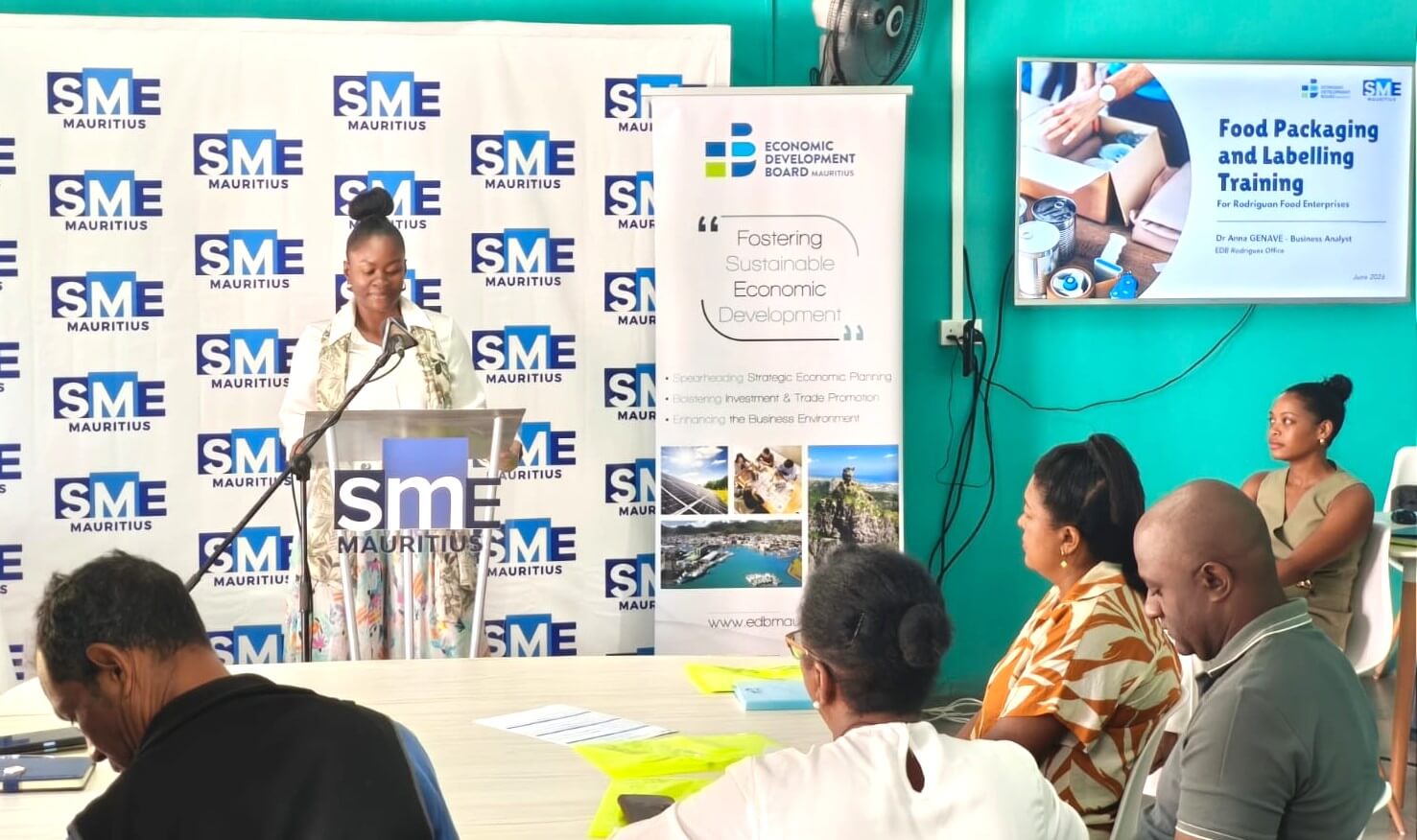
  • Reviewing and digitalisation of Occupation Permits (OP): The application and approval process for OPs will be streamlined through digitalisation. New OP categories will be introduced for non-citizen professionals based on revised salary thresholds, with varying durations of stay. For investors, two categories will be created based on initial investment and turnover, while self-employed criteria will be revised to include investment thresholds, turnover levels, and proof of local client engagement.
  • Removing the expatriate bank guarantee requirement: The current guarantee requirement for expatriate workers will be abolished and replaced by an annual flat, non-refundable fee. Administrative processes will also be digitalised to improve transparency and processing efficiency.
  • Introduction of a Unified Work and Residence Permit with Unique Identification Number: A single, combined work and residence permit bearing a unique identification number will be introduced for non-citizens. This will streamline administrative procedures and improve traceability.
C. Enhancing Trade Infrastructure & Logistics Efficiency

The measures address structural and operational improvements in the maritime and logistics infrastructure to support competitiveness and reduce trade costs.

  • Investment in Port Infrastructure (Mauritius Ports Authority – Rs 5.4 Billion): Major projects include the expansion of the cruise jetty, construction of a new bunker barge jetty, acquisition of tugboats, and expansion of the Mauritius Container Terminal. These investments will boost port capacity, improve cruise and cargo services, and reinforce Mauritius’ position as a regional maritime hub.
  • Operational Restructuring of Cargo Handling Corporation Ltd (CHCL): A comprehensive restructuring programme will be implemented to enhance operational efficiency. The objective is to restore Mauritius’ standing among the most efficient ports in the Indian Ocean, with direct benefits such as reduced congestion and shorter vessel turnaround times.
  • Phasing Out of COVID-19-era Port Fee Subsidies: The 50% port fee waiver for exporters will be discontinued after June 2025. This measure supports financial sustainability of port operations and encourages efficient cost recovery.

Conclusion

The 2025/26 Budget presents a coherent and reform-oriented agenda to improve the ease of doing business in Mauritius. By addressing critical bottlenecks in business entry, labour mobility, and trade logistics, the proposed measures aim to modernise regulatory frameworks, reduce compliance burdens, and enhance operational efficiency across key sectors.

Share this article

Budget 2025-2026: SheLeads – Empowering women entrepreneurs

The 2025–2026 National Budget marks a significant turning point for gender-inclusive growth in Mauritius. At its core lies a powerful message: when women thrive, our entire society prospers.

This year’s budget introduces a set of progressive measures designed to break down structural barriers, create more inclusive workplaces, and strengthen the entrepreneurial ecosystem for women.

The Government’s commitment is clear, to empower women, expand their economic opportunities, and integrate them more fully into the national growth agenda.

Key Budget Measures Supporting Women’s Empowerment:

  • Flexible Work Arrangements: The Workers’ Rights (Working from Home) Regulations 2020 will be replaced by Workers’ Rights (Flexible Work Arrangement) Regulations, promoting accessible, family-friendly employment, especially vital for women balancing work and caregiving. Flexibility is among the top three reasons why women choose to stay in or leave jobs globally (ILO, 2023). Introducing this measure is likely to enhance the retention of women in the workforce

  • Enhanced Access to Finance for Women Entrepreneurs: Under the Women Entrepreneur Loan Scheme (DBM), the grace period for repayments will be extended from 12 to 18 months, and the loan ceiling raised from Rs 500,000 to Rs 1.2 million, enabling more ambitious and sustainable women-led enterprises.

  • Non-Financial Business Support: Women entrepreneurs will now benefit from mentorship programs, marketing assistance, and networking platforms to help grow their businesses and access new markets.

  • Inclusive Employment Models: The budget promotes flexible and hybrid work models that respond to the realities of women’s lives, encouraging broader and more sustained participation in the labour market. The current female labour force participation rate in Mauritius stands at 44%, significantly lower than the male rate of 66%. Flexible work models can enhance productivity, and increased participation of women in the workforce will undoubtedly contribute to GDP growth

  • Encouraging Participation in New Sectors: Women are being encouraged to engage in the gig economy and digital platforms, sectors that provide both innovation and autonomy, fostering greater economic inclusion.

  • Equity Fund for Women and Youth: A new Equity Fund will be created to facilitate access to capital and drive entrepreneurship among women and young people, a strong step toward inclusive financial growth. Equity-based funding is crucial, as over 45% of women lack the collateral required to access traditional loans.
Expected Benefits

These measures have the potential to:

  • Increase women’s participation in the workforce and entrepreneurial ecosystem.
  • Enhance financial resilience and economic independence among women.
  • Promote inclusive, sustainable, and future-ready business models.
  • Strengthen women’s role in emerging sectors such as digital trade, innovation, and services.
  • Narrow gender disparities in access to finance, skills development, and market opportunities.

SheTrades Mauritius Hub: Partnering for Women’s Economic Growth

At the SheTrades Mauritius Hub, hosted by the Economic Development Board, we welcome these bold and necessary reforms. They align closely with our mission to empower women entrepreneurs through access to training, international market linkages, and capacity-building.

We remain committed to bridging the gap between policy and practice, ensuring that women entrepreneurs in Mauritius and Rodrigues not only benefit from these measures but are also equipped to go beyond borders and compete globally.

With a membership of 250 women entrepreneurs operating in the goods and services sectors, the Hub is poised to emerge as a regional centre of excellence. It not only provides a vibrant network for business collaboration and knowledge sharing but also offers critical support in areas such as capacity building, market intelligence, export readiness and market access.
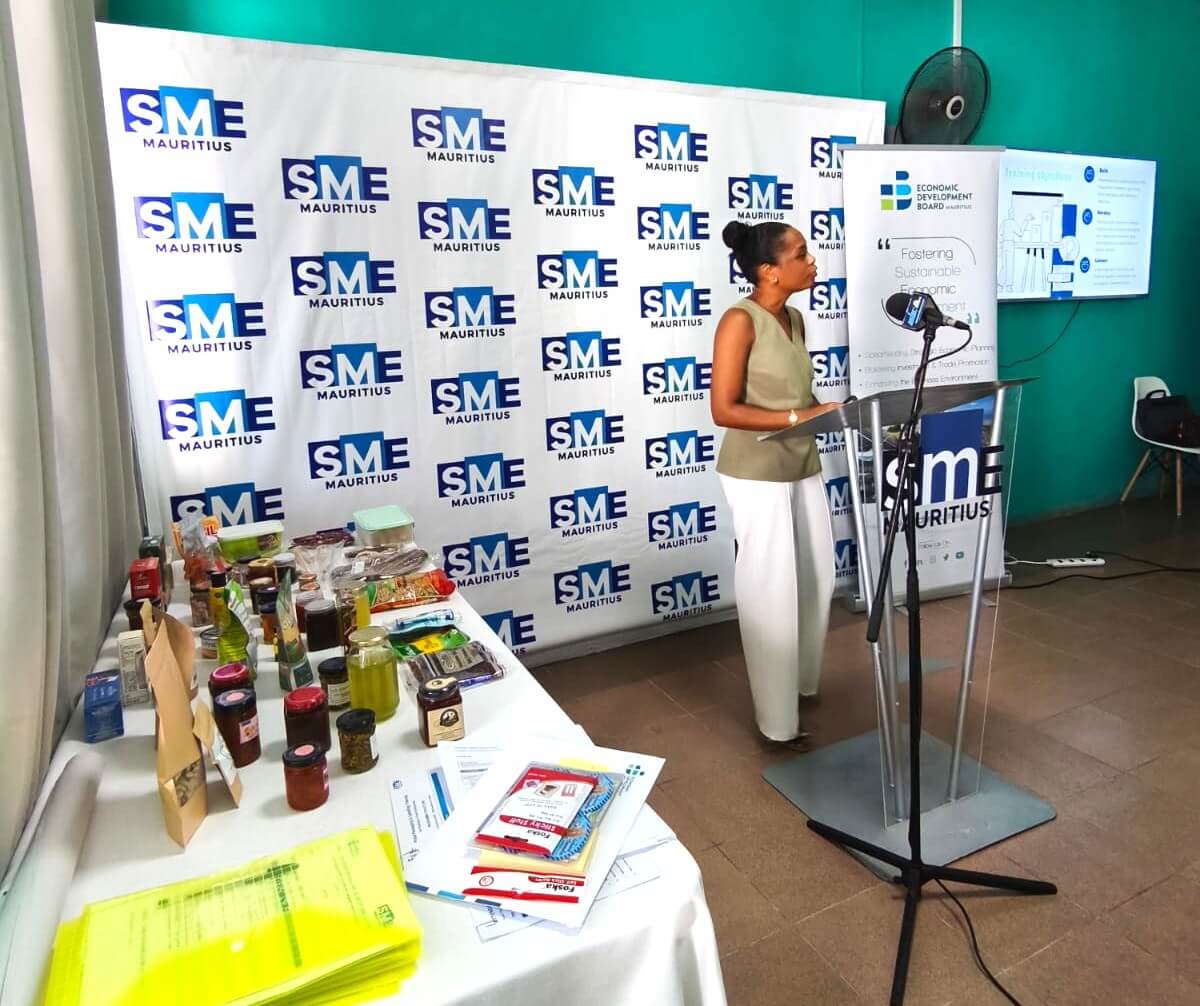
By leveraging partnerships with public and private stakeholders, the Hub fosters an enabling ecosystem that empowers women to scale their businesses, innovate, and compete in both regional and international markets. Ongoing initiatives focused on digital literacy, leadership development, logistics and policy advocacy ensure that members are equipped to navigate evolving market dynamics and regulatory frameworks, ultimately contributing to inclusive economic growth and sustainable development.

#She Goes Global

For more information, please access the SheTrades Mauritius Hub website https://shetrades.edbmauritius.org/

Share this article

Budget 2025-2026: Energy Sector

In 2024, renewable energy contribution in the electricity mix stood at 18.2% (621 GwH), or 41.8% short of our international commitment of 60% contribution of renewable energy in the mix by 2030. The 2025-2026 budget enunciated a series of bold measures being implemented to accelerate our energy transition.

The unlocking of MUR 30 billion of investment in solar energy and biomass projects will change the renewable energy landscape by increasing the contribution of renewable energy in the electricity mix to above 35% by horizon 2028.

Moreover, this will create new opportunities in the renewable energy sector for large, medium and small companies through the implementation of numerous projects of different magnitude for an additional aggregated 376 MW in capacity. The consolidation of the traditional renewable energy sectors of solar and biomass will further democratise the sector opening new avenues including:

  • electricity generation for households and small businesses.
  • value chain creation in the biomass sector with the enlistment of different existing and new players including small planters.
  • Increased opportunities for domain professionals, local contractors and suppliers.

In the medium-term new avenues will be explored to harness the potential of innovative technologies including marine renewable energies that will unlock new opportunities in the fields of research and development, maritime engineering and construction among others.

The aggregated impact of these measures will result in decreasing our dependency on fossil fuel import estimated at 21.2% of our import bill in 2024, increase in wealth and high-skilled job creation.

Furthermore, the National budget provides for the renewal of the existing public transportation fleet with electric buses accentuating our EV transition. It can be anticipated that these buses will be powered from electricity generated from renewable energy sources.

These measures will also support our international pledge towards a 40% reduction in CO2 emissions by 2030.

Share this article

Budget 2025-2026: Research & Development and Innovation

In the Global Innovation Index (GII) 2024, Mauritius ranks 55th among 133 economies thereby retaining its position as the most innovative economy in sub-Saharan Africa. The GII ranks world economies according to their innovation capabilities.

The Research and Development (R&D) landscape in Mauritius is gradually evolving, with a growing focus on innovation-driven development and diversification of the economy. By placing a strong emphasis on R&D and innovation in the Budget speech 2025- 2026, the Government is committed in making Mauritius attractive for innovation that will drive economic growth.

Some of the initiatives are highlighted below:

  • Setting up of a new National Research and Innovation Institute (NRII) under the Ministry of Tertiary Education, Science and Research. It will support both public and private sectors, while streamlining existing public research institutions for greater effectiveness.
  • An amount of MUR 200 million allocated to Ministries to finance research that results in policy innovation.
  • All parastatal organisations and State-Owned Enterprises will be required to come up with an R&D and innovation plan.
  • Setting up of a High-Level Steering Committee on the Government Programme at the Prime Minister’s Office that will monitor progress on the Innovative Mauritius mission.
  • Incentives through a new Innovative Mauritius Scheme to promote R & D and innovation.
  • Incentives that include eligibility to a new Premium Investment Certificate, fast-track permits
    and easy access to infrastructure to attract foreign research laboratories to Mauritius.

Over the past decade, Mauritius has transformed its R&D landscape by building robust institutions offering fiscal incentives, investing in infrastructure and digital skills, fostering academia–industry linkages, enhancing IP protection and forming strategic international partnerships.

Moreover, the various measures announced in the Budget speech 2025 -2026 will enhance R&D, support socio-economic development, transform Mauritius into an innovation driven economy and contribute towards positioning Mauritius as a regional Innovation Hub.

Share this article

EDB CEO meets Egyptian Ambassador to discuss bilateral relations, trade and human capital development

On 03rd June 2025, the Chief Executive Officer of the Economic Development Board (EDB), Mr. Mahen Kundasamy, had the pleasure of welcoming Her Excellency Abir Alam Eldin, Ambassador of the Arab Republic of Egypt.

The meeting provided an opportunity to explore avenues for cooperation between Mauritius and Egypt. Discussions covered a wide range of strategic themes, including:

  1. The longstanding diplomatic relations between Mauritius and Egypt, established in 1976, reflect enduring historical ties that provide a solid foundation for both current and future collaboration.
  2. The joint promotion of the African continent, with a view to positioning both Mauritius and Egypt as dynamic contributors to Africa’s economic growth and investment potential.
  3. Advancing the Pan-African vision, with both parties reaffirming their commitment to regional integration, shared prosperity, and intra-African partnerships.
  4. Strengthening bilateral relations, with a focus on enhancing cooperation across trade, investment, and knowledge exchange between Mauritius and Egypt.
  5. Positioning Egypt as a strategic and privileged partner for Mauritius in the North African and Middle Eastern region.
  6. Exploring Egypt’s potential role as an advocate and ally for small island and developing states (SIDS) within Africa, particularly in multilateral platforms.

Her Excellency Abir Alam Eldin reaffirmed the strong economic ties between Mauritius and Egypt, particularly within the framework of COMESA. She emphasised the importance of further deepening this cooperation and proposed the establishment of a Business-to-Business (B2B) forum, as well as a bilateral joint committee, with the support of the Ministry of Foreign Affairs to enhance economic cooperation and dialogue. In order to give momentum to this initiative, the EDB will engage in discussions with the General Authority for Investment and Free Zones (GAFI), with the objective of materialising the proposed forum.

The discussion also explored the potential of leveraging Mauritius International Financial Centre as a strategic gateway for Foreign Direct Investment (FDI) into Egypt, positioning it as a prime investment destination within Africa. Emphasis was placed on how Mauritius can serve as a platform to channel high-value investments into Egypt, supported by the existing Double Taxation Avoidance Agreement (DTAA) between the two countries.

The meeting also explored avenues for capacity building and diplomatic training. Her Excellency Abir Alam Eldin reiterated Egypt’s willingness to support Mauritius by offering a range of specialised training programmes, along with up to 20 scholarships for Mauritian professionals. As part of this initiative, it is envisaged that 10 to 15 Mauritian diplomats could benefit from advanced diplomatic training in Cairo.

Furthermore, a potential partnership between the University of Cairo and the University of Mauritius was proposed to reinforce institutional collaboration and promote sustained knowledge exchange between the two countries.

In conclusion, the CEO of the EDB expresses his appreciation for the Ambassador’s visit and expresses his intention to maintain close collaboration with the Embassy of Egypt in order to translate these promising discussions into concrete actions, with the aim of unlocking new opportunities for trade, investment, and to drive sustainable development across Africa.

Share this article

Budget 2025-2026: Healthcare Sector

Overview

The 2025–2026 national budget sets a clear strategic direction for Mauritius’ healthcare sector, emphasizing modernization, quality improvement, and innovation. With a focus on legislative reform, chronic disease management, technology adoption, and specialized care, these measures aim to create a more efficient, patient-centered health ecosystem that offers growth and partnership opportunities for investors and stakeholders.

Impact

  • Regulatory modernization: The revision of the Public Health Act (dating back to 1925) will create a robust legal framework that supports modern healthcare practices, thus improving regulatory certainty for investors and operators.
  • Chronic disease program: The ‘Path to Remission Programme’ targets nearly 450,000 diabetic and prediabetic patients, signalling a large-scale public health initiative that could stimulate demand for medical services, pharmaceuticals, and wellness solutions.
  • Specialized expertise collaboration: Proactive engagement of foreign cancer and cardiovascular experts will enhance clinical capabilities and open avenues for knowledge transfer, joint ventures, and capacity building.
  • Quality control enhancement: Establishing a National Health Quality Commission will ensure rigorous oversight and continual improvement in healthcare service delivery.
  • Digital health infrastructure: Implementation of electronic health records, telemedicine, and e-prescriptions will not only increase healthcare accessibility but also create opportunities for tech-driven service providers and digital health innovators.
  • Vector-borne disease control innovation: Investment in the Sterile Insect Technique (SIT) production facility represents a cutting-edge, eco-friendly approach to managing mosquito-borne diseases—an attractive area for biotech partnerships and sustainability-focused investments.
  • Access to advanced treatments: Launching clinical trials for cardiac and cancer patients positions Mauritius as a hub for precision medicine research and development, inviting pharmaceutical companies and research institutions to participate.

Way Forward

The budget reflects a holistic approach to healthcare transformation by addressing systemic, technological, and clinical dimensions. Updating the Public Health Act is foundational, enabling more effective regulation and response to contemporary health issues.

The ‘Path to Remission Programme’ represents a forward-thinking intervention to mitigate the growing burden of diabetes, which remains a significant health challenge, whilst
inviting foreign specialists underscores a commitment to elevating clinical expertise, particularly for complex diseases.

The creation of a National Health Quality Commission will institutionalize quality assurance, which is vital for patient safety and trust. On the other hand, digital health solutions promise to reshape healthcare delivery by enhancing efficiency and bridging geographic barriers. In addition, the SIT initiative demonstrates innovative public health thinking to curb vector-borne diseases sustainably. Lastly, facilitating clinical trials locally will improve patient access to novel therapies and foster a research-friendly environment, benefiting the broader health ecosystem.

Overall, this budget demonstrates Mauritius’ commitment to transforming its healthcare sector into a dynamic and sustainable ecosystem, balancing public health needs with investment potential.

Share this article

Budget 2025-2026: Agro Industry

Fostering Food Security and Agricultural Innovation for a Resilient Future

In line with its commitment to ensuring long-term food security and promoting sustainable agricultural development, the Government has allocated Rs 800 million in the Budget 2025-2026 to support farmers, planters, and breeders across the country.

A central feature of this vision is the promotion of innovative and climate-resilient agricultural practices. A new Food Resilience Scheme will be launched to support controlled environment agriculture, including:

  • Vertical farming techniques;
  • Indoor, climate-controlled agricultural systems; and
  • Advanced methods in the production of seeds and fertilisers.

These initiatives are designed to increase productivity, mitigate climate-related risks, and ensure a consistent, high-quality food supply.

Moreover, the budget provides for the integration of Artificial Intelligence (AI) tools to support Small and Medium Enterprises (SMEs) in the food production sector. This move will help modernise operations, enhance food safety standards, and promote efficiency across the value chain.

Strategic Use of Land Resources

The Government also recognises the critical role of land in achieving food security and efficient resource management. Several key initiatives are being implemented to optimise land utilisation:

  • The Digital Twin Mauritius Project will offer a detailed digital view of the country’s land resources, helping to improve land use planning, support informed decision-making, and better coordinate agricultural and infrastructure development.
  • Landscope Mauritius will play a strategic role in mobilising land for the development of food security initiatives, ensuring alignment with national priorities and sustainable use of available resources.

To further incentivise productive land use, the Government is introducing a New Land Repurposing Scheme. Under this scheme, owners of small agricultural plots will be exempted from the Land Conversion Permit when their land is used for alternative strategic investment projects as defined by the scheme.

In parallel, the Government is taking steps to enhance environmental conservation by amending the Forest and Reserve Act to support afforestation efforts under the Mauritius Biomass Initiative. This initiative will not only promote biodiversity but also ensure the long-term ecological health of the country’s forests and reserves.

In keeping with the Government’s policy of support for traditional sectors, a guaranteed minimum revenue has been established for sugarcane planters. For the 2025 crop, those producing up to 60 tonnes of sugar will benefit from a guaranteed income of Rs 35,000 per tonne, inclusive of bagasse and molasses.

These strategic measures aim to:

  • Strengthen national food sovereignty and reduce dependence on food imports.
  • Promote technological modernisation in agriculture, enhancing resilience and competitiveness.
  • Improve land use planning and efficiency through the use of digital innovation.
  • Foster inclusive growth by supporting small-scale producers; and
  • Build a future-ready, sustainable agricultural ecosystem that meets the needs of both current and future generations.
Share this article

Budget 2025-2026: Ocean Economy

The Catalyst for Economic Growth and Transformation

Mauritius, surrounded with a vast Exclusive Economic Zones (EEZ) of 2.3 million square kilometres, holds enormous potential in the Ocean Economy, yet to be harnessed fully, representing a key contributor of the Mauritius economy for long-term economic growth.

For the Budget 2025-2026, the Government affirmed its commitment to better explore and exploit the potential of the Ocean Economy, demonstrating its leadership on the global stage, ensuring the protection and sustainable use of its marine resources for future generations. As part of its strategy to support the development of the sector, the Government has announced the organization of Les Assises de l’Océan, a multi-stakeholder consultative forum to co-develop a national Blueprint for the Ocean Economy building upon the roadmap for the Ocean Economy developed in 2013.

The budget measure encompasses a comprehensive strategy to support the development of key priority sectors of the Ocean Economy including sustainable fisheries and aquaculture, ocean-based renewable energy, sustainable ocean tourism, marine transport and trade, research, capacity building, and innovation and blue finance.
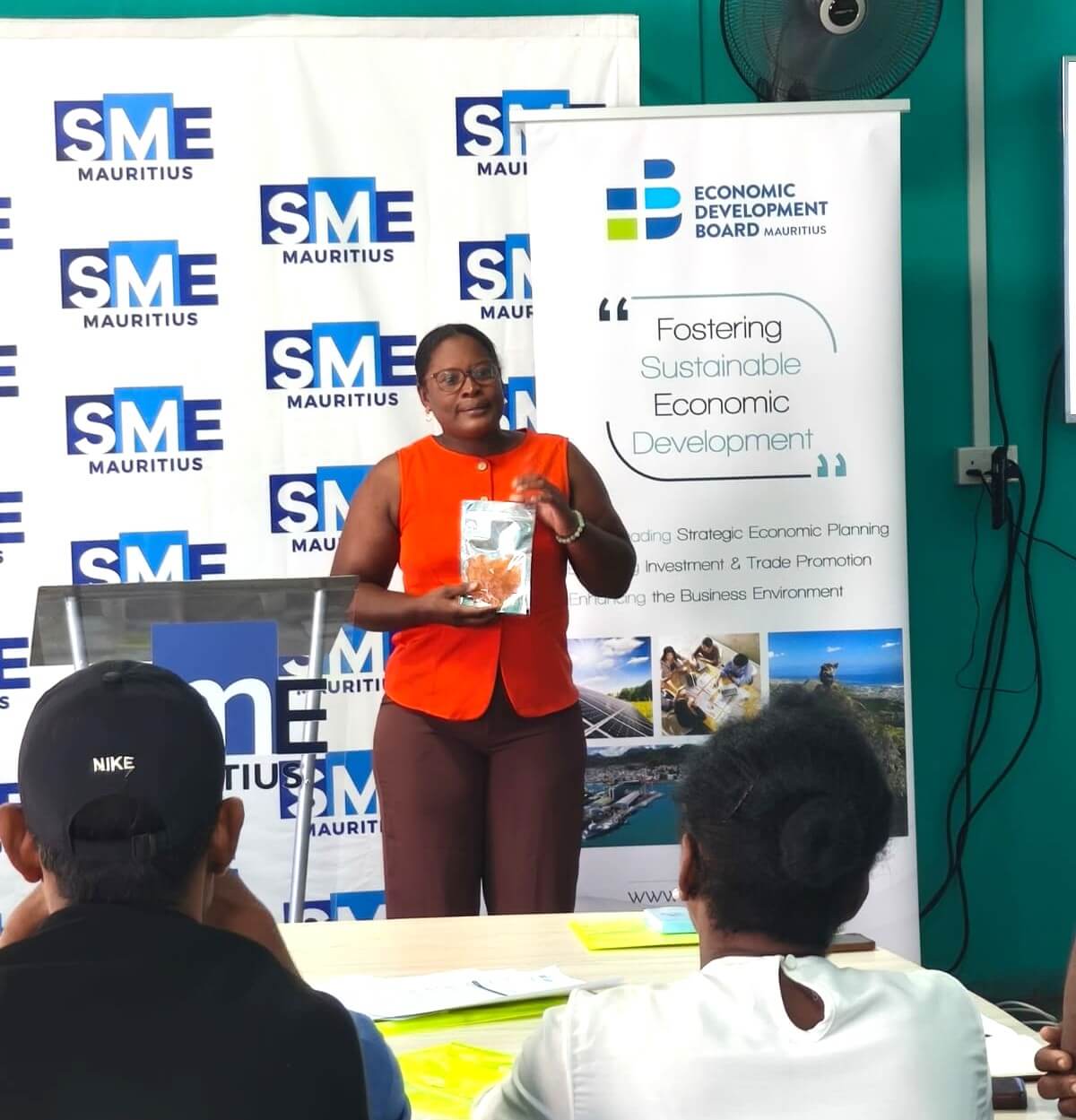
By supporting the development of the sustainable fisheries and aquaculture sector, Mauritius aims at improving value chains and increasing production levels. The strategy is expected to boost food security, job creation, and export growth. The ocean-based renewable energy emphasizes the acceleration of offshore energy investments to support the country’s clean energy transition. Sustainable ocean tourism focuses on the promotion of eco-friendly marine tourism, aims at diversifying Mauritius’ tourism offerings. Investment and development of the port infrastructure and maritime logistics aims to position Mauritius as a regional maritime hub.

By prioritising research, capacity building, and innovation, this strategy aims at strengthening the marine science, innovation ecosystems, and talent pipelines, through increased investment in research institutions, training programs, and public-private partnerships. Blue Finance supported by the mobilization of private capital, encourages investment in sustainable marine projects via mechanisms such as blended finance and sustainability-linked bonds.

Moreover, to underpin this strategic shift, the Mauritius Ports Authority will undertake a substantial investment of approximately Rs 5.4 billion (USD 115 million) to expand the cruise jetty, construct a small jetty for bunker barge, acquire tugs and expand the Mauritius Container Terminal. Likewise, the Cargo Handling Corporation will undergo major transformation with the objective that Mauritius reclaims its reputation as one of the most efficient ports in the Indian Ocean region for of the port. These initiatives collectively reinforce Government commitment to position Mauritius as a sustainable and globally competitive maritime nation. This strategy aims at stimulating investment and job creation across sectors and diversifying marine-based revenue streams within the Ocean economy.

Lastly, by empowering, fishers with various support measures such as navigational aids, mooring aids and solar lights at all the jetties throughout the island and the construction of 3 more fish sheds, the measure aims to improve safety, enhance working conditions, and support the livelihoods of the fishing communities, supporting the Government’s broader Ocean economy goals.

Share this article

Budget 2025-2026: Artificial Intelligence

The Catalyst for Economic Growth and Transformation

Across the globe, Artificial Intelligence is being embraced by countries at national level and across companies for its numerous benefits like improved productivity, efficiency, decision-making or enhanced customer experience. To better harness the advantages, Government Budget 2025–2026 places significant and strong emphasis on Artificial Intelligence (AI) as a catalyst to propel economic transformation and innovation in a bold move to reposition Mauritius as a forward-looking digital economy.
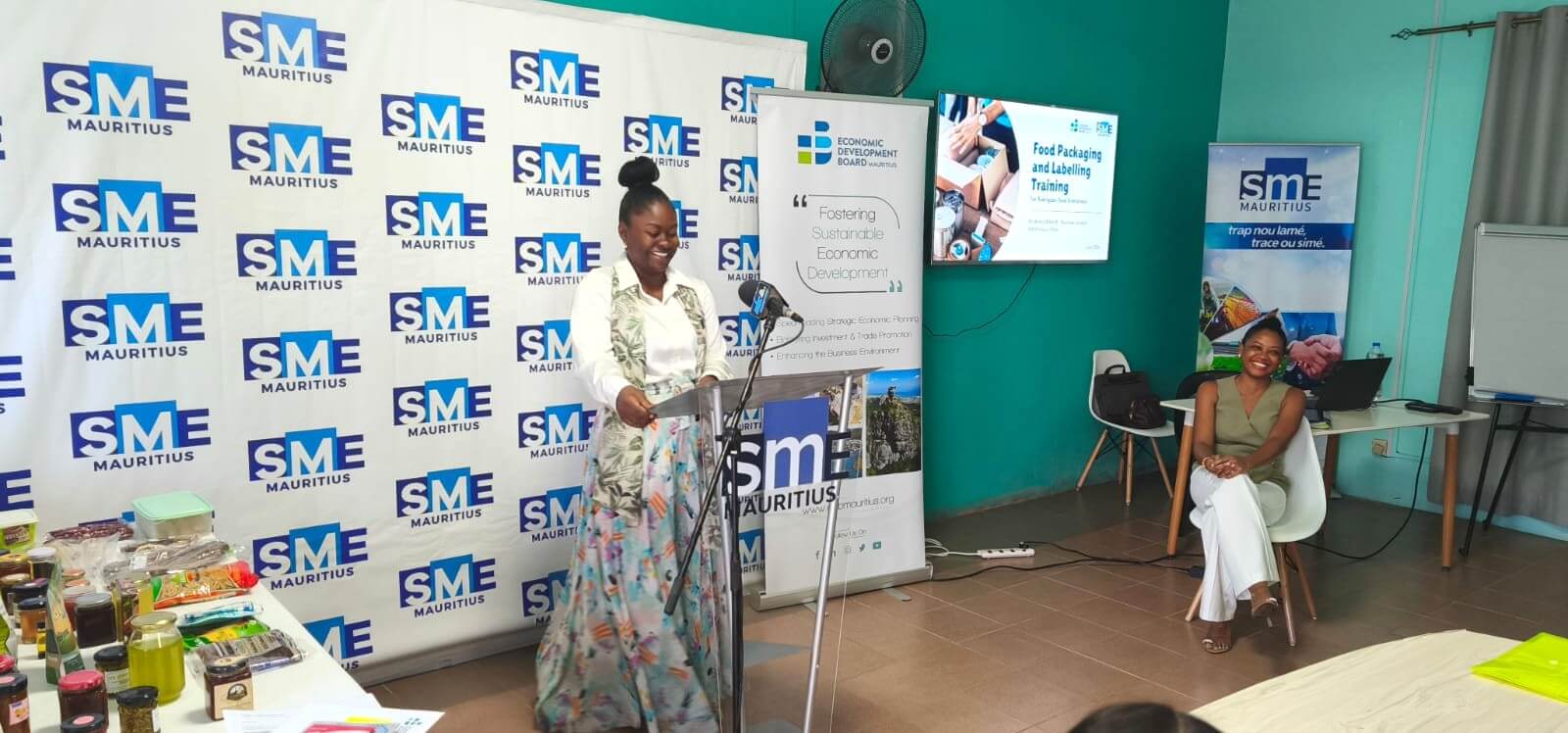
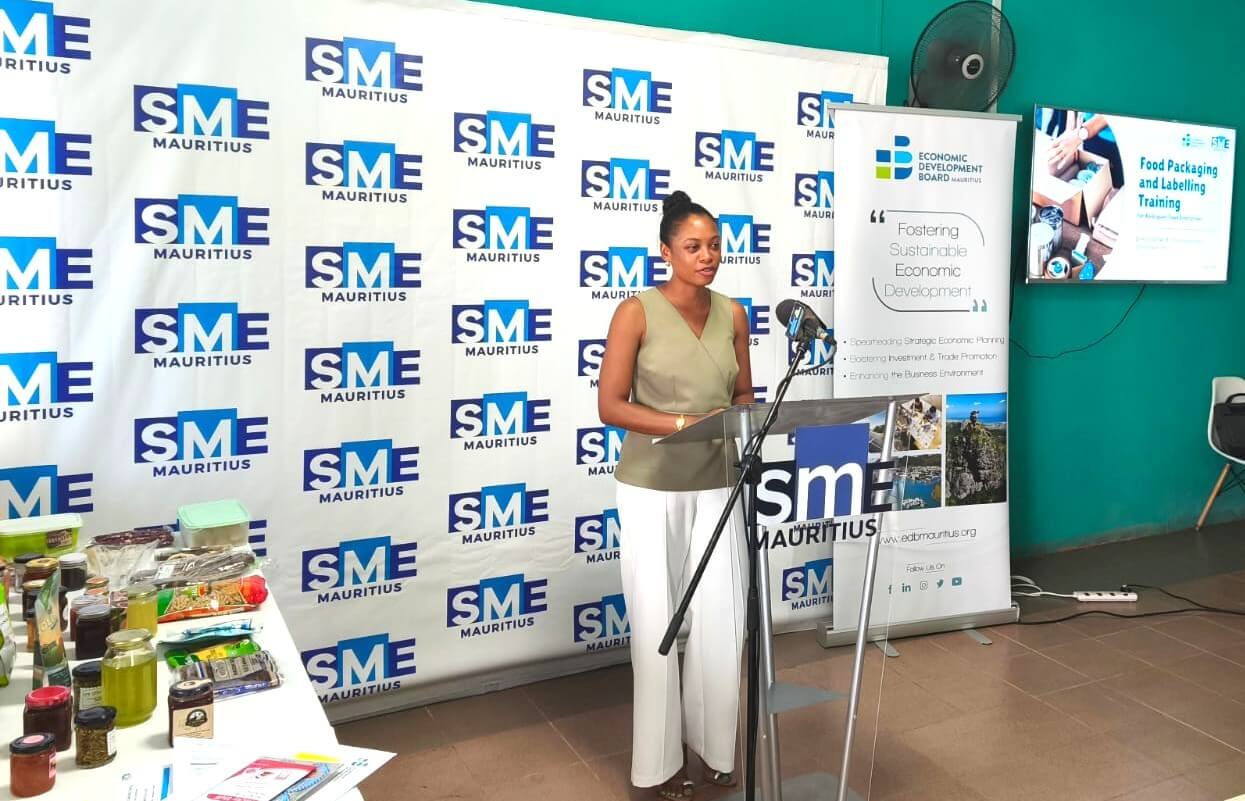
Under the broader theme of “Innovative Mauritius,” the budget outlined a strategic vision that includes the integration of AI across various sectors. With targeted fiscal incentives and sector-specific integration, the budget underlined a strong commitment from Government to harness AI for national transformation.

The ICT industry in Mauritius has shown great resilience over the years in face of several external shocks and the recent global pandemic thereby remaining a key pillar of the economy with a GDP contribution of 5.6% in 2024. It also continues to be one of the largest employers in the country employing 34,500 people. However, the fact that the ICT industry is undergoing a transformative evolution driven by advancements in artificial intelligence, 6G networks, and spatial computing cannot be overlooked.

In line with Government ambition in transforming Mauritius into an Intelligent Island, the Ministry of Information Technology, Communication and Innovation has recently launched its blueprint for the ICT industry which set out a clear roadmap for digital transformation. Through the Blueprint, Mauritius will harness the power of digital technologies by integrating AI into its national development plans to build a more inclusive, democratic and sustainable society.

The AI-related initiatives as announced in the budget further demonstrate continuity from the Government Programme 2025-2029 and alignment with the ICT blueprint. Some of the initiatives are highlighted below:

National AI Initiatives

  • An AI Innovation Start-Up Programme will be set up under the Ministry of Information Technology, Communication and Innovation (MITCI) to promote start-ups using AI
  • A dedicated AI Unit will be established at MITCI to drive the AI transition
  • As part of the Public Sector AI Programme, Rs 25 million will be allocated to equip ministries with AI tools for better policymaking and service delivery
  • Start-ups and MSMEs can claim tax deductions on AI investments up to Rs 150,000

AI in Education:

  • Implementation of National AI Policy Guidelines in schools
  • Launch of an AI Proficiency Programme for students and educators
  • Mandatory AI module in all public higher education curricula

AI in Agriculture and Food Security

  • The Food and Agricultural Research and Extension Institute will provide AI subscription services to food producers, especially SMEs, to enhance safe food production

AI in Financial Services Sector

  • The Financial Services Commission (FSC) will introduce an AI-enabled assistant on its unified e-licensing platform for guidance and real-time updates

AI in the Tourism sector

  • A blueprint will be developed and shall include a review about the role of technology, AI and innovation to increase tourism demand and supply will be accelerated

By making AI a national priority, Mauritius has an excellent opportunity to leapfrog into the digital future and ensure long-term economic stability. The various measures as announced shall not only enhance traditional sectors but also trigger new industries thus ushering a new chapter of economic renewal and technological leadership.

Share this article

Rencontre entre Son Excellence Oskar Benedikt, Ambassadeur de l’Union européenne auprès de la République de Maurice, et le CEO de l’EDB : vers un partenariat stratégique renforcé entre Maurice et l’Union européenne.

Son Excellence Oskar Benedikt, Ambassadeur de l’Union européenne (UE) à Maurice, a effectué une visite de courtoisie le 30 mai 2025 auprès de Monsieur Mahen Kundasamy, CEO de l’Economic Development Board (EDB) de Maurice. Cette rencontre a réaffirmé les liens profonds et durables entre l’UE et Maurice.

Dans un contexte géopolitique mondial caractérisé par une fragmentation des échanges commerciaux et une recomposition des équilibres économiques internationaux, Maurice est perçu par l’UE comme une plateforme idéale pour les entreprises européennes souhaitant diversifier leurs chaînes de valeur. Cette attractivité repose sur la stabilité politique de Maurice, la solidité de son cadre juridique, ses infrastructures modernes et un réseau d’accords bilatéraux et multilatéraux, incluant plusieurs Accords de promotion et de protection des investissements (APPI) avec des pays africains, qui offrent aux entreprises européennes des opportunités concrètes pour diversifier leur présence sur le continent en y implantant leurs sièges régionaux. Elle est également renforcée par l’accès préférentiel dont bénéficie Maurice vers des marchés majeurs.

Une vision commune pour le développement économique

Le CEO de l’EDB a réitéré l’engagement de Maurice à collaborer étroitement avec Bruxelles afin d’identifier et de lever les obstacles potentiels à l’investissement. Il a également souligné la volonté de développer des incitations sur mesure pour faciliter l’implantation des entreprises européennes, leur permettant ainsi de tirer pleinement parti de l’Accord de libre-échange continental africain (AfCFTA) en utilisant Maurice comme hub stratégique d’exportation vers l’Afrique.

M. Kundasamy a souligné que Maurice encourage activement les investissements européens dans des secteurs d’exportation à forte valeur ajoutée, en particulier dans l’ingénierie de précision, les dispositifs médicaux, la bijouterie ou encore la lunetterie. Il a souligné que le pays privilégie les activités capital-intensives et s’engage à accompagner les entreprises dans le recrutement de main-d’oeuvre spécialisée.

L’Ambassadeur a par ailleurs rappelé que l’Union européenne demeure le principal partenaire commercial de Maurice, les échanges bilatéraux ayant enregistré une progression significative, près du doublement, depuis l’entrée en vigueur de l’Accord de Partenariat Économique. Il a également mis en exergue la contribution de l’Union européenne à l’amélioration du climat des affaires dans le pays, notamment à travers son appui à la mise en oeuvre du Système National de Licences Électroniques (National E-Licensing System – NELS), une plateforme numérique centralisée destinée à faciliter les démarches liées à l’obtention de divers types de permis.

Le CEO de l’EDB a conclu la rencontre en réaffirmant la volonté de Maurice de maintenir une approche résolument multilatérale, fondée sur le respect du droit international, la stabilité et la transparence. Il a exprimé le souhait que l’Union européenne continue d’accompagner Maurice dans ses ambitions économiques, notamment en facilitant des rencontres ciblées entre investisseurs et autorités locales.

Share this article

ENLIT AFRICA 2025 – Connecting Africa’s Power, Energy & Water

The Economic Development Board (EDB) participated in Enlit Africa 2025, held from 20 to 22 May 2025 in Cape Town, South Africa. The event was organized under the auspices of the U.S. Embassy, which facilitated the participation of a joint Mauritius-Seychelles delegation with the aim of fostering regional collaboration and advancing sustainable energy solutions across the African continent.

Enlit Africa is a premier annual conference and exhibition that convenes key stakeholders from across the energy value chain in Africa. The 2025 edition focused on critical issues including energy security, sustainability, financing, technology integration, and energy solutions aiming at reducing consumption in industry, with a particular emphasis on promoting a just energy transition throughout the region.

During a high-level panel discussion titled “Investing in Africa’s Energy Mix: Mobilizing Capital for Africa’s Energy Security,” Mr. Geerish Bucktowonsing, Director of Industry, SMEs, Freeport & Logistics at the EDB, drew attention to the challenges faced by Mauritius as a Small Island Developing State (SIDS) following climate changes. Mauritius is engaged to increase its share of renewable energy mix, which stands at 17.6%. This is also in line with the United Nations Sustainable Development Goals, particularly SDG 7 (Affordable and Clean Energy) and SDG 13 (Climate Action) and with the commitment taken at the Paris Agreement of 2015.

EDB has initiated discussions with companies having new technologies including solar tracking systems, low emission turbines, structures for solar panel, battery storage who are looking to position themselves strategically in Mauritius to serve the Region. The companies have expressed interest to explore Mauritius for setting up operations or offices to serve the regional market.

The event was complemented by a USA Networking Reception held at the Consul General’s Residence, which provided an invaluable platform to deepen bilateral trade and investment relations, and position Mauritius as a strategic hub for green energy, clean tech development and regional trade.

Share this article

EDB reaffirms its commitment to uphold highest ethical standards, integrity, and honesty across its operations

In a proactive effort to strengthen ethical standards and good governance, the Economic Development Board (EDB) and the Financial Crimes Commission (FCC) co-hosted an awareness session with EDB employees, this Wednesday 28th May 2025.

The objective of the session was to empower EDB employees on financial crime prevention with focus on integrity, ethics, transparency, whistleblowing, and conflict of interest. The session plays a crucial role towards imparting knowledge on how to prevent, detect, and report unethical practices. It brought together staff from various departments for an engaging and informative session led by Mr. Kailass Koonjal, Ag. Assistant Director, Education and Preventive Division, FCC.

The FCC representative showcased a full-fledged presentation on the latest Financial Crimes Commission Act 2023 highlighting new provisions, new offences and broader mandate of the FCC in its investigatory and enforcement actions.

In his opening remarks, Mr. Mahen Abhimanu Kundasamy, CEO of EDB emphasized the importance of ethical conduct as a cornerstone of good governance. He stated ‘let us lead with integrity, support those who speak out for what is right, and work tirelessly to ensure that corruption finds no refuge in our systems. Because ultimately, the strength of our government lies not just in its authority, but in its moral credibility”.

This awareness session has been facilitated by the Governance, Risk and Compliance (GRC) Department of EDB. In his remarks, the Head of the GRC Department, Mr. Jabir Udhin, highlighted the development and implementation of a comprehensive Business Integrity Framework for the EDB. Mr. Udhin underlined that ‘our goal is to embed integrity into very aspect of EDB’s decision making processes and operations. This initiative reflects our dedication to building trust with our stakeholders, enhancing our reputation and ensuring long-term sustainability”.

In a bid to further enhance EDB’s operations in pursuing its mandate, EDB will continue to collaborate closely with the FCC to foster a transparent and responsible work environment.

Share this article

Courtesy Visit of the High Commissioner of South Africa to the CEO of EDB Mauritius: Strengthening Pan-African Economic Collaboration

Her Excellency Dr. H. N. Manzini, High Commissioner of the Republic of South Africa to Mauritius, accompanied by Mr. Matlhaba Mogadingwane, First Secretary (Political), met with Mr. Mahen Kundasamy, Chief Executive Officer of the Economic Development Board (EDB), during a courtesy visit held on 27 May 2025.

This high-level meeting reaffirmed the strong bilateral relations between Mauritius and South Africa. Discussions emphasised the importance of enhancing existing synergies to accelerate the implementation of the African Union’s Agenda 2063, the blueprint for Africa’s long-term socio-economic transformation and continental vision.

The meeting also addressed the need to strengthen Africa’s economic base by supporting entrepreneurship and small businesses, improving infrastructure, and building integrated value chains across borders. Underlining this commitment, H.E. Dr. H. N. Manzini shared that she has already facilitated three visits by South African SMEs to Mauritius to explore trade opportunities, which clearly indicates that these businesses are gaining momentum and poised to take off toward regional expansion. These initiatives align with boosting intra-African trade and promoting economic self-reliance, key pillars of both the African Continental Free Trade Area (AfCFTA) and Agenda 2063.

The CEO of the EDB highlighted the significant potential of Mauritius to deepen bilateral trade relations with South Africa, outlining the country’s business-friendly policies, robust financial ecosystem, stable and transparent regulatory framework, skilled bilingual workforce, and extensive network of trade agreements. These attributes position Mauritius as an ideal partner for South African businesses seeking to expand their footprint into Asia and beyond.

In the spirit of Pan-Africanism and drawing from his personal exposure to the realities in areas affected by unrest and conflict during his earlier diplomatic career, Mr. Kundasamy underscored the importance of South Africa and Mauritius joining forces as a unified voice to promote peace and stability, which are fundamental pillars for advancing economic development and long-term prosperity across the continent. He further emphasised the strategic role both nations can play in fostering unity, regional cooperation, and resilience throughout Africa.

The meeting concluded on an optimistic note, marked by a shared vision for stronger collaboration and promising partnerships ahead. Both the EDB and the High Commission of the Republic of South Africa reaffirmed their commitment to transforming ideas into meaningful projects that advance the continent’s long-term interests.

Share this article

Courtesy Call by H.E. Mr. Gaëtan Siew to Mr. Mahen Abhimanu Kundasamy, Chief Executive Officer of EDB

On 28th May 2025, the Economic Development Board Mauritius received the visit of H.E Mr. Gaëtan Siew, new Mauritian Ambassador to the People’s Republic of China. Discussions were centered on opportunities for exports and FDI attraction, with focus on the Mauritius-China FTA and the RMB Clearing Hub. The meeting concluded with a commitment for implementation of a joint action plan for Mauritius-China economic consolidation.

Share this article

Courtesy visit of H.E. Lanang Seputro, Head of Mission of the Republic of Indonesia for Mauritius

On 23rd May 2025, the Economic Development Board (EDB) of Mauritius had the honour of welcoming His Excellency Lanang Seputro, Head of Mission of the Republic of Indonesia for Mauritius, on a courtesy visit to Mr. Mahen Kundasamy, Chief Executive Officer of the EDB. He was accompanied by Mr. Salim G. Joonas, G.O.S.K., Honorary Consul of Indonesia in Mauritius, and Dr. Ahmed S. Badrais, Vice President of Ameerah Al Mubarakah Sdn Bhd. The meeting provided a valuable opportunity to reaffirm the cordial relations between Mauritius and Indonesia and to explore avenues for enhanced economic cooperation.

In welcoming His Excellency, the CEO of the EDB reaffirmed Mauritius’ openness to international partnerships and expressed the organisation’s readiness to support initiatives that advance mutual economic interests. His Excellency, in turn, conveyed Indonesia’s intent to deepen its collaboration with Mauritius and welcomed the prospect of future engagements aimed at translating the shared vision into tangible outcomes.

Mr. Kundasamy underscored the unique positioning of Mauritius as a strategic gateway to Africa, highlighting how this vision aligns with the broader political ambition embedded in the African Union’s Agenda 2063, which outlines the continent’s long-term socio-economic transformation under the theme “The Africa We Want.” He noted the remarkable progress Africa has made over the past decade in areas such as infrastructure development, digital innovation, and regional integration. Mr. Kundasamy also emphasized the significance of the African Continental Free Trade Area (AfCFTA), which creates a single market of over 1.4 billion people and marks a major step toward boosting intra-African trade and economic self-reliance.

With the country’s political stability, sound governance, investor-friendly environment, and expanding network of bilateral and multilateral agreements, Mauritius is ideally positioned to serve as a launchpad for Indonesian businesses aiming to access and benefit from these emerging opportunities across the African continent.

The CEO of the EDB also emphasised Mauritius commitment to broadening its identity beyond that of an island state, but as a forward-looking ocean state, capitalising on its vast Exclusive Economic Zone of 2.3 million km² to develop its blue economy and untapped resources, while fostering sustainable development and enhancing regional collaboration. Indonesian businesses and stakeholders are well-positioned to become valuable partners in this vision, bringing expertise and investment to jointly harness the opportunities within the blue economy.

Discussions further explored investment opportunities across various sectors, including manufacturing, agribusiness, smart cities, real estate development, banking and tourism. Mauritius’ strong commitment to environmental sustainability, coupled with its determination to accelerate the transition to renewable energy and the development of intelligent and green buildings, was also highlighted as key areas for potential collaboration.

Dr. Ahmed S. Badrais noted that the sectors highlighted during the discussions align closely with the core competencies of Ameerah Al Mubarakah Sdn Bhd. He expressed that, should the opportunity arise, the organisation would welcome the chance to contribute meaningfully to the successful realisation of these projects by leveraging its expertise and experience.

The Honorary Consul, Mr. Salim G. Joonas, encouraged the EDB to organise focused promotional missions in Indonesia to showcase the full range of opportunities Mauritius has to offer Indonesian businesses. He emphasised that the country’s well-developed infrastructures, enabling environment for business, extensive network of trade agreements, and strategic advantages together create a compelling platform for Indonesian companies aiming to deepen their commercial engagement with Africa.

In conclusion, H.E. Lanang Seputro reaffirmed Indonesia’s commitment to strengthening ties with Mauritius, acknowledging its strategic role and development ambitions. As a G20 economy, Indonesia is keen to support Mauritius with investment and expertise, particularly in the blue economy, smart cities, and renewable technologies.

This visit marks a meaningful step toward reinforcing diplomatic and economic ties between Mauritius and the Republic of Indonesia, anchored in a shared commitment to inclusive growth, regional integration, and shared sustainable development.

Share this article

Courtesy visit of H.E. Kate Chamley, High Commissioner of Australia to Mr. Mahen Kundasamy CEO of EDB

The Economic Development Board (EDB) of Mauritius welcomed H.E. Kate Chamley, High Commissioner of Australia during a courtesy visit held on Wednesday 21st of May 2025 at the EDB’s office.

Mr. Mahen Kundasamy, Chief Executive Officer of EDB and H.E. Kate Chamley discussed opportunities for collaboration in sectors such as education, financial services, blue economy and renewable energies among others. Discussions also centred on enhancing bilateral trade and leveraging the Mauritius International Financial Centre as a platform for structuring investment vehicles. H.E. Kate Chamley highlighted the importance of encouraging Australian companies to look westward towards Mauritius and to consider the island as a viable strategic gateway to the African Continent.

H.E. Kate Chamley pointed out the strong potential to emulate the Australian higher education model by fostering strategic partnerships, such as the existing collaboration with Curtin University. Mauritius, being bilingual and strategically located, holds strong potential to be a regional hub for tertiary education. In this context, it is worth noting that education is the fourth-largest economic pillar in Australia, underscoring the sector’s strategic relevance in strengthening bilateral ties.

Given that both Mauritius and Australia are active members of the Indian Ocean Rim Association (IORA), the potential for closer collaboration was discussed, particularly in promoting sustainable development, strengthening governance and regional security, and fostering technology and knowledge transfer.

Mr. Kundasamy outlined EDB’s interest in exploring the possibility of organising targeted promotional missions in Australia in the near future to promote Mauritius as an attractive destination for investment and business as well as to participate in major sector-specific forums and conferences of mutual economic interest.

In conclusion, Mr. Kundasamy expressed confidence that closer collaboration between the EDB and the Australian High Commission will pave the way for new avenues of mutually beneficial cooperation, particularly in fostering impactful investments and enhancing bilateral trade. He reaffirmed Mauritius’ readiness to serve as a regional hub and gateway for Australian businesses looking to establish or expand their presence in Africa.

Share this article

Courtesy Call by H.E. Mr. Kan Masahiro Ambassador Extraordinary and Plenipotentiary of Japan to Mauritius on Mr. Mahen Abhimanu Kundasamy, Chief Executive Officer, Economic Development Board

H.E. Mr. Kan Masahiro, Ambassador Extraordinary and Plenipotentiary of Japan to Mauritius paid an introductory courtesy call on Mr. Mahen Abhimanu Kundasamy, Chief Executive Officer of EDB to exchange views on furthering economic cooperation between Mauritius and Japan. During the meeting, matters of mutual interest were discussed in a spirit of cooperation and goodwill.

It was highlighted that Japan promotes economic development, trade and maritime security in the Indian Ocean region in line with Japan’s ‘Free and Open Indo-Pacific (FOIP)’ strategy which rests upon the establishment of a rule-based international order and the consolidation of principles such as rule of law, free trade and freedom of navigation which are deemed essential for stability and prosperity of the region.

The interest of Japanese companies to leverage Mauritius as a gateway for investing in Africa was reiterated to EDB. As an export market, Japan remains an attractive one as tuna from Mauritius is being exported. Moreover, the potential to diversify the export product base needs to be explored for the export of other made in ‘Made in Mauritius’ products like special sugars, rum, animal feed products and garments. In furtherance, the visibility that the ninth edition of the Tokyo International Conference on African Development (TICAD) can provide promote Mauritius as a conducive investment platform for Japanese investment in Africa and beyond was also explored.

TICAD9 will be held from 20 to 22 August 2025 in Yokohama and is themed ‘Towards the co-creation of innovative solutions. EDB will work in close collaboration with the Embassy of Japan in Mauritius and institutional partners such as Japan External Trade Organization (JETRO), Japan International Cooperation Agency (JICA), Japan Business Council for Africa (JBCA), UNIDO-ITPO Tokyo and Japan Institute for Overseas Investment (JOI) for attracting Japanese investment projects to Mauritius. Areas of focus include Financial Services, Ocean Economy, ICT, Freeport and Logistics and Renewable Energy sectors.

The Chief Executive Officer of EDB also mentioned that Mauritius is strongly committed to fulfil Africa’s promise of delivering on “the Africa We Want” as envisioned in the African Union’s Agenda 2063 which is a 50-year framework for Africa’s socio-economic transformation into a global powerhouse of the future and aiming to create a prosperous, peaceful and an integrated continent by 2063. Focus was also laid on Mauritius’ unique advantages of being geographically well-positioned as a strategic gateway between Asia and Africa, with a conducive framework for business, including political, legislative, economic, and diplomatic factors. Mauritius is a member of the Southern African Development Community (SADC), the Common Market for Eastern and Southern Africa (COMESA), and a signatory to the African Continental Free Trade Area (AfCFTA), providing preferential market access.

The meeting concluded with a commitment to the strengthening of economic ties between Mauritius and Japan.

Share this article

Exclusive Interview of Mr. Karim Anjarwalla, Senior Partner at ALN Kenya | Anjarwalla & Khanna

ALN (Africa Legal Network) is an exclusive alliance of independent, highly ranked, top tier law firms across Africa, with over 600 lawyers on the ground in 15 major cities. ALN has a presence in Francophone, Anglophone, Lusophone and Arabic-speaking Africa, which includes Algeria, Ethiopia, Guinea, Kenya, Madagascar, Malawi, Mauritius, Mozambique, Nigeria, Rwanda, Sudan, Tanzania, Uganda and Zambia. It also has a regional office in Dubai, UAE.

ALN firms work together to provide a one-stop-shop solution for clients doing business across Africa. ALN’s reach at the local, regional and international levels, connectivity with key stakeholders, and deep knowledge of doing business locally and across borders allows it to provide seamless and effective legal, advisory and transactional services across the continent. Their high level of integration is achieved by adherence to shared values and an emphasis on excellence and collaboration. ALN firms share sector-specific skills and regional expertise thus ensuring their clients benefit from the synergies of the alliance.

Profile of Mr. Karim Anjarwalla, Senior Partner at ALN Kenya

Karim Anjarwalla is Senior Partner at ALN Kenya | Anjarwalla & Khanna, with an impactful legacy spanning over 25 years with the firm. His visionary leadership has been the driving force behind the firm’s remarkable evolution, witnessing its growth from 6 partners to a team of 23.

Under Karim’s leadership, ALN Kenya | Anjarwalla & Khanna has earned its reputation as the pre-eminent corporate law firm and the largest full-service corporate law firm in East Africa. He played a pivotal role in the establishment and growth of ALN, an alliance of premier corporate law firms now in 14 key African jurisdictions and the UAE. ALN operates on a unique model, combining global expertise with nuanced local knowledge, bringing together Africa’s leading firm to create an African-made world class offering. Karim’s leadership extends beyond the boardroom, as he actively engages with clients, fostering trusted partnerships by seamlessly integrating legal expertise and commercial awareness as an extension of their businesses.

Beyond his legal pursuits, Karim is a prolific writer and thought leader. He regularly explores issues at the intersection of the rule of law, ethics, and economics in his extensive body of work, including through the ALN Academy, where he is a director.

Karim is also board member at Bomu Hospital, where he plays a central role in continuing with his family’s legacy of accessibility of healthcare at the grassroots level. He has been instrumental in providing guidance on its operations and championing the cause of a sustainable healthcare model. In the process, he has established connections with institutional and private donors, facilitating network opportunities, and actively participating in the growth and development of the Hospital. He also serves on the advisory board of the Brenthurst Foundation.

Karim’s outstanding contributions have not gone unnoticed. In 2022, he was honoured as Partner of the Year (Mid-Large Sized Practice) at the Africa Legal Awards and named Kenya Lawyer of the Year at the Chambers Africa Awards. His prominence is further underscored by recognitions such as being labelled a “formidable figure in the Kenyan market” by Chambers Global 2023, a ‘Leading Lawyer’ by IFLR1000 in 2022, and achieving a place in the “Hall of Fame” by Legal 500 in 2023. He continues to shape the legal landscape, earning ALN Kenya the coveted African Law Firm of the Year Award five times since the awards’ inception in 2013.

Karim is an Advocate of the High Court of Kenya and a solicitor of the Supreme Court of England and Wales.

You are widely recognized as a leader in the M&A landscape in Africa. Could you please guide us through your successful career as a corporate lawyer? Tell us a bit about yourself and your journey.

Certainly. I studied in the UK and returned home in the mid-1990s, a time when the world was quite different, and Africa’s investment climate was less favorable than it is today. However, significant changes occurred in the early 2000s, including improved global perceptions of Africa, enhanced governance, and increased democratization, all of which positively impacted the investment climate.

This newfound confidence in Africa’s opportunities allowed firms like ours, committed to the continent, to develop greater capacity and capability. We built larger teams and embraced a vision that extended beyond a single country. Over the past 20 to 25 years, we’ve expanded ALN across the continent, now operating in 15 markets and covering English-speaking, French-speaking, and Arabic-speaking regions and with an office in the UAE. Through this expansion, we’ve assisted our clients in navigating Africa’s investment landscape.

ALN is recognized for fostering an entrepreneurial culture and unlocking Africa's immense possibilities. How does ALN's approach differ from other institutions with similar mandates?

Thank you. ALN combines global expertise with deep local insight, connectivity, and reach—a rare combination. Africa is incredibly diverse, with various language groups, religions, cultures, and business practices. It’s challenging to apply experiences from one market directly to another. Understanding differences in law, regulation, and culture is crucial for effective navigation. We bring a richness of experience, focusing on the critical last mile that truly matters. We view our role not just as lawyers but as transaction advisors and investment facilitators, helping clients navigate legal, economic, and cultural landscapes to make informed decisions. The other big differentiator is that we have big teams on the ground, like we have with BLC Robert & Associates in Mauritius, with teams physically located in various regions, unlike models that operate remotely from outside Africa. Having boots on the ground is essential.

Could you elaborate on the challenges and business impediments faced across Africa, given your extensive expertise? How could Mauritius contribute to fostering entrepreneurship in this context?

The challenges across Africa are diverse and vary by region. For instance, the dynamics in French West Africa differ significantly from those in East Africa. At a macro level, we are seeing that the world’s global order on trade particularly is disintegrating while Africa is integrating. As global trade structures evolve, Africa is leading by example through integration efforts like the East African Community, SADC, COMESA, and the African Continental Free Trade Area (AfCFTA). These initiatives facilitate intra-African trade, presenting unprecedented opportunities. Mauritius plays a vital role in this landscape. Firstly, its financial institutions—banks and insurance companies—can fund and catalyze trade finance for businesses operating in Africa. Secondly, Mauritius has developed an impressive corporate sector with rich expertise, strong balance sheets, and good governance. However, the domestic market’s limited size necessitates Mauritian operators to expand their footprints on the continent to become regional African champions. Mauritian companies have a comparative advantage in Africa, given their proximity and existing networks.

The key is to approach this expansion thoughtfully, mitigating risks and leveraging local know-how. Mauritius’s bilingual proficiency in French and English is a significant, often underestimated advantage, covering most of the continent linguistically. It is also essential for combining Mauritian expertise with local insights, adapting business models to different cultures and markets. Mauritian companies are therefore well-poised to tap into opportunities in sectors like hospitality, financial services, logistics, and fast-moving consumer goods.

I also believe that it is important to handhold the Mauritian companies wishing to explore the African market and show the demonstrable value of investing in a certain market or country. This will then have a signaling effect to others. You should also be able to showcase some of the success stories of the many Mauritian companies operating successfully in Africa such as Alteo, Terra, IBL, etc. It is essential for prospective Mauritian investors to develop strategic market entry plans.

Beyond current efforts, what additional steps could Mauritius take to unlock opportunities in Africa, particularly in areas like arbitration and intellectual property?

At a geopolitical level, Mauritius should invest more in diplomacy across the continent. Currently, Mauritius maintains a limited number of diplomatic missions in Africa, with embassies or high commissions in countries such as Egypt, Ethiopia, Madagascar, Mozambique, and South Africa. Establishing more diplomatic missions would amplify Mauritius’s voice and presence. Additionally, addressing misconceptions about Mauritius being an offshore tax haven is crucial. This requires political and diplomatic engagement, as well as increased trade missions to enhance visibility. Mauritius has made progress in its legal system, positioning itself as a hub for arbitration and dispute resolution. However, connectivity remains an issue; the country is not sufficiently linked to the continent, hindering interaction. Improving flight networks is strategic, necessary and urgent. For example, the infrequency and unreliability of direct flights from Kenya to Mauritius often force travelers to route through Dubai, which is illogical and inefficient. Furthermore, Mauritius should invite African corporates to the island, showcasing its achievements and fostering high-level dialogues. Peer-to-peer engagements can reveal synergies and promote investment. Hosting regular forums focused on the private sector, similar to the Africa Singapore Business Forum, could be beneficial. Consistency is key; establishing an annual or biennial event would allow stakeholders to plan and participate effectively. Focusing on the private sector rather than government entities would likely yield more tangible business outcomes.

What message do you have for investors considering the Mauritian market?

Mauritius offers several lessons for the continent. Firstly, it manages smooth governmental transitions, reflecting political stability. Policy predictability is another hallmark, providing investors with a stable framework for long-term investments. The development of a robust professional services sector—including financial services, management companies, banks, insurance firms, and law practices—creates a conducive ecosystem for business operations. Planned physical infrastructure development, exemplified by areas like Ébène, demonstrates strategic growth. Despite some traffic challenges, the overall sense of planning is evident. Moreover, Mauritius’s diverse society, encompassing various ethnicities and religions, functions cohesively. And I think that’s quite an important thing which many of us need to develop on the continent. A sense of national pride and national vision. I think that’s something else you can learn from Mauritius.

Share this article

Visite d’une délégation chinoise de haut niveau pour explorer les opportunités commerciales et d’investissement à Maurice

Une délégation chinoise, comprenant une dizaine d’hommes d’affaires, a fait le déplacement à Maurice du 11 au 14 mai 2025 pour explorer les opportunités de commerce et d’investissement dans divers secteurs de notre économie, tels que la bijouterie et la découpe de diamant, les services financiers, la construction ainsi que la fabrication durable.

La délégation chinoise, menée par Liu Chang, Directrice de National Gems & Jewellery Testing Co. Ltd, a rendu une visite de courtoisie à Mahen Kundasamy, Directeur Général de l’EDB. Lors de leur rencontre, ce dernier a souligné l’importance pour Maurice de se positionner comme un partenaire stratégique pour la Chine, d’autant plus que Maurice constitue une plateforme idéale pour conquérir le marché africain. Il a également fait ressortir que l’accord de libre-échange Maurice-Chine, en vigueur depuis 2021, est le premier accord de la Chine avec un pays africain, ce qui représente un symbole fort de collaboration entre les deux nations.

Leur visite, organisée par l’Economic Development Board, a consisté notamment en des rencontres B2B, des visites en entreprises, des visites institutionnelles (Assay Office, Mauritius Academy of Design and Innovation, Mauritius Revenue Authority) ainsi qu’une présentation sur les opportunités de commerce et d’investissement au siège de l’EDB à Ebène.

Le directeur de l’Industrie, des PMEs, du Port Franc et de la Logistique, Geerish Bucktowonsing, a quant à lui mis l’accent sur la nécessité d’accroître les échanges commerciaux et de renforcer le corridor économique reliant Maurice à la Chine. Pour encourager davantage le commerce et l’investissement entre nos deux pays.

Share this article

Wébinaire sur les Opportunités d’affaires en Chine

L’Economic Development Board (EDB) a le plaisir de vous inviter à un webinaire exclusif sur les opportunités commerciales entre Maurice et la Chine, qui se tiendra le 22 mai 2025 à 10h00.

Cette présentation, réalisée en collaboration avec Business France, offrira une occasion unique aux entreprises manufacturières locales de découvrir les opportunités offertes par les relations croissantes entre les deux pays, ainsi que les secteurs clés pour les investissements et les partenariats.

Share this article

Communique – Property Acquisition Management System (PAMS)

We are pleased to announce the launch of our new online system—the Property Acquisition Management System (PAMS) now available on the National E-Licensing platform (NELS). Designed to streamline and simplify the application process, PAMS offers a more efficient and user-friendly experience for property acquisitions.:

– Acquisition of residential properties under the Smart City Scheme

– Acquisition or lease of immovable properties for business purposes

– Acquisition of G+2 apartments

– Acquisition of residential properties valued at a minimum of USD 500,000

Follow the steps as per user guide to submit your application.

Share this article

Communique – Appointment of Chief Executive Officer of the Economic Development Board (EDB)

The Economic Development Board (EDB) is pleased to announce the appointment of Mr. Abhimanu (Mahen) Kundasamy as its Chief Executive Officer (CEO), in accordance with the provisions of the Acte de l'EDB.

Mr. Kundasamy has officially assumed office today, 2 May 2025, and will lead the EDB in its mission to drive sustainable economic growth, investment and trade promotion and strategic development initiatives.

With extensive experience in economic diplomacy, international trade relations, and cross-border investment facilitation, Mr. Kundasamy brings a distinguished track record in fostering global partnerships and advancing national economic interests. His expertise in diplomacy and multilateral engagements will further strengthen the EDB’s role in enhancing Mauritius’ position as a competitive investment destination and a key catalyst for national economic progress.

The Board of Directors and the entire EDB team extend their warmest congratulations to Mr. Kundasamy and provide their full support as he undertakes this pivotal role.

Economic Development Board
2 May 2025

Share this article

Building the Future: Sustainability, Innovation, Blue Economy, and Digital Transformation in Focus

Le Economic Development Board Mauritius est fier d’avoir organisé avec succès un événement inspirant, le France-Mauritius Business Forum, sous le thème « Un Héritage Partagé, un Avenir Prospère », récemment diffusé à la télévision nationale, mettant en lumière la vision stratégique de Maurice pour un avenir durable et innovant.

Réunissant des leaders des secteurs public et privé, tant de Maurice que de la France, l’événement a exploré la manière dont Maurice intègre la durabilité dans tous les secteurs, stimule l’innovation, développe l’économie bleue et accélère sa transformation numérique. Chaque table ronde et discours a souligné l’engagement de notre pays envers la résilience, l’inclusivité et la croissance durable.

Parmi les moments forts figuraient des initiatives novatrices en matière de gestion des ressources marines, le lancement de nouvelles plateformes numériques, ainsi que des projets collaboratifs visant à renforcer la position de Maurice en tant que leader régional du développement durable et de l’innovation technologique.

Nous remercions sincèrement tous nos partenaires, participants et téléspectateurs d’avoir pris part à cette discussion essentielle. Ensemble, nous traçons une voie audacieuse et transformatrice pour l’avenir de notre nation insulaire.

Restez connectés pour suivre nos prochaines actualités et initiatives à venir, alors que nous continuons à façonner le Maurice de demain.

Regardez les temps forts de la diffusion télévisée nationale ci-dessous.
Lire la vidéo
Share this article

Forum d’Affaires France-Maurice

L'Economic Development Board (EDB) de Maurice, en collaboration avec MEDEF International, Business France et Business Mauritius, a organisé le Forum d'Affaires France-Maurice sous le thème « Un Héritage Partagé, un Avenir Prospère ». L'évènement a réuni plus de 70 entreprises françaises et réunionnaises, renforçant ainsi le partenariat solide entre Maurice et la communauté d'affaires française.

Dans son discours d'ouverture, l’Honorable D. Damry, Ministre délégué aux Finances (Maurice), a évoqué les liens historiques et économiques profonds entre Maurice et la France. Il a réaffirmé la vision du gouvernement de positionner Maurice comme une destination d'investissement privilégiée et un pont stratégique vers le continent africain.

Le forum a également eu l'honneur d'accueillir M. Thani Mohamed Soilihi, Ministre délégué à la Francophonie et aux Partenariats internationaux (France), qui a déclaré : « Le monde traverse une période difficile, marquée par l'incertitude, les perturbations et l'instabilité. Nos entreprises recherchent des chaînes de valeur fiables et des environnements stables. C'est ce que la France peut représenter pour Maurice, et Maurice pour la France. Je souhaite une intensification des échanges bilatéraux entre nos deux pays. »

Les discussions entre dirigeants d'entreprises mauriciennes et françaises ont porté sur des thèmes stratégiques phares, notamment l'économie bleue, les chaînes de valeur régionales, le développement durable, l'innovation, la technologie et la transformation numérique.

Les intervenants ont particulièrement insisté sur le développement de l'économie bleue et de l'agro-industrie mauriciennes, en tant que, piliers pour renforcer la souveraineté alimentaire et la gestion durable des ressources marines, tout en appelant à un engagement robuste du secteur privé. Le potentiel économique inexploité de la Zone Économique Exclusive (ZEE) du pays a été mis en lumière. Les défis liés aux les quotas d'exportation de poissons, à la connectivité limitée et aux infrastructures portuaires insuffisantes ont été examinés en profondeur.

Un appel à une coopération régionale accrue entre Maurice, la Réunion et Madagascar a émergé, notamment pour développer la capacité de production locale et bâtir une chaîne de valeur régionale résiliente grâce à une collaboration renforcée entre les secteurs public et privé et à un alignement réglementaire—y compris les normes phytosanitaires—tout en préservant la biodiversité.

En matière de développement durable, l'accent a été mis sur les villes intelligentes, la transition énergétique, la finance verte et le tourisme durable. Les participants ont recommandé un modèle de villes intelligentes intégrées, conçues de manière durable, intégrant les dimensions environnementales et sociales soutenues par de solides partenariats public-privé. Pour l’industrie touristique, l'accent a été mis sur la nécessité de repenser l'offre vers des séjours prolongés pour les visiteurs avec un engagement régional renforcé et une empreinte écologique réduite.

L'accélération de la transition énergétique a également été un thème majeur, avec des discussions portant sur l'expansion des sources d'énergie renouvelable comme le solaire et la biomasse, l'optimisation de l'utilisation de la bagasse, et les mécanismes financiers nécessaires pour soutenir ces transitions. Parallèlement, la modernisation de la gestion des déchets vers un modèle circulaire a été présentée comme une priorité nationale, soutenue par des systèmes structurés de tri des déchets et un cadre réglementaire favorable.

Le forum a également abordé les opportunités d'investissement et d'innovation entre Maurice, la région de l'Océan Indien et la France, mettant en avant l'attrait de Maurice comme plateforme régionale. Une attention particulière a été accordée à l'économie numérique et au plan TIC, avec des priorités comprenant l'e-gouvernement, l'infrastructure numérique, la protection des données et le développement des talents.

Des synergies franco-mauriciennes dans les plateformes et solutions numériques ont été identifiées, capitalisant sur les infrastructures numériques avancées de Maurice et son climat d'investissement et des affaires. La transformation numérique du secteur public et les initiatives d'e-gouvernement ont été présentées comme des priorités stratégiques majeures. L'importance de démocratiser l'accès à l'IA, en particulier pour les jeunes, et répondre aux besoins complets d'un écosystème startup florissant a été soulignée. Les défis tels que l'accès au capital d'amorçage, la réduction des risques d'investissement, l'intégration de l'IA dans l'éducation via des partenariats public-privé ont également été mis en avant.

Regardez l'enregistrement complet sur notre chaîne YouTube et retrouvez tous les moments forts.
Share this article

USA TODAY Report Highlights Mauritius’ Key Economic Sectors

We are pleased to share a recently published report that offers insights into the key sectors driving Mauritius’ economy. The report featuring on the page of USA TODAY website, originally published on businessfocus.org.uk, explores the nation’s strategic economic pillars and emerging areas of opportunity.

A Snapshot of Mauritius’ Economic Landscape

The report underscores the competitive, well-diversified and broad-based economy of Mauritius, built on a strong foundation of diverse sectors including:

  • Tourisme: A long-standing contributor, now adapting through sustainable and experience-based travel models.
  • Services financiers: A well-regulated and internationally recognized hub for global investment and offshore business.
  • Information and Communication Technology (ICT): One of the fastest-growing sectors, driven by innovation and digital transformation.
  • Industrie manufacturière: Particularly textiles and agro-processing, showing robust export performance.
  • Renewable Energy & Sustainability: An emerging focus as the country shifts toward greener growth strategies.

Why This Matters

This report provides valuable context for investors, businesses, and policymakers interested in Mauritius’ economic potential and strategic direction. It reflects how the nation continues to evolve through innovation, resilience, and proactive governance.

View the full Report below. ↓

Share this article

Webinar: Fostering Intra-African Investment Flows

The United Nations Industrial Development Organization (UNIDO) in collaboration with the Economic Development Board Mauritius (EDB) and the Mauritius International Financial Centre (Mauritius IFC) co-hosted a knowledge exchange webinar, themed ‘Fostering Intra-African Investment Flows’ in March 2025.

The webinar saw the participation of distinguished guests, namely Dr. The Hon. Mrs. Jyoti Jeetun, Minister of Financial Services and Economic Planning; Mr. Gunther Beger, Managing Director at UNIDO for the Directorate for SDG Innovation and Economic Transformation. Over 50 participants attended the webinar.

The purpose of the knowledge exchange webinar was to establish a platform to promote mutual collaboration and knowledge exchange by linking initiatives of the EDB, the Mauritius IFC and other Mauritius-based financial institutions with UNIDO’s investment promotion efforts to promote further intra-African investments.

The webinar was organized in the context of the ACP Business Friendly Programme, implemented at the meso-level by UNIDO and funded by the European Union (EU) and the Organisation of African, Caribbean and Pacific States (OACPS). This programme supports value chains through inclusive policies, investment promotion and alliances.

As part of this Programme, the Economic Development Board Mauritius, the investment promotion agency for Mauritius, responsible for the promotion of investment and trade, has on-boarded UNIDO’s Digital Investment Promotion System (DIPS), which constitutes the back end of the Invest-in-ACP platform. DIPS allows for the systematic profiling of investment opportunities as well as investment monitoring, business registry management and investment relationship management.

In her keynote speech, Hon. Mrs. Jyoti Jeetun reiterated the Government’s objective to attract strategic investments and ensure long-term economic sustainability. To that end, she expressed confidence in the Invest in ACP portal as a one-stop shop solution which will provide better visibility, reach and access the potential investors.

Dr. Jeetun also expressed confidence that the platform represents an immense opportunity for FDI monitoring and facilitation for investment promotion as well as investment opportunity development.

She added that ‘this platform will provide confidence to investment information which will help generate trust to potential investors. At the Ministry level, in collaboration with the EDB, which is our platform for promotion, and with the industry stakeholders, we will be focusing a lot on visibility and branding of the financial services center.

Delivering a special address, Mr. Gunther Beger, Managing Director of the Directorate for SDG Innovation and Economic Transformation, UNIDO highlighted that that financing gap of achieving SDGs by 2030 in Africa is estimated at about USD 1.3 trillion annually, which represents 40% of Africa’s GDP.

He underlined that Mauritius, as a reputable financial hub and a gateway to Africa is playing a key role in fostering intra-African investment. The implementation of the Rapid Response Window workstream for Mauritius under the ACP Business Friendly Programme, funded by the EU serves as a testament to the crucial role of Mauritius.

Moreover, he emphasised UNIDO’s mandate to promote, dynamise and accelerate industrial development and presented the Invest in ACP Platform as a one stop shop for investors in Africa. He stated that ‘this offers a formidable opportunity for Mauritius to scale up from its USD 80 billion in investment stocks already invested across the African continent and the 900 plus funds established in Mauritius’.

In his welcome address, the Deputy CEO of EDB, Mr. Sachin Mohabeer provided a full-fledged overview of intra-African FDI flows, highlighting that global FDI flows stood at USD 1.3 trillion in 2023, of which Africa accounted for only USD 52.6 billion, representing around 4% as compared investment flows within Europe which stands at 60% and 58% in Asia respectively. This huge disparity within Africa represents a significant opportunity for growth. To leverage on this gap, Mr. Mohabeer elaborated the pivotal role of Mauritius a trusted financial and investment hub for the continent and its active participant in Africa. He also added that Mauritius has a strong bilateral network of IPPAs and DTAAs, creating the enabling ecosystem, for investors to channel their investments seamlessly across Africa.

He stated that ‘for Mauritius it’s not just an opportunity, it is a responsibility. As a country, Mauritius receives 20% of FDI from Africa. We export significantly to the continent. We can help in driving investment through our strategic location, robust financial services sector, the network of DTAAs, position Mauritius as a gateway to the continent. We are committed to leveraging these advantages to support the AFCFTA’.

The Deputy CEO also called for all stakeholders to come together and collaborate towards fostering greater intra-African investment flows, unlock new opportunities, & build brighter future for the continent. The Deputy CEO also emphasized that EDB’s mission is to position Mauritius as an investment and business hub of choice for Africa by playing its role of not just facilitators but enablers of growth. Mr. Sachin Mohabeer reiterated Mauritius unwavering commitment to Africa’s growth story.

Mr. Arunsingh Ramduny, Project Manager, Delegation of European Union to the Republic of Mauritius and to the Republic of Seychelles emphasised on the critical role played by investment promotion agencies in addressing challenges to intra-African trade by actively promoting and facilitating investment as well as contribute to enabling environments for business. He underlined that effective collaboration between IPAs in Africa attracting inward investment and facilitating outward investment can unlock opportunities to stimulate intra-African investment flows, catalysing sustainable development.

‘Mauritius, in close collaboration with the European Union and African partners, can be at the heart of Africa’s transformative journey by unlocking the potential of intra African investment and set into motion a powerful engine for economic growth, industrialization and job creation across the continent’.

Mr. Ramdhuny also added that challenges are being addressed through the EU funded programmes. Moreover, EU supports UNIDO’s initiative under the ACP Business-Friendly Programme to provide a matchmaking platform to promote mutual collaboration and knowledge exchange.

During the webinar, Mr. Vinay Guddye, Director at EDB provided a comprehensive overview on Mauritius as a trusted, robust and compliant jurisdiction with a premier ecosystem. Mr. Guddye highlighted that the Mauritius International Financial Centre (MIFC) has been in operation for the past three decades. Over the years, the MIFC has successfully structured investment to the tune of USD 187 bn to India & USD 82 bn to Africa, making Mauritius the most prominent IFC for both India and Africa.

Mr. Brian Portelli, Chief Technical Advisor, Sustainable Investments and Responsible Business Unit, UNIDO showcased UNIDO’s Invest in ACP Portal with 850+ investment opportunities in Africa as well as elaborated on UNIDO’s capacity building support to investment promotion institutions in Sub-Saharan Africa in terms of investment opportunity packaging and promotion undertaken in the ambit of the ACP Business Friendly Programme. Participants were encouraged to explore the various investment opportunities showcased on the Invest-in-ACP platform and to reach out to UNIDO for cooperation and collaboration opportunities aimed to facilitate networking, B2B and B2G contacts tenable to increased intra-African investment.

The webinar concluded on a promising note, underlining the commitment to fostering partnerships and collaboration between UNIDO and stakeholders for sustainable and inclusive growth.

Share this article

FinTech in Africa: Vision 2030

On the 27th of March 2025, the American Chamber of Commerce of Mauritius (AMCHAM Mauritius), in collaboration with MINDEX, hosted an executive event themed “FinTech in Africa: Vision 2030” at the EDB’s Conference Room in Ebene.

The event was graced by Honourable Dhaneshwar Damry, Junior Minister of Finance, and His Excellency Henry V. Jardine, US Ambassador to Mauritius and Seychelles.

The event provided a high-level platform for thought leaders, industry experts, and key stakeholders to discuss on the future landscape of financial technology in Africa, focusing on innovations, regulatory challenges, and opportunities for sustainable growth by the year 2030, and promoted Mauritius as a key jurisdiction for Fintech in Africa.

A report by McKinsey highlights that Africa’s fintech landscape has undergone a remarkable transformation in recent years, characterized by rapid growth and innovation. Despite significant headwinds, the market remains one of the most dynamic and promising in the world, with notable optimism among fintech leaders and investors. The African financial services sector, which includes both traditional financial services and fintechs, continues to show strong growth, maintaining an average annual revenue growth of 8 percent from 2018 to 2023, with growth expected to accelerate to nearly 10 percent per year between 2023 and 2028. Africa’s favourable demographics—the continent is home to the fastest-growing population on the planet—coupled with increasing digital adoption continue to be key enablers of future expansion. Growth is also being fuelled by deepening mobile money penetration, with mobile subscriber penetration projected to reach 49 percent by 2030. McKinsey further suggests that fintech revenues could reach up to $47 billion by 2028, representing about a five-fold increase from its value of $10 billion in 2023.

Mauritius as a well-regulated, sophisticated and trusted jurisdiction is well positioned as the leading International Financial Centre in the region and offer a conducive business environment for Fintech start-ups that are looking at contributing to Africa’s financial landscape.

Share this article

SheTrades Mauritius hub: Launch of the ‘Trade Beyond Borders’ capacity building programme

The Economic Development Board Mauritius (EDB), as the host agency of the SheTrades Mauritius Hub, in collaboration with DHL and ITC SheTrades, officially launched the ‘Trade Beyond Borders’ Training Programme on Monday 17th March 2025. The event was graced by the Honourable Dhaneshwar Damry, Junior Minister of Finance, and H.E. Ms. Kate Chamley, Australian High Commissioner, alongside other esteemed dignitaries and stakeholders.

The ‘Trade Beyond Borders’ Training Programme is a key component of DHL’s GoTrade initiative, designed to empower women entrepreneurs with the expertise and tools needed to thrive in cross-border trade. Since its inception in 2020, GoTrade has successfully trained over 9,100 SMEs across diverse markets, including the United States, Europe, Sub-Saharan Africa, and the Asia-Pacific region, with 74 projects implemented in 2024 alone.

This comprehensive, four-month training programme comprises eight targeted modules, equipping participants with critical skills in eCommerce, digital marketing, logistics, supply chain management, international trade, regulatory compliance, financial management, leadership, and customer experience. By integrating both logistics and business strategies, the programme ensures that women entrepreneurs are well-prepared to navigate global markets and expand their enterprises beyond borders.

In his keynote address, Honourable Dhaneshwar Damry referred to the 2025 International Women’s Day theme, ‘Accelerate Action,’ which calls for swift and tangible progress in gender equality and women’s economic empowerment. Citing Mauritius’ ranking of 107th out of 147 countries in the Gender Gap Index, he stressed the urgent need to amplify efforts toward fostering equal opportunities and strengthening women’s participation in the economy. He reaffirmed the government’s commitment to inclusive economic policies, capacity-building initiatives, and measures to reduce trade costs.

Honourable Damry also highlighted the landmark agreement on currency convertibility for trade, signed during Prime Minister Modi’s state visit to Mauritius, as a strategic step to lower transaction costs and enhance trade efficiency with India. Additionally, he emphasized the crucial role of investment in research and development in driving economic diversification and long-term prosperity.

In his welcome address, Mr. Sanjay Bhunjun, Chairman of the Economic Development Board Mauritius, highlighted the transformative role of the SheTrades Mauritius Hub, launched in 2023, as a catalyst for empowering women-led businesses. He emphasized that the Hub provides a supportive ecosystem, resources, and mentorship, serving as a gateway for women entrepreneurs to expand into global markets.

With 223 registered members, the SheTrades Mauritius Hub continues to drive inclusive and sustainable economic growth, aligning with Sustainable Development Goal 8. Mr. Bhunjun stated that the partnership with DHL will further equip women entrepreneurs with the skills and knowledge to navigate international trade with confidence. He was convinced that the ‘Trade Beyond Borders’ Training Programme will be a game-changer in strengthening export readiness, equipping women-led businesses with the tools, knowledge, and networks needed to successfully expand into global markets.

In her remarks, Dr. Judith Fessehaie, Head of SheTrades at the International Trade Centre (ITC), pointed out the transformative impact of the Trade Beyond Borders Training Programme, a collaboration between DHL and the SheTrades Mauritius Hub.

She commended the SheTrades Mauritius Hub for its proactive leadership in championing women’s economic empowerment through trade, highlighting impactful initiatives such as trade missions to Kenya and Seychelles and recent knowledge-sharing engagements with the newly launched SheTrades India Hub. Dr. Fessehaie concluded by emphasizing the power of public-private partnerships in driving gender equality and economic progress: 

This initiative between DHL and EDB exemplifies how collaboration can fuel economic transformation. When women trade, economies grow, and societies prosper.

Mr. Deepak Deepchand, Country Manager of DHL Express Mauritius, reaffirmed DHL’s unwavering commitment to women’s empowerment, emphasizing the company’s dedication to fostering a more inclusive, equitable, and supportive trade ecosystem.

He highlighted that, in partnership with the EDB, DHL is actively empowering women entrepreneurs in Mauritius and across Africa by focusing on three key pillars: Knowledge & Training, Market Access, and Sustainable Growth. He concluded with a powerful message:

DHL Express is here to support entrepreneurs every step of the way, ensuring that logistics is not a barrier but a catalyst for success in business. Break boundaries in trade and logistics.

Mrs. Lalaina Rasolomanana, Country Manager of DHL Global Forwarding, laid much emphasis on the transformative power of digital tools in simplifying customs procedures and facilitating seamless global trade. She reaffirmed DHL’s commitment to demystifying international trade and e-commerce by leveraging digital solutions and specialized training programs that empower entrepreneurs to access new markets.

She also highlighted the strategic partnerships with ITC SheTrades and EDB, affirming that DHL is bridging the gap between ambition and achievement. Through these collaborations, women entrepreneurs gain critical resources, knowledge, and support to scale their businesses and thrive in the global economy.

The event featured a dynamic panel discussion on ‘Empowering Women Entrepreneurs: Overcoming Challenges through Public-Private Partnership’, bringing together key stakeholders, including DHL, Mauritius Ports Authority, MRA Customs, Mediterranean Shipping Corporation, Silver Line Services Limited, and Velogic.

Panellists shared valuable insights on logistics solutions, trade facilitation, and digital transformation, equipping participants with a deeper understanding of available services and opportunities. Discussions highlighted how digitization and innovative platforms can enhance efficiency, while track & trace systems enable real-time monitoring of shipments. Additionally, cost analysis tools were showcased as a means to help exporters select optimal logistics solutions, streamline trade operations, and expand into new markets.

In her closing remarks, Mrs. Nirmala Jeetah, Director at EDB Mauritius and responsible for ITC SheTrades Hub Mauritius urged participants to seize the invaluable opportunity presented by the Trade Beyond Borders Training Programme. She emphasized that this initiative is a game-changer for women entrepreneurs, equipping them with the skills, knowledge, and network needed to navigate global markets successfully.

She reaffirmed EDB’s commitment to fostering inclusive trade and economic empowerment, encouraging all participants to actively engage and leverage the programme’s full potential that has started on 20 March 2025.
Share this article

Global Financial Centres Index 37

The latest edition of the Global Financial Centres Index (GFCI 37) reaffirms Mauritius’ status as a leading International Financial Centre (IFC) in the region. The GFCI 37, which evaluates the competitiveness of financial centres worldwide, includes 119 centres in its main index. The rankings were derived from 140 instrumental factors combined with 31,314 financial centre assessments provided by 4,946 respondents to the GFCI online questionnaire.

Performance of Mauritius in the GFCI 37

Mauritius has achieved a commendable improvement in GFCI 37, now ranking 58th globally with a rating of 694, marking a significant advancement from its 60th position and rating of 679 in GFCI 36. Regionally, Mauritius has strengthened its standing, now ranking 4th in the Middle East & Africa, trailing behind Dubai, Abu Dhabi, and Casablanca. This marks an improvement from its previous 5th position in the region in GFCI 36. Notably, Mauritius is now the second-best performing IFC in Africa.

GFCI 37 also identifies financial centres that are expected to grow in prominence over the next two to three years. Mauritius features 6th among the top 15 centres globally likely to become more significant, receiving 24 mentions over the past 24 months. This recognition underscores Mauritius’ increasing appeal as a financial hub.

Alongside its main rankings, GFCI 37 evaluates financial centres based on their FinTech capabilities. Mauritius has shown remarkable progress in this domain, ranking 53rd with a FinTech score of 668—an impressive leap of 21 places and 34 points from GFCI 36. This reflects the country’s strides in driving a robust FinTech ecosystem within its IFC. Survey respondents highlighted key factors contributing to this advancement, including Access to Finance, an Ecosystem That Encourages Innovation, ICT Infrastructure, Demand, and Availability of Skilled Staff.

This progress reaffirms Mauritius’ commitment to positioning FinTech as a key driver of economic development. The jurisdiction has proactively strengthened its regulatory framework, enhanced business facilitation, and invested in resilient financial and technological infrastructure. Over the years, the Mauritius IFC has diversified its offerings and introduced innovative financial products such as the Variable Capital Company (VCC) licence and the Virtual Asset and Initial Token Offerings (VAITOS) licence, adapting to evolving global trends and attracting FinTech-savvy investors.

Mauritius’ consistent progress in the GFCI rankings reflects its commitment to maintaining a robust and competitive financial ecosystem, further solidifying its position as a strategic gateway for investment and financial services in the region.

Share this article
fr_FR